.png)
Overview
When Rockstar’s 2006 cult classic Bully first let players roam the hallways of Bullworth Academy, it carved a niche that has stubbornly resisted a true sequel. Over the past decade, the high‑school sandbox genre has been eclipsed by open‑world juggernauts and narrative‑driven experiences, leaving a conspicuous void for gamers who crave mischievous, socially‑charged gameplay without the moral weight of a full‑blown crime saga. The absence of an official continuation has turned the genre into a fertile hunting ground for smaller studios eager to capture that nostalgic itch, and it is within this vacuum that Agefield High: Rock the School has emerged.
At the same time, Sony’s PlayStation 5 ecosystem is undergoing a subtle shift. After a period dominated by blockbuster exclusives, the console’s library is diversifying with mid‑tier titles that promise higher replay value at lower development costs. This strategic pivot aligns with a broader industry trend where publishers hedge against the volatility of AAA launches by cultivating a steady stream of niche, yet globally resonant, experiences. The announcement of Agefield High’s September 25, 2026 launch therefore arrives at a moment when the platform is actively courting both legacy fans of the genre and a new generation of players looking for fresh, albeit familiar, sandbox mischief.
What Happened?
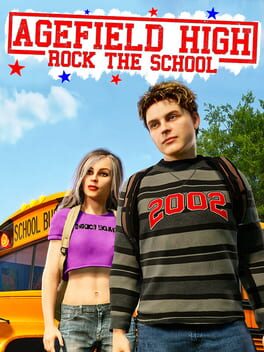
Earlier this week, the development studio Pixel Pulse Interactive confirmed that Agefield High: Rock the School will finally hit the PS5 on 25 September 2026. The title positions itself as a “high‑school humiliation ritual simulator,” promising a blend of open‑world exploration, reputation mechanics, and a humor‑laden narrative that mirrors the social hierarchy experiments of its spiritual predecessor. While early trailers hint at a stylised art direction that leans heavily into exaggerated caricature, the core loop revolves around orchestrating pranks, navigating cliques, and managing the inevitable fallout of teenage rebellion.
Pixel Pulse’s lead designer, Maya Kwon, emphasized that the project is not a direct clone but an evolution of the formula, incorporating modern systems such as dynamic AI‑driven student schedules, a fully voiced dialogue tree, and a “choice‑consequence” engine that reacts to the player’s level of cruelty or compassion. Marketing materials also highlight a multiplayer “Rival School” mode, allowing up to four players to compete in coordinated schemes, a feature that could set a new standard for social‑play in the genre. The studio has positioned the game as a budget‑friendly title, pricing it below the typical AAA tier, which signals an intent to capture impulse buyers and the ever‑growing “value‑seeker” demographic on PlayStation Store.
Analysis
From a market‑performance perspective, Agefield High arrives at a crossroads where demand for nostalgic revivals is intersecting with the rise of live‑service ecosystems. The title’s modest budget and targeted release date—well after the crowded holiday window—could allow it to dominate a quiet sales period, especially if Sony leverages its promotional pipelines to spotlight the game during the September “Fall Gaming” showcase. Moreover, the inclusion of a multiplayer component may extend the title’s longevity, feeding into the broader trend of post‑launch content that keeps player engagement high without the massive development overhead of a full‑scale live service.
However, the game also faces significant technical and reputational hurdles. Replicating the delicate balance of humor and social commentary that made Bully a cult hit is no small feat; missteps could relegate Agefield High to the “cash‑grab” category, damaging both the studio’s credibility and Sony’s curation reputation. Additionally, the title must navigate the increasingly sensitive landscape surrounding depictions of bullying and harassment in media. If the developers fail to embed robust contextual framing—such as consequences for overly toxic behaviour—the game risks backlash from both advocacy groups and the broader gaming community, which has grown more vocal about ethical representation over the past five years.
XPLog Opinion
At XPLog UK, we view Agefield High as a calculated gamble that could pay dividends for both the publisher and the PlayStation platform, provided it respects the thin line between satire and exploitation. The title’s promise of a fresh, multiplayer‑centric spin on high‑school chaos could rejuvenate a genre that has lain dormant for too long, but only if Pixel Pulse delivers a nuanced experience that acknowledges the real‑world implications of its subject matter. In a market saturated with hyper‑realistic shooters and sprawling RPGs, a well‑executed, humor‑driven sandbox could become a cult favourite, reinforcing Sony’s commitment to diverse, mid‑tier exclusives that keep the ecosystem vibrant.
Final Thoughts
Agefield High: Rock the School is set to launch on 25 September 2026, positioning itself as the de‑facto spiritual successor to Bully for the current console generation. Its success will hinge on how deftly it balances nostalgic appeal with modern sensibilities, and whether Sony can amplify its modest ambitions into a meaningful commercial foothold. Players and analysts alike should keep an eye on the pre‑release demos slated for early summer 2026, as they will likely reveal whether the game can transcend its “rip‑off” label and become a genuine, if irreverent, staple of the PS5 library.