.png)
Overview
Since the surprise breakout of Vampire Survivors in early 2022, the loosely defined "bullet heaven" genre has evolved from a novelty curiosity into a bustling sub‑ecosystem of indie shooters, roguelites and hybrid survival experiences. The core formula—players dodging overwhelming swarms while their arsenal auto‑generates and scales—has proven remarkably sticky, spawning a flood of titles that iterate on the original premise with everything from retro pixel art to high‑octane 3D chaos. Yet despite the genre’s rapid expansion, many critics still question whether it can sustain meaningful evolution beyond incremental tweaks, especially as the market becomes saturated with copycat titles that offer little fresh mechanics.
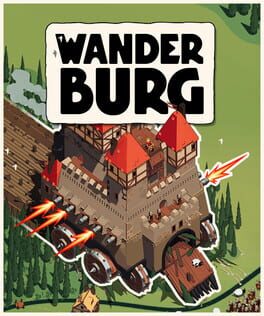
Enter Wanderburg, an ambitious project that fuses the bullet‑heaven core loop with an unmistakably medieval‑mechanical aesthetic: a modular castle‑tank hybrid that players can customize, upgrade, and even feed with sheep to power its cannons. Developed by a small, but seasoned indie studio that cut its teeth on procedural dungeon crawlers, the game launched into early access today on Steam, positioning itself as a potential turning point for the genre. By marrying the frantic dodge‑and‑shoot rhythm with a tangible, constructible vehicle that feels both siege engine and armored behemoth, Wanderburg aims to broaden the appeal of bullet heaven to players who crave a more tactile sense of progression and strategic depth.
What Happened?
The announcement came via a concise yet evocative press release accompanied by a gameplay trailer that showcases the titular castle‑tank barreling through hordes of grotesque, fantasy‑styled enemies while unleashing a barrage of cannon fire. The developers highlighted the modularity of the vehicle: players start with a basic keep‑on‑wheels chassis and can attach towers, walls, and artillery pieces collected from the battlefield, each piece offering unique stat boosts and new attack patterns. The trailer also hints at a resource‑gathering loop where rescued sheep can be corralled into the tank’s belly, converting their wool into temporary over‑charge for devastating area‑of‑effect blasts.
Wanderburg’s early‑access pricing is set at £19.99, with a promised roadmap that includes a full campaign, cooperative multiplayer, and a robust level‑editor for community‑generated siege maps. The developers have pledged weekly content drops for the first three months, focusing on new enemy archetypes, castle modules, and seasonal events that will keep the player base engaged. Importantly, they have opened a public Discord channel where feedback will directly inform balance tweaks and feature prioritisation, signalling a commitment to an iterative development model that leans heavily on its early‑access community.
Analysis
From a market perspective, Wanderburg arrives at a moment when bullet heaven titles are both a proven revenue stream and a risky saturation point. The genre’s low development overhead—often relying on procedural generation and simple art pipelines—has encouraged a flood of releases, many of which struggle to differentiate themselves beyond superficial cosmetic changes. Wanderburg’s hybrid approach, however, injects a tangible sense of agency through its modular vehicle system, potentially setting a new benchmark for depth in the space. If the developers can deliver a satisfying progression curve that rewards strategic assembly of the castle‑tank, they may capture a segment of the audience that has grown weary of the genre’s repetitive loops, thereby extending the commercial lifespan of bullet heaven beyond the typical six‑to‑nine‑month hype window.
Technical challenges loom, though. Marrying a high‑velocity projectile system with a physics‑driven modular construct demands careful optimization to avoid frame‑rate cliffs, especially on lower‑end PCs where the early‑access demographic often resides. Moreover, the decision to incorporate cooperative multiplayer introduces networking complexities that could strain the small studio’s resources if not scoped correctly. Success in these areas will be pivotal not just for Wanderburg’s own reputation, but also for the broader perception of bullet heaven titles as viable candidates for console launches—a market segment that has historically been hesitant to embrace the genre due to its niche appeal and performance sensitivities.
XPLog Opinion
At XPLog UK we view Wanderburg as a daring experiment that could either revitalize the bullet‑heaven formula or underscore its limitations; the stakes are high because the genre’s future hinges on whether developers can break the “more of the same” narrative that has begun to erode player enthusiasm. The modular castle concept is a clever hook that promises a fresh layer of strategic depth, and the early‑access model gives the studio a real chance to refine the experience with direct community input. Should the team deliver on its roadmap without sacrificing performance, Wanderburg may become the flagship title that proves bullet heaven can evolve into a fully fledged sub‑genre capable of sustaining long‑term player investment and cross‑platform viability.
Final Thoughts
Wanderburg’s early‑access debut marks a pivotal moment for both its creators and the bullet‑heaven ecosystem at large. With a scheduled full release slated for Q2 2025, the next few months will be critical as the developers iterate on balance, expand multiplayer functionality, and polish the modular castle mechanics. Players and industry watchers alike should keep an eye on community feedback channels, the cadence of content updates, and any announced console ports, as these will be strong indicators of whether Wanderburg can truly steer the genre into new, sustainable territory.