.png)
Overview
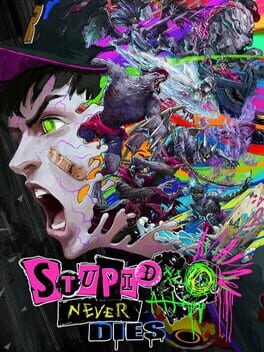
The indie landscape of 2026 is witnessing a resurgence of hyper‑stylised, genre‑blending experiences, and the arrival of Stupid Never Dies marks a bold entry into this wave. While the broader market has been dominated by hyper‑realistic shooters and sprawling live‑service titles, a growing segment of developers is mining the cultural cache of punk aesthetics, retro‑futurism and subversive storytelling to carve out niche yet lucrative audiences. This trend can be traced back to the early 2020s when titles such as Katana ZERO and Cyberpunk 2077, despite their divergent receptions, demonstrated that a gritty, neon‑slick visual language could command both critical attention and commercial viability. Stupid Never Dies builds on that lineage, positioning itself as an action RPG that fuses the visceral chaos of zombie survival with the anarchic ethos of punk ideology, a combination that has rarely been explored at this scale.
At the same time, the zombie genre has become a double‑edged sword for developers; its ubiquity has led to fatigue among mainstream audiences, yet it remains a reliable draw for players seeking visceral combat and emergent narratives. Stupid Never Dies distinguishes itself by injecting a “vibrant feast” of sensory overload—blazing colour palettes, synth‑driven soundscapes, and kinetic combat that rewards both reflexes and improvisation. The game's protagonist, Davy, a sardonic undead anti‑hero, serves as a narrative conduit for the game's thematic exploration of decay versus rebellion, echoing the cultural critiques of early 2000s punk zines while leveraging modern gameplay loops. This synthesis of style and substance signals a deliberate attempt to re‑energise a genre that has, until now, leaned heavily on formulaic horror tropes.
What Happened?
During a live‑streamed showcase at the Indie Gaming Expo last week, the development studio behind Stupid Never Dies unveiled a playable demo that thrust players into a chaotic opening sequence: Davy is flushed down a grimy toilet in an abandoned shopping mall, only to emerge in a nightmarish arena populated by grotesque, neon‑lit undead. The demo demonstrated a seamless blend of fast‑paced melee combat, elaborate combo systems, and an adaptive soundtrack that reacts to the player’s aggression levels. Early impressions highlighted the game's commitment to “excess” – from over‑the‑top weapon upgrades that resemble makeshift punk art installations, to environmental interactions that allow players to weaponise discarded signage and broken vending machines. The visual fidelity, despite being built on a modest engine, leverages stylised lighting and post‑processing effects to create a world that feels simultaneously retro and hyper‑modern.
The studio’s lead designer, in a post‑event interview, emphasized that the title aims to appeal not only to hardcore action RPG fans but also to players craving a distinct aesthetic identity. Target platforms include next‑gen consoles and PC, with a planned release window in early 2027 to capitalize on the post‑holiday sales lull. The developers also hinted at a live‑service component, promising periodic “punk festivals” – limited‑time events that will introduce new weapon skins, narrative arcs, and community‑driven challenges. By positioning the game as both a standalone experience and a platform for ongoing content, the studio signals its intent to sustain player engagement beyond the initial launch, a strategy that aligns with the industry's shift towards longevity and recurring revenue streams.
Analysis
From a market perspective, Stupid Never Dies arrives at a crossroads where visual differentiation is increasingly valuable. Competing against heavyweight franchises that dominate console dashboards, an indie‑scale title must leverage its unique selling points—namely, its punk‑infused aesthetic and kinetic combat—to carve out a dedicated fanbase. Early metrics from the demo’s streaming numbers suggest a strong curiosity factor, especially among viewers who gravitate towards high‑energy, visually arresting games. However, the technical ambition of delivering fluid combat while maintaining a richly stylised world may present performance challenges on lower‑end hardware, a risk that could affect adoption rates on platforms with less powerful specs. The studio’s decision to adopt a modular live‑service approach could mitigate this risk by allowing post‑launch patches and optimisations, but it also introduces the need for sustained development resources, a common hurdle for mid‑size independent studios.
Strategically, the title could influence console ecosystems by reinforcing the appeal of niche, culturally resonant experiences on next‑gen hardware. Sony’s recent emphasis on indie showcases and Microsoft’s push for “Play Anywhere” initiatives both create fertile ground for a game that thrives on cross‑platform accessibility and community‑driven events. If Stupid Never Dies succeeds in delivering its promised content cadence, it may encourage platform holders to allocate more front‑page visibility to similar genre‑blending titles, thereby diversifying the catalogue beyond mainstream blockbusters. Moreover, the game’s punk ethos—a celebration of anti‑establishment narratives—could resonate with younger demographics seeking representation of subcultural identities within mainstream gaming, potentially reshaping marketing narratives around authenticity and cultural relevance.
XPLog Opinion
At XPLog UK we view Stupid Never Dies as a daring experiment that could redefine how indie developers approach genre hybridisation; its audacious blend of zombie horror, punk rebellion, and action‑RPG mechanics is a calculated risk that, if executed with the polish hinted at in the demo, may set a new benchmark for style‑driven game design. While the market is saturated with polished AAA titles, there is a palpable appetite for experiences that feel handcrafted and culturally specific, and Stupid Never Dies appears poised to satisfy that niche. Our verdict is cautiously optimistic: the game’s success will hinge on its ability to sustain the initial wow factor through meaningful post‑launch content and robust performance across the hardware spectrum.
Final Thoughts
In sum, Stupid Never Dies is more than a flash of neon‑lit chaos; it is a statement about the evolving priorities of both developers and players who crave identity, excess, and longevity in their digital playgrounds. With a slated early‑2027 launch, the industry will be watching closely to see whether the game can translate its demo’s kinetic energy into a full‑fledged, enduring title that not only entertains but also reshapes expectations for indie‑driven, genre‑defying experiences. Keep an eye on the studio’s upcoming dev‑log series and the first wave of “punk festival” events, as they will provide the clearest indicators of the title’s staying power in a competitive market.