.png)
Overview
For over a decade Nintendo has leveraged its bi‑annual Direct presentations as a theatrical stage where hardware ambitions and software dreams collide, and the September Direct this year is no exception. With the long‑awaited successor to the Switch finally poised to enter the market, the company chose to spotlight its winter slate, a strategic move that signals confidence not only in the upcoming handheld‑hybrid but also in the ecosystem of titles that will define its launch window. The announcement arrives at a moment when the broader console market is settling into a post‑pandemic equilibrium, with Sony and Microsoft entrenched in a hardware arms race centred on raw power and subscription services, while Nintendo continues to double‑down on its unique value proposition of portable freedom and family‑friendly design.
Historically, Nintendo’s hardware cycles have been marked by bold, sometimes polarising, design choices – from the Wii’s motion‑control revolution to the Switch’s seamless docked/handheld hybrid that reshaped the industry in 2017. The forthcoming “Switch 2” (officially yet unnamed) is rumored to bring a brighter OLED display, an upgraded Nvidia Tegra X2 chip, and a battery life that rivals the original’s, all while retaining the iconic Joy‑Con form factor that has become a cultural touchstone. This lineage of iterative yet impactful upgrades sets the stage for a winter lineup that must not only showcase technical prowess but also re‑engage a player base that has, over the past three years, migrated between handheld indie gems and the burgeoning cloud‑gaming arena.
What Happened?
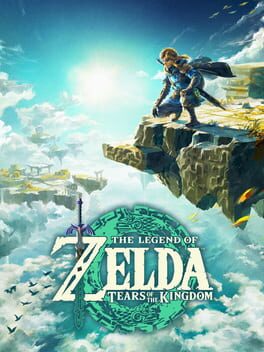
The Direct unveiled a robust portfolio of titles slated for release between November 2024 and February 2025, anchoring the Switch 2’s debut with heavyweight franchises that have historically driven console sales spikes. Among the marquee announcements were a full‑scale sequel to "The Legend of Zelda: Tears of the Kingdom," promising an expanded open‑world experience that leverages the new hardware’s improved GPU throughput, and a next‑generation "Metroid Prime" revival that will debut exclusively on the new system, marking a rare first‑party launch outside the traditional Switch lifecycle. Additionally, Nintendo confirmed a refreshed "Mario Kart 9" with cross‑play capabilities, a feature that directly addresses long‑standing community demands for broader multiplayer ecosystems.
Beyond first‑party firepower, the showcase highlighted a suite of indie collaborations, including an enhanced port of "Hollow Knight: Silksong" optimized for higher frame rates, and a surprise partnership with FromSoftware to bring a bespoke "Dark Souls"‑style experience to the handheld format. While Nintendo refrained from divulging concrete specifications, a brief segment featuring a side‑by‑side comparison of the current Switch’s 720p docked output versus a teased 1080p mode on the new console hinted at a modest yet meaningful graphical leap. CEO Shuntaro Furukawa’s closing remarks emphasized “a seamless transition for our community,” underscoring a strategic focus on backward compatibility and a unified ecosystem that will allow existing Switch owners to migrate their libraries with minimal friction.
Analysis
The winter slate functions as both a sales catalyst and a litmus test for Nintendo’s ability to compete in a market where raw horsepower often eclipses creative differentiation. By stacking flagship IPs with technically demanding updates, Nintendo is positioning the Switch 2 as a hybrid that can finally close the performance gap that has lingered since the original’s launch, without abandoning its core philosophy of accessibility. This approach could attract a segment of the core gamer demographic that has drifted toward PlayStation’s “PlayStation Plus” ecosystem, especially if the promised cross‑play and enhanced online services materialize. However, the reliance on legacy franchises also carries risk; if the new hardware fails to deliver a perceptible improvement in load times or visual fidelity, the titles may feel like incremental upgrades rather than transformative experiences, potentially dampening the launch momentum.
Supply chain considerations loom large as well. The semiconductor shortage that hampered console production in 2021‑22 has largely eased, yet the heightened demand for high‑end mobile GPUs means Nintendo must navigate a delicate balance between unit cost and retail price. An aggressive pricing strategy could preserve Nintendo’s reputation for affordability, but may compress margins at a time when development costs for next‑gen titles are escalating. Moreover, the decision to maintain Joy‑Con compatibility while introducing a new dock could complicate manufacturing logistics, a factor that will influence both launch inventory and long‑term aftermarket support.
XPLog Opinion
From XPLog’s perspective, Nintendo’s winter Direct is a masterclass in calibrated ambition: it leans on the undeniable pull of its flagship franchises while quietly modernising the hardware foundation to meet the expectations of an increasingly discerning core audience. The real triumph will be measured not just by first‑week sales, but by how effectively the company converts its hybrid identity into a sustainable competitive edge against the raw power narrative dominating Sony and Microsoft. If Nintendo can deliver a seamless, high‑quality experience that feels both familiar and forward‑looking, it will reaffirm the console’s relevance in an era where cloud and subscription services threaten to homogenise the gaming landscape.
Final Thoughts
In sum, the September Direct sets the tone for what could be a watershed moment in Nintendo’s hardware saga. With the winter lineup acting as both a showcase and a proving ground, the industry will be watching closely for launch dates, pricing details, and the real‑world performance of the Switch 2’s promised upgrades. Keep an eye on the official reveal slated for early October, when Nintendo is expected to confirm the exact specifications and retail pricing, and on the subsequent Q4 release window that will determine whether the new hybrid can truly capture the hearts of both legacy fans and the next generation of core gamers.