.png)
Overview
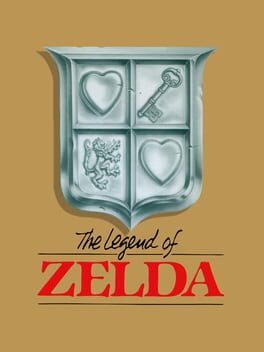
Tomorrow marks a watershed moment for Nintendo as it rolls out a dedicated 40th‑anniversary Direct centred on The Legend of Zelda, a franchise that has defined the company’s identity since the release of the original 1986 adventure on the Famicom Disk System. Over four decades, Zelda has evolved from pixel‑art labyrinths to sprawling open‑world epics, each iteration pushing hardware boundaries and reshaping player expectations. The upcoming broadcast is therefore more than a simple showcase; it is a cultural barometer that gauges how Nintendo intends to leverage its most iconic IP in an era dominated by high‑budget live‑service titles and cross‑platform blockbusters.
Industry analysts have been watching the console wars with a keen eye on Nintendo’s next hardware move, often dubbed the “Switch 2” in speculation circles. While Nintendo has traditionally eschewed the hype‑driven reveal cycles of its rivals, the convergence of a major Zelda announcement, rumours of an Ocarina of Time remake, and whispers of a Sony‑backed Zelda film signal a strategic pivot toward multimedia integration. In a market where Sony and Microsoft are doubling down on cinematic universes and streaming ecosystems, Nintendo’s decision to potentially align with a Hollywood studio could reshape the franchise’s revenue streams and fan engagement models for years to come.
What Happened?
The Direct is set to deliver fresh footage of the long‑awaited Ocarina of Time remake, a title that has been teased intermittently since the original’s 1998 debut and has become a touchstone for nostalgia‑driven sales strategies across the industry. Early reports suggest the remake may launch alongside the rumored Switch 2 hardware in November, a timing that would pit it directly against Rockstar’s GTA 6 launch window—a bold gambit that could force consumers to choose between two generational landmarks. Nintendo’s own statements have been deliberately vague, emphasizing “new experiences for both veteran adventurers and newcomers,” a phrasing that hints at a possible redesign of core gameplay mechanics to suit next‑gen capabilities while preserving the franchise’s signature puzzle‑platforming DNA.
Beyond the remake, the Direct is expected to address the most tantalising rumor of the season: a potential Zelda film collaboration with Sony Pictures. While no official confirmation has been made, industry insiders have reported that Sony’s film division is in advanced talks to adapt the franchise’s mythic lore for the big screen, leveraging its recent successes with superhero adaptations to bring Hyrule’s timeless narrative to a broader audience. Should this partnership materialise, it would represent Nintendo’s first major foray into co‑producing a live‑action property with a direct competitor, a move that could redefine cross‑licensing norms and set a precedent for future collaborations with non‑gaming studios.
Analysis
The convergence of a high‑profile remake, a speculative next‑gen console launch, and a potential Hollywood tie‑in creates a perfect storm of market dynamics. From a financial perspective, Nintendo stands to capture a dual revenue surge: one from hardware sales buoyed by a marquee exclusive, and another from ancillary media rights that could unlock licensing fees, merchandising, and streaming royalties. Competitors like Sony will likely view the Zelda film as a strategic counter‑punch to their own franchise adaptations, prompting a possible escalation in cross‑media bidding wars that could inflate production budgets across the board.
Technically, the undertaking is not without challenges. Recreating Ocarina of Time for next‑gen hardware demands a delicate balance between preserving the iconic art direction and exploiting modern rendering pipelines, ray‑traced lighting, and higher frame‑rate targets. Moreover, integrating a cinematic narrative that satisfies both die‑hard fans and a mainstream film audience will require Nintendo to cede a degree of creative control—an uncharacteristic move for a company that has historically guarded its IP tightly. The success of this venture will hinge on Nintendo’s ability to orchestrate a seamless experience across interactive and passive media, a feat that could either cement its status as a transmedia powerhouse or expose cracks in its traditionally insulated development model.
XPLog Opinion
At XPLog UK we view the upcoming Direct as Nintendo’s most ambitious cultural statement since the launch of the original Switch. By aligning Zelda’s legendary heritage with next‑gen hardware and a potential Sony‑backed film, Nintendo is signalling that it will no longer rely solely on handheld‑first design philosophy but will instead embrace a holistic entertainment ecosystem. While the risk of over‑extending the franchise is real—particularly if the film fails to capture the series’ nuanced storytelling—the upside is a revitalised brand presence that could attract a new generation of players and investors alike. In short, the move is a calculated gamble that, if executed with the meticulous care Zelda has always demanded, could redefine Nintendo’s relevance in a market increasingly dominated by multimedia franchises.
Final Thoughts
The 40th‑anniversary Direct promises to be more than a nostalgic showcase; it is a strategic inflection point that could dictate Nintendo’s trajectory for the rest of the decade. As the world tunes in tomorrow, keep an eye on the exact release windows hinted at for the Ocarina of Time remake, the official confirmation (or denial) of a Sony‑produced Zelda film, and any subtle cues about the hardware roadmap that may accompany the presentation. Those dates will serve as the first markers of a potentially transformative era for both the franchise and the broader console landscape.