.png)
Overview
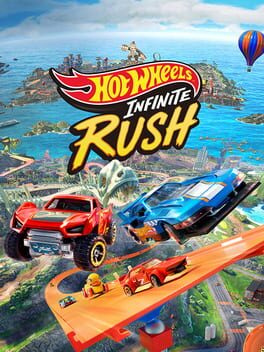
When Milestone Games announced that its latest open‑world racer, Hot Wheels Infinite Rush, would debut on Nintendo's forthcoming Switch 2, the industry took notice. The collaboration brings together a studio best known for translating high‑octane arcade sensibilities into polished console experiences—titles like the MotoGP and Ride series—with a franchise that has long thrived on the imagination of toy‑box enthusiasts. This pairing is more than a simple licensing deal; it reflects Nintendo's broader ambition to diversify the Switch 2's library beyond its traditional platforming and family‑friendly fare, positioning the console as a viable home for mid‑core and hardcore racing aficionados.
In the current console climate, where open‑world design has become a de‑facto expectation for major racing franchises, the arrival of a Hot Wheels‑themed sandbox on a hybrid platform is a calculated risk. Competitors such as Microsoft’s Forza Horizon and EA’s Need for Speed have set high bars for scale, visual fidelity, and live‑service integration. Yet Nintendo's ecosystem, with its unique blend of portability and a loyal, often younger, user base, offers a distinct market niche. The decision to launch the title ahead of the Switch 2's official release date aims to generate buzz, test the hardware's capabilities, and provide early adopters with a taste of the next generation's performance envelope.
What Happened?
The first wave of critical impressions has now surfaced, spearheaded by a detailed review from Push Square, a subsidiary of Nintendo Life. Reviewers praised the game's exuberant track designs, which reinterpret classic Hot Wheels sets into sprawling, vertically layered cityscapes that encourage both reckless stunts and strategic navigation. The critics highlighted the fluid handling model, noting that Milestone successfully transplanted its arcade‑driven physics onto the Switch 2's upgraded GPU, delivering frame rates that remain consistently smooth even in densely populated sections of the map.
Conversely, the assessments also flagged several areas where the experience falls short of contemporary standards. Some critics observed that the open world, while imaginative, suffers from texture pop‑in and occasional draw‑distance limitations that betray the hardware's constraints. Additionally, the game's progression system—predicated on micro‑transactions for cosmetic upgrades—has drawn criticism for potentially fragmenting the player base. Nevertheless, the consensus underscores that Hot Wheels Infinite Rush offers a compelling entry point for both die‑hard racing fans and newcomers drawn by the brand's nostalgic appeal.
Analysis
From a market perspective, the title arrives at a pivotal moment for Nintendo's hardware strategy. By delivering a title that competes on the same visual and performance tier as third‑party blockbusters, Nintendo signals its intent to attract a broader demographic, thereby expanding the console's install base beyond its traditional family‑centric core. The positive reception of the game's core mechanics could translate into a measurable lift in early Switch 2 sales, particularly among players who have previously gravitated toward more mature racing experiences on rival platforms.
Technically, Milestone's utilization of its proprietary Milestone Engine on the Switch 2 showcases a noteworthy evolution. The engine, originally optimized for high‑end consoles, has been stripped down and re‑engineered to exploit the hybrid's increased memory bandwidth and improved ray‑tracing capabilities. This adaptation not only sets a precedent for future open‑world titles on Nintendo hardware but also raises expectations for subsequent patches that could address the current visual shortcomings, such as texture streaming and level‑of‑detail scaling.
XPLog Opinion
At XPLog UK we view Hot Wheels Infinite Rush as a litmus test for Nintendo's willingness to gamble on genre‑expanding titles that push the Switch 2's envelope. While the game is not without flaws, its ambitious scope and the evident care in translating the Hot Wheels ethos into a living, breathing playground suggest that the console is ready to host experiences that were once thought exclusive to more powerful platforms. Should Milestone deliver timely updates that smooth out the graphical hiccups, the title could become a cornerstone for a new wave of third‑party collaborations that redefine what the Switch 2 can achieve.
Final Thoughts
In sum, the early critical reception of Hot Wheels Infinite Rush paints a picture of a title that, while imperfect, heralds a promising shift in Nintendo's third‑party strategy and the broader racing genre's migration to hybrid hardware. Players and analysts alike should keep an eye on forthcoming patch notes, community feedback, and the official launch window slated for early Q4 2026, as these will determine whether the game can cement its place as a flagship experience for the Switch 2 era.