Overview
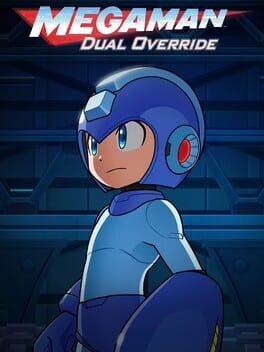
The latest entry in Capcom’s storied Mega Man franchise, Mega Man: Dual Override, arrived on the Nintendo Switch with a fan‑fare that feels both nostalgic and forward‑looking. Since the original 1987 debut, Mega Man has oscillated between mainstream blockbuster releases and niche revivals, each iteration attempting to balance the series’ signature precision platforming with the evolving expectations of a player base that has grown up alongside the blue‑bladed hero. In recent years, Capcom has leaned heavily into anthology collections—most notably the Mega Man Legacy Collection—leveraging the retro wave that has swept the industry, while simultaneously experimenting with new mechanics in titles like Mega Man 11. Dual Override represents the culmination of that dual strategy: a modern engine that respects the classic 2‑D formula, yet injects fresh gameplay concepts such as a dual‑character system and adaptive difficulty layers that aim to broaden appeal without diluting the series’ core challenge.
The timing of the announcement is no accident. The console market is currently dominated by a few heavyweight ecosystems, with Nintendo’s Switch maintaining a strong foothold in the family‑friendly and indie‑centric segments. Capcom’s decision to launch a flagship platformer on the Switch signals an intent to capture both long‑standing fans and a new generation accustomed to portable, bite‑size gaming sessions. Moreover, the broader industry context—a resurgence of “hard‑core” titles like Dark Souls, Celeste, and the recent indie platformer renaissance—provides a fertile environment for a game that openly embraces difficulty as a design virtue rather than a barrier. Dual Override, therefore, is positioned not merely as a nostalgic cash‑in but as a strategic statement about where Capcom believes the future of action‑platforming lies.
What Happened?
During a live‑streamed showcase hosted by Nintendo Direct, Capcom unveiled a detailed trailer for Mega Man: Dual Override, revealing a striking visual overhaul that blends the series’ iconic pixel art roots with high‑definition shading and fluid animation. The footage highlighted the game’s central mechanic: the ability to switch between two distinct Mega Man avatars, each equipped with a unique set of weapons and traversal abilities, fostering a layer of strategic depth previously unseen in the franchise. Developers emphasized that this duality is more than a gimmick; it directly influences level design, boss encounters, and even narrative beats, allowing for puzzles that require coordinated use of both characters to progress. The announcement also confirmed that the game will feature a robust difficulty scaling system, ranging from a forgiving “Casual” mode—intended to welcome newcomers—to a “Hardcore” tier that resurrects the punishing trial‑and‑error ethos that defined early entries.
In addition to gameplay revelations, Capcom’s lead designer, Hiroki Nakamura, addressed the title’s development timeline, noting that Dual Override entered pre‑production shortly after the success of the Mega Man Legacy Collection 2, and that the team allocated roughly three years of iterative design to fine‑tune the dual‑character system. The studio also disclosed plans for post‑launch support, including downloadable content that will introduce new boss battles and a community‑driven level editor, echoing the user‑generated content trends that have propelled titles like Super Mario Maker to sustained relevance. While exact pricing and launch windows were withheld, the company hinted at a global release in the fourth quarter, aligning with the holiday sales surge that historically benefits platform‑centric releases.
Analysis
From a market performance perspective, Dual Override arrives at a crossroads where legacy franchises must either evolve or risk obsolescence. Capcom’s historical reliance on franchise recycling—evident in the frequent re‑releases of Resident Evil and Street Fighter titles—has generated steady revenue but also invited criticism of creative stagnation. By integrating a dual‑character system and modernized aesthetics, Capcom is attempting to rejuvenate the Mega Man brand while preserving the mechanical purity that hardcore fans cherish. This hybrid approach may prove pivotal in recapturing market share from competitors like Square Enix, whose recent forays into action‑platforming (e.g., Nier Automata) have demonstrated that narrative depth and fluid combat can coexist with high difficulty. Moreover, the decision to anchor the game on the Switch leverages Nintendo’s strong install base of 100+ million units, ensuring a sizable launch audience without the fragmentation that can dilute sales on multi‑platform releases.
Technical hurdles also loom large. Implementing seamless character swapping in a fast‑paced platformer demands precise input handling and robust state management to avoid latency that could frustrate players during split‑second boss phases. Capcom’s engineering team has reportedly built a custom middleware layer to synchronize animation rigs across both avatars, a move that, while resource‑intensive, could set a new benchmark for character‑centric design in 2‑D titles. Additionally, balancing the dual difficulty modes without alienating either end of the skill spectrum will require meticulous playtesting; past attempts at scaling difficulty in the series—such as the “Easy Mode” in Mega Man 11—have been met with mixed reception, underscoring the fine line between accessibility and dilution of the brand’s identity.
XPLog Opinion
At XPLog UK we view Mega Man: Dual Override as a litmus test for Capcom’s ability to translate nostalgic capital into sustainable innovation. The title’s ambition to marry classic, unforgiving platforming with contemporary design sensibilities could either revitalize the franchise’s relevance or cement its status as a relic for the hardcore enclave. Our editorial stance is cautiously optimistic: the dual‑character mechanic, if executed with the precision promised, may unlock a fresh strategic layer that re‑engages veteran players while providing a scaffold for newcomers to gradually master the series’ difficulty curve. However, the ultimate verdict will hinge on Capcom’s post‑launch support strategy—particularly the promised level editor and DLC pipeline—which will determine whether Dual Override becomes a living platform that evolves with its community or a one‑off nostalgic showcase.
Final Thoughts
In sum, Mega Man: Dual Override stands as a bold declaration that Capcom is still willing to gamble on its iconic IP, betting that a carefully calibrated blend of retro challenge and modern flexibility will resonate across the fragmented console landscape. As the fourth‑quarter launch window approaches, industry watchers should monitor pre‑order trends, community feedback on the dual‑character system, and the rollout of post‑launch content, all of which will shape the long‑term health of the Mega Man franchise and its place within the ever‑competitive platforming arena.
.png)
 XPLog
06 Sep 2026
5 min read
XPLog
06 Sep 2026
5 min read