.png)
Overview
The past decade has witnessed an unprecedented convergence of social networking and interactive entertainment, turning what were once solitary pastimes into communal rituals that stretch across continents. As broadband became ubiquitous and consoles embraced robust online ecosystems, developers began to design experiences that deliberately reward physical distance with shared virtual journeys, and nowhere is this trend more evident than in the recent surge of co‑op puzzle adventures that double as social glue for dispersed friend groups.
Australian indie studio House House, the creative force behind the viral sensation Untitled Goose Game, has long been a poster child for the global rise of small‑team development that punches well above its weight. Emerging from Melbourne’s fertile indie scene in 2014, the studio cultivated a reputation for whimsical design and meticulous polish, earning the trust of platform holders eager to showcase distinctive, personality‑driven titles. In this environment, the Nintendo Switch has become a de‑facto launchpad for such experiences, offering a portable, always‑online hardware base that aligns perfectly with the “play‑anywhere” ethos that Big Walk embodies.
What Happened?
Big Walk arrived on the Nintendo Switch and PC platforms earlier this quarter, presenting players with a sprawling, stylised open world that encourages two‑player cooperation to solve environmental puzzles, unlock hidden pathways, and uncover narrative fragments scattered across a sun‑drenched landscape. The game’s core loop revolves around synchronized movement: each participant controls a distinct avatar whose steps must be coordinated to manipulate terrain, trigger mechanisms, and progress through a series of increasingly intricate challenges that reward both communication and timing.
During a live‑streamed press event, House House’s creative director emphasized that the title was deliberately engineered to serve as a digital “meeting place” for friends who have been separated by geography or time. The studio highlighted its intention to keep the learning curve shallow enough for casual reunions while embedding layers of depth that reward long‑term collaboration. Early community feedback has been overwhelmingly positive, with player‑generated content surfacing on social platforms and the game quickly climbing the indie charts on the eShop, suggesting a resonant chord struck among those craving meaningful shared experiences.
Analysis
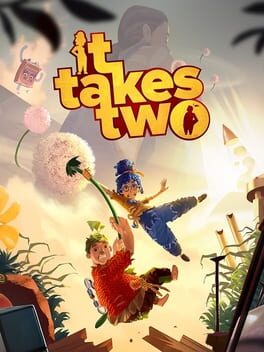
From a market perspective, Big Walk occupies a sweet spot at the intersection of the co‑op puzzle niche and the socially‑driven “stay‑connected” genre that flourished during the pandemic. Its launch on the Switch—a console that continues to dominate the handheld segment—means it can tap into a user base already accustomed to on‑the‑go multiplayer sessions. Competitors such as It Takes Two and Lovers in a Dangerous Spacetime have demonstrated that there is robust appetite for games that require genuine cooperation, and Big Walk differentiates itself by framing that cooperation as a bridge across real‑world distances rather than a purely in‑game challenge.
Technically, the title leverages the Switch’s lightweight networking stack, but House House has signalled intentions to roll out cross‑platform play with PC in future updates, a move that could dramatically expand its reach. The studio’s prior experience with efficient asset pipelines and low‑overhead engine optimisation bodes well for smooth performance even in the most densely populated puzzle zones. However, the reliance on stable internet connections may still pose a barrier in regions where latency remains an issue, a factor that could influence the game's long‑term adoption curve.
XPLog Opinion
At XPLog UK we view Big Walk as more than a charming indie curiosity; it is a strategic exemplar of how developers can harness the emotional weight of long‑distance friendships to create a product that feels indispensable to its audience. House House has managed to translate the intangible yearning for reconnection into concrete gameplay loops, a feat that could inspire a wave of titles seeking to embed real‑world social utility into their design philosophy. If the studio follows through with robust post‑launch support and expands cross‑play, the game could become a cornerstone of the Switch’s multiplayer library for years to come.
Final Thoughts
Big Walk arrives at a moment when the industry is actively redefining what multiplayer means, shifting from competitive spectacles to collaborative experiences that reinforce personal bonds. With its first major update slated for early next year and a roadmap that hints at seasonal events and community‑driven puzzle packs, the title is poised to remain a living platform for friends separated by oceans but united by shared steps. Keep an eye on House House’s announcements in the coming months, as they will likely set the tone for how indie co‑op games evolve within the broader console ecosystem.