.png)
Overview
The indie horror‑action RPG scene has been quietly fermenting a new sub‑genre that blends the meticulous world‑building of classic top‑down Zelda titles with the relentless, unforgiving combat loops popularised by FromSoftware’s Bloodborne. Withering Realms, the long‑awaited follow‑up to the cult‑favorite Withering Rooms, arrives in early access at a moment when players are craving fresh, atmospheric experiences that diverge from the mainstream AAA pipelines. The original Withering Rooms proved that a doll‑house aesthetic could serve as a fertile ground for dread, leveraging cramped, toy‑like environments to amplify tension. Now, Withering Realms expands that premise, transplanting the unsettling universe into an alternate 1920s where the Great War never fully unfolded, having been cut short by a cataclysmic occult event that reshaped geopolitics and left a scarred world ripe for exploration.
From a market perspective, the timing is significant. The early‑2020s have seen a resurgence of retro‑styled indie titles that marry nostalgic visual language with modern gameplay depth—think Hyper Light Drifter, Death's Door, and the ever‑popular Hollow Knight. Simultaneously, the horror‑RPG niche has been invigorated by titles such as Elden Ring’s darker expansions and the critically acclaimed Returnal, which demonstrate that audiences will tolerate steep difficulty curves if the world feels alive and the lore is compelling. Withering Realms positions itself at the intersection of these trends, promising a unique blend of narrative intrigue, mechanically demanding combat, and a visual palette that feels both familiar and unsettlingly new.
What Happened?
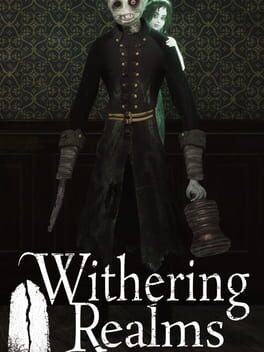
Developed by the small but ambitious studio behind the original dollhouse experiment, Withering Realms launched into early access on September 4th, 2026. Players assume the role of a spectral child, an ethereal presence bound to the shoulders of a living marionette—a grotesque construct of brass springs, creaking hinges, and a single, unblinking eye that recalls the nightmarish stop‑motion aesthetics of Phil Tippett’s Mad God. The partnership is not merely cosmetic; the child’s ghostly abilities—phase‑through walls, temporary invisibility, and a haunting wail that disrupts enemy patterns—complement the marionette’s brute strength, heavy melee attacks, and a repertoire of improvised weapons fashioned from period‑appropriate relics.
The game’s core loop revolves around traversing a sprawling, interconnected map of crumbling mansions, soot‑blackened factories, and fog‑laden streets, each rendered in a muted, sepia‑toned palette that evokes the interwar era while still feeling otherworldly. Combat is deliberately unforgiving: enemies range from occult‑infused trench soldiers to nightmarish automatons that echo the marionette’s own design, forcing players to master timing, positioning, and the synergistic use of both characters’ abilities. Early access builds promise regular content drops, including new districts, expanded lore entries that flesh out the occult catastrophe that halted World War I, and community‑driven difficulty modifiers that cater to both seasoned Souls‑like veterans and newcomers seeking a more narrative‑driven experience.
Analysis
From a commercial standpoint, Withering Realms taps into a sweet spot that larger publishers have struggled to occupy: a high‑risk, high‑reward horror‑RPG that leans heavily on atmospheric storytelling while delivering a combat system that demands skill. Its early‑access model mirrors the successful trajectories of titles like Hades and Baldur’s Gate 3, where iterative development and community feedback have cultivated loyal fanbases and generated sustained revenue streams. Competitively, the game faces off against established Souls‑like franchises and emerging indie horror experiments, yet its distinctive visual identity and the novelty of a dual‑character mechanic could carve out a niche that attracts both horror aficionados and action‑RPG purists.
Technical hurdles remain, however. The dual‑entity system requires sophisticated synchronization to prevent input lag, especially on lower‑end hardware where the physics of the marionette’s spring‑laden limbs could strain CPU resources. Moreover, the early access stage must balance polishing the core combat loop with expanding the world’s lore without overwhelming the modest development team. Should the studio manage these challenges, the title could set a benchmark for how indie studios approach complex, narrative‑heavy gameplay without the backing of a major publisher.
XPLog Opinion
At XPLog UK, we view Withering Realms as a bold statement that indie developers can still innovate within the crowded RPG space by daring to blend aesthetics that feel almost anachronistic with mechanics that demand modern reflexes. The ghost‑child/marionette duo is more than a gimmick; it forces players to think asymmetrically, rewarding strategic coordination in a way few contemporary titles do. If the early‑access roadmap delivers on its promises, Withering Realms could become a reference point for future horror‑RPG hybrids, proving that the market still craves experiences that are simultaneously intimate, terrifying, and technically ambitious.
Final Thoughts
Withering Realms arrives at a crossroads where nostalgia, horror, and demanding gameplay intersect, offering a compelling early‑access proposition that could reshape expectations for indie RPGs. Players should keep an eye on the studio’s monthly update cadence, the upcoming October live‑stream demo, and the promised Q4 expansion that will introduce the “Eclipsed District,” a new area that promises to deepen the occult mythos and test the limits of the ghost‑marionette synergy. Whether it matures into a genre‑defining classic or remains a cult curiosity will depend on how deftly the developers navigate technical constraints and community expectations—but the potential impact on the broader console and PC ecosystems is unmistakably significant.