.png)
Overview
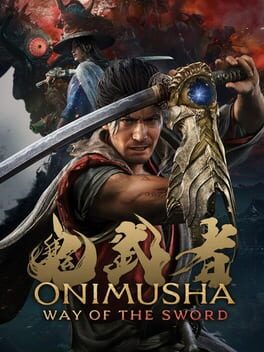
When Capcom finally lifted the veil on Onimusha: Way of the Sword, the gaming world witnessed the convergence of two powerful currents: the nostalgic revival of a beloved 2000s franchise and the modern imperative to make high‑skill action titles approachable to a broader audience. The Onimusba series, once a flagship of early‑generation PlayStation’s cinematic samurai action, has been dormant for over a decade, leaving a generation of players yearning for a return to Miyamoto Musashi’s blade‑wielding exploits. In an era where retro reboots—from Resident Evil Village’s reimagined corridors to the remastered Crash Bandicoot—are not merely cash grabs but strategic moves to re‑engage lapsed fans, Capcom’s latest entry arrives at a moment when the market rewards both reverence for legacy and innovation in player experience.
Yet the excitement was tempered by a familiar refrain: modern action games, especially those that demand precise timing and relentless reflexes, have become gatekeepers. Titles such as Sekiro and the Dark Souls lineage have cultivated a reputation for punishing difficulty, which, while celebrated by hardcore circles, can alienate newcomers and casual players seeking narrative immersion over mechanical mastery. The industry’s response has been a proliferation of “easy” or “story” modes, a trend that reflects a shifting business model where player retention and inclusivity are as valuable as pure difficulty. Capcom’s decision to embed a dedicated Story (Storyline Focus) mode directly into Onimusha: Way of the Sword signals its awareness of this evolution and its desire to expand the franchise’s demographic reach without sacrificing the core combat identity that defined the series.
What Happened?
Capcom’s announcement detailed a bifurcated difficulty system: the traditional Action (Combat Focus) mode, which pits players against relentless enemy patterns and razor‑thin timing windows, and the newly minted Story mode, explicitly marketed toward “action game beginners.” In Story mode, enemy damage output is curtailed, player damage is amplified, and the most crucial change—parry windows are widened, granting a more forgiving margin for timing. These adjustments, while seemingly modest on paper, recalibrate the entire combat loop, allowing players to experience the rhythmic flow of Musashi’s swordplay without the frustration of repeated, unforgiving deaths that have historically characterized boss encounters.
The crown jewel of Story mode is the Action Prompts system, a contextual overlay that activates by default in this difficulty tier. When a parry opportunity arises, a subtle icon or visual cue appears, indicating the precise moment to press the block button. This is not a mere tutorial pop‑up; it is an in‑combat, die‑get‑you‑back‑into‑the‑action mechanic that dynamically adapts to the player’s performance, offering guidance only when the system detects a missed timing. By integrating this feedback directly into the heat of battle, Capcom transforms the learning curve from a series of isolated training sessions into a seamless, iterative teaching process, effectively democratizing the art of parrying for players who might otherwise abandon the experience in frustration.
Analysis
From a market perspective, the inclusion of an adaptive, tutorial‑driven easy mode could markedly expand Onimusha’s appeal beyond its legacy fanbase. Historical data from similar implementations—such as the “Assist Mode” in Dark Souls III or the “Easy Mode” in Nioh 2—demonstrate measurable upticks in sales among casual players and a reduction in churn rates during the early weeks post‑launch. Moreover, the Action Prompts system aligns with a broader industry shift toward “learning by doing” design philosophies, where real‑time assistance replaces static manuals. This approach not only satisfies the growing demand for inclusive game design but also positions Capcom to capture a slice of the lucrative mid‑core segment that sits between hardcore enthusiasts and narrative‑driven gamers.
However, the technical and design challenges inherent in retrofitting a historically unforgiving combat system should not be underestimated. Balancing the widened parry windows and damage scaling without diluting the visceral satisfaction of a perfectly timed block requires meticulous playtesting. There is also a risk that the presence of on‑screen prompts could erode the sense of mastery that long‑time fans cherish, potentially fragmenting the community into “purists” and “assist‑mode” players. If not handled delicately, the dichotomy could spawn a perception that the core experience has been compromised for broader accessibility, a criticism that has haunted previous franchise revivals when developers appeared to prioritize sales over authenticity.
XPLog Opinion
At XPLog UK, we view Capcom’s Story mode as a bold, if calculated, gamble that could set a new benchmark for how legacy action titles reconcile heritage with modern inclusivity. The Action Prompts feature, in particular, exemplifies a thoughtful design philosophy: it respects the game’s combat depth while offering a scaffold for players to climb the learning curve. While we remain vigilant about the potential for “dumbed‑down” backlash, the evidence suggests that a well‑executed easy mode can broaden a title’s lifespan, foster a more diverse player community, and ultimately reinforce the franchise’s relevance in a crowded market.
Final Thoughts
Onimusha: Way of the Sword’s Story mode does more than lower the difficulty bar—it reimagines how a classic sword‑play system can teach, rather than punish, its audience. As Capcom rolls out post‑launch patches and potentially expands the Action Prompts framework to other titles, the industry will be watching to see whether this model can become a template for future revivals. Players should keep an eye on the upcoming November DLC, which promises to introduce new boss encounters that will test both the traditional and assisted combat pathways, offering a definitive litmus test for the long‑term viability of Capcom’s accessibility strategy.