.png)
Overview
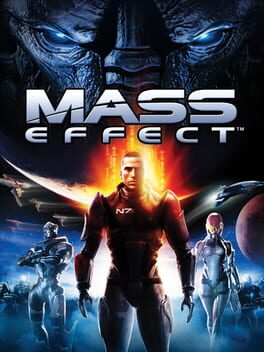
When the next generation of consoles entered the market, developers rushed to fill the vacuum left by veteran studios that had either shuttered or shifted focus. The legacy of BioWare’s Mass Effect, a franchise that defined narrative‑driven sci‑fi RPGs for a decade, has become a benchmark for any studio daring to tackle interstellar storytelling with branching choices, deep characterisation and a living galaxy. In the wake of BioWare’s recent restructuring and the mixed reception to its latest releases, both publishers and players have been yearning for a fresh take that can recapture the blend of cinematic scope and player agency that made the original trilogy a cultural touchstone.
Enter Exodus, the upcoming PlayStation 5 exclusive that promises to stitch together the expertise of former BioWare, Naughty Dog, and EA veterans under the banner of a new, ambitious IP. Announced amid the bustling corridors of Gamescom, the title arrived with a striking visual identity: a universe populated by sentient amphibians and ursine alien races, a bold aesthetic choice that signals an intent to differentiate itself from the human‑centric narratives of its predecessors. The involvement of high‑profile talent such as Matthew McConaughey, slated to lend his voice to a pivotal character, further underscores the publisher’s desire to blend blockbuster Hollywood appeal with interactive depth, a formula that has proven lucrative for titles like Horizon Forbidden West and the recent God of War entries.
What Happened?
During a hands‑on demo at Gamescom, the development team revealed that Exodus will leverage the PS5’s custom SSD and Tempest 3D AudioTech to deliver seamless planetary transitions and immersive soundscapes that react to player decisions in real time. The game’s engine, a heavily modified iteration of the proprietary framework used in previous Naughty Dog projects, has been tuned to render complex AI‑driven ecosystems where frog‑like diplomats negotiate trade routes while bear‑like warlords enforce territorial claims. This level of procedural narrative ambition is positioned as a direct response to community feedback that recent RPGs have become too linear, offering instead a living galaxy that evolves with each playthrough.
Executive producer Lena Ortiz, speaking on the press stage, emphasized that Exodus is not merely a “Mass Effect clone” but a reimagining of the space‑opera genre that integrates player‑driven diplomacy, resource management, and combat that blends third‑person shooter mechanics with tactical squad commands. The studio has also confirmed a multi‑year post‑launch support roadmap, including DLC expansions that will introduce new star systems, a robust modding toolkit for the community, and cross‑play considerations for future PC ports. By anchoring the launch on the PS5’s hardware strengths while promising a long‑term content pipeline, the publisher aims to secure a foothold in the lucrative premium‑price segment that has historically been dominated by established franchises.
Analysis
From a market perspective, Exodus arrives at a juncture where Sony is actively courting exclusive experiences to differentiate the PS5 from its rivals, particularly Microsoft’s Xbox Series X|S, which has leaned heavily on Game Pass subscriptions. The decision to make Exodus a timed‑exclusive not only bolsters Sony’s first‑party lineup but also signals confidence that a high‑budget, narrative‑centric RPG can still command premium retail prices in an era increasingly dominated by subscription models. Moreover, the involvement of industry veterans from BioWare and Naughty Dog mitigates the risk associated with launching a new IP; their collective pedigree provides a pedigree that can attract both legacy fans and newcomers seeking fresh storytelling horizons.
Technical ambition, however, introduces potential hurdles. The promise of dynamically shifting ecosystems and real‑time AI negotiations demands rigorous testing to avoid performance bottlenecks, especially on a console architecture that, while powerful, still imposes strict memory constraints. If the development team can deliver a smooth, lag‑free experience, Exodus could set a new standard for open‑world sci‑fi RPGs, prompting competitors to invest in similar AI‑driven worldbuilding. Conversely, any shortcomings could reinforce the narrative that only established franchises can reliably deliver such scale, potentially dampening publisher willingness to fund comparable next‑gen experiments.
XPLog Opinion
At XPLog UK we view Exodus as a litmus test for the viability of ambitious, story‑first RPGs in a market that increasingly rewards rapid content delivery over deep, handcrafted experiences. The title’s blend of cinematic talent, veteran development talent, and next‑gen hardware utilisation positions it as a potential flagship that could reinvigorate the single‑player space‑opera niche. Should the game deliver on its promises, it will not only fill the void left by Mass Effect’s recent missteps but also reaffirm that large‑scale, narrative‑driven titles still have a profitable home on premium consoles.
Final Thoughts
Exodus stands poised to become a defining moment for the PS5’s exclusive catalogue, with a projected launch window in early 2025 and a suite of post‑launch updates that could keep the conversation alive for years. As the industry watches, the title will serve as a barometer for whether the next generation can sustain the kind of deep, choice‑laden storytelling that once made Mass Effect a household name. Keep an eye on upcoming developer diaries, performance benchmarks, and the first wave of community feedback, all of which will shape the narrative around Exodus’s ultimate impact on the console ecosystem and the broader RPG landscape.