.png)
Overview
For over a decade Nintendo has relied on its succinct Direct presentations to punctuate the rhythm of the console market, delivering surprise announcements in a tightly controlled, highly polished format. The decision to schedule two full‑length Directs back‑to‑back is therefore a seismic shift, suggesting the company believes the upcoming content is potent enough to sustain two separate global broadcasts without diluting audience enthusiasm. This unprecedented move arrives at a moment when the Switch family is approaching the twilight of its hardware cycle, and the long‑rumoured “Switch 2” – a next‑generation hybrid platform – is finally edging out of the shadows. By sandwiching a franchise‑defining celebration between broader hardware and software reveals, Nintendo is effectively using the cultural weight of The Legend of Zelda to shepherd its next console generation into the public consciousness.
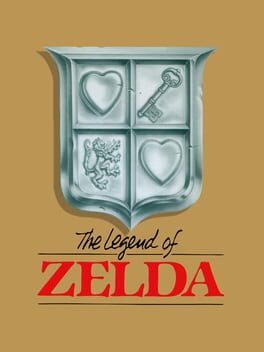
The Zelda franchise, now entering its 40th anniversary, carries a legacy that rivals any in gaming history. Since the launch of the original 1986 adventure, the series has repeatedly redefined narrative scope, gameplay innovation, and technological ambition, with 1998's Ocarina of Time often cited as the watershed moment that transformed 3D game design. Past remasters – from Wind Waker HD to the 2019 Link’s Awakening – have demonstrated Nintendo’s ability to re‑contextualize beloved titles for modern hardware while preserving the core experience. In a market increasingly dominated by live‑service shooters and photorealistic open worlds, a high‑profile Zelda revival not only reaffirms Nintendo’s commitment to auteur‑driven, single‑player experiences but also offers a potent counter‑programming strategy against the narrative‑driven releases from Sony and Microsoft.
What Happened?
In the first of the twin Directs, Nintendo confirmed that the next week will feature a dedicated Zelda celebration, marking four decades of Hyrule’s mythos. The broadcast opened with a meticulously crafted 30‑second montage that juxtaposed iconic imagery from the original Ocarina of Time with freshly rendered, high‑definition visuals that hint at a substantial graphical overhaul. While concrete specifications were withheld, the teaser unmistakably signalled a full remake rather than a simple port, and the accompanying voice‑over confirmed a release window later this year on the forthcoming Switch 2 hardware. This aligns with the timeline first hinted at in June, when the company teased the project’s existence without revealing a title or platform.
Beyond the Ocarina showcase, the Direct featured comments from series veterans Eiji Aonuma and Yoshiaki Koizumi, who spoke of “re‑imagining the adventure for a new generation of players while honoring the emotional beats that made the original a cultural touchstone.” The presenters also hinted at a broader ecosystem rollout, mentioning cross‑title tie‑ins, a limited‑edition collector’s box, and a planned “Zelda Month” of in‑game events across the Nintendo eShop. Though the hardware specifics of the Switch 2 remain under wraps, the announcement subtly emphasized its enhanced processing capabilities, faster SSD storage, and a higher refresh‑rate display—features that would directly benefit a high‑fidelity Zelda remake.
Analysis
The timing of this dual‑Direct strategy dovetails with Nintendo’s need to inject fresh excitement into a hardware platform that, despite its commercial success, is beginning to show its age against the raw power of the PlayStation 5 and Xbox Series X. By leveraging Zelda’s anniversary, Nintendo can generate a wave of pre‑order intent for the Switch 2, mirroring the “Mario Day” hype that propelled the original Switch’s launch in 2017. Moreover, the decision to anchor the remake on next‑gen hardware rather than a late‑cycle Switch update signals confidence that the new console will ship in sufficient numbers to justify a premium, flagship title—a gamble that could pay dividends if the launch window captures the holiday buying season.
From a development perspective, re‑creating Ocarina of Time for modern hardware is no trivial undertaking. The original engine was built around the Nintendo 64’s fixed‑function pipeline, and translating its intricate level geometry, dynamic weather system, and iconic time‑travel mechanics into a fully ray‑traced, 4K‑capable environment will demand substantial engine re‑work or a complete rebuild. This technical ambition carries risk: any misstep could alienate purists who cherish the original’s feel, while also exposing the new console’s performance ceiling. Nonetheless, success would cement the Switch 2 as a true next‑generation platform capable of delivering both nostalgic reverence and cutting‑edge visual fidelity, potentially attracting third‑party studios that have previously hesitated to target Nintendo hardware.
XPLog Opinion
At XPLog we view Nintendo’s twin‑Direct gamble as a masterclass in brand‑centric product strategy: by anchoring the Switch 2 launch to a universally revered franchise, Nintendo sidesteps the usual reliance on speculative hardware specs and instead offers a concrete, emotionally resonant reason for consumers to upgrade. While the market will undoubtedly scrutinise the remake’s fidelity to its predecessor, the broader implication is clear—Nintendo is positioning itself not merely as a hardware contender but as the curator of gaming heritage, a role that could safeguard its relevance in an ecosystem increasingly driven by graphical horsepower and live‑service revenue models.
Final Thoughts
In sum, the back‑to‑back Directs represent a calculated convergence of nostalgia, technology, and market timing that could redefine Nintendo’s trajectory for the remainder of the decade. Players should mark their calendars for the upcoming broadcasts, keep an eye on any revealed performance benchmarks for the Switch 2, and brace for a potential flood of anniversary‑related content that may extend well beyond the initial launch window. The next few months will be decisive in determining whether Zelda’s 40th‑year celebration becomes the catalyst that propels Nintendo into a new era of growth or merely a fleeting flash of nostalgia in an increasingly competitive console landscape.