Overview
The indie ecosystem has long been a crucible for experimentation, where the boundaries of gameplay, narrative, and aesthetics are constantly tested. In recent years, Sony Interactive Entertainment has leaned heavily into this philosophy under the stewardship of Shuhei Yoshida, the former head of PlayStation’s indie initiatives, whose tenure saw the rise of titles such as "Journey" and "Journey of the Broken Circle" that married minimalist design with profound emotional resonance. Parallel to this, Jordan Magnuson, the founder of the seminal TIGSource community, cultivated a digital agora where aspiring developers could share prototypes, critique each other's work, and collectively push the medium forward. Their combined pedigree represents two pillars of modern indie culture: corporate‑backed support and grassroots collaboration.
Against this backdrop, the announcement of a joint Game Poem jam for the weekend of 7‑8 September signals a deliberate pivot toward interdisciplinary creation. While game jams have traditionally focused on rapid prototyping of mechanics and visuals, this event explicitly asks participants to weave lyrical verse around the act of play itself, effectively treating code and poetry as interchangeable tools of expression. In an industry increasingly obsessed with monetisation metrics, the decision to foreground artistic dialogue over commercial deliverables is both a nostalgic nod to the early days of experimental game development and a forward‑looking experiment in how creators might engage audiences beyond the screen.
What Happened?
The initiative, billed as a “Game Poem jam,” invites developers, writers, and musicians to submit original works that blend gameplay concepts with poetic structures, all under the thematic umbrella of celebrating Yoshida’s legacy and Magnuson’s TIGSource ethos. Submissions are accepted from midnight UTC on Monday 7 September until the close of Tuesday 8 September, with the expectation that each entry will include a playable prototype (or at least a detailed design document) accompanied by a poem that either narrates the player’s journey, deconstructs game mechanics, or reimagines the interactive experience as a literary form. The jam’s promotional materials emphasize “sick rhymes” as a tongue‑in‑cheek challenge, yet the underlying intent is serious: to catalyse a dialogue between two historically distinct creative practices.
Organisers have outlined a straightforward judging process: a panel comprising Yoshida, Magnuson, and a rotating roster of indie veterans will evaluate entries on criteria such as thematic cohesion, innovative use of interactivity, and the poetic quality of the written component. Winners will receive not only a modest cash prize but also the opportunity to showcase their work at an upcoming PlayStation Indie Spotlight event, potentially securing mentorship from Sony’s indie development team. By positioning the jam within Sony’s broader indie outreach program, the organizers aim to surface fresh talent that can thrive in a hybrid creative space, while also reinforcing the company’s reputation as a patron of avant‑garde experimentation.
Analysis
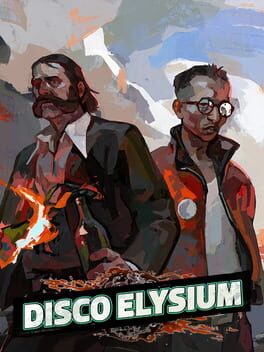
The convergence of game design and poetry taps into a growing market trend where players seek deeper narrative resonance and artistic authenticity. Recent successes of titles like "Outer Wilds" and "Disco Elysium" demonstrate that audiences are willing to invest in experiences that challenge conventional storytelling frameworks, and a jam that foregrounds lyrical expression could unearth concepts that align with this appetite. Moreover, by framing the event as a collaborative venture between a former Sony executive and a community‑driven founder, the jam blurs the line between corporate sponsorship and independent creativity, potentially setting a template for future cross‑sector partnerships that leverage brand legitimacy without stifling artistic freedom.
From a competitive standpoint, Sony’s move could be interpreted as a strategic counter‑measure to Xbox’s recent emphasis on Game Pass exclusives and Nintendo’s push for family‑friendly indie showcases. By nurturing a pipeline of creators who are comfortable operating at the intersection of code and verse, Sony may cultivate a unique catalogue of titles that differentiate its platform in an increasingly homogenised market. However, the technical demands of integrating poetic narrative structures into interactive frameworks pose non‑trivial challenges; developers must reconcile the linear nature of verse with the branching possibilities of gameplay, a tension that could either yield groundbreaking mechanics or expose limitations in current development tools.
XPLog Opinion
At XPLog UK we view this Game Poem jam as a bold, if somewhat whimsical, experiment that could recalibrate how the industry perceives the role of art in game creation. The initiative invites creators to question whether the emotional weight of a well‑crafted poem can augment—or even supplant—the traditional reliance on cinematic cut‑scenes and voice‑over narration. If successful, it may inspire a new sub‑genre of “poetic games” that prioritize linguistic rhythm and metaphorical gameplay loops, offering core gamers a fresh avenue for intellectual and aesthetic engagement.
Final Thoughts
The September jam is more than a weekend diversion; it is a litmus test for the viability of cross‑disciplinary indie development under the aegis of a major console manufacturer. As the submission deadline approaches, industry watchers will be keen to see which concepts manage to harmonise code and cadence, and whether any of those prototypes evolve into full‑scale releases that reshape player expectations. Keep an eye on the PlayStation Indie Spotlight later this year, where the most compelling entries are slated to be exhibited, potentially heralding a new chapter in the symbiosis of gaming and poetry.
.png)
 XPLog
04 Sep 2026
4 min read
XPLog
04 Sep 2026
4 min read