.png)
Overview
When Sucker Punch announced the Ghost of Tsushima Complete Edition earlier this year, the industry buzzed not only about the polished visual overhaul for next‑gen hardware but also about the ambitious post‑launch content strategy that Sony’s flagship franchise has embraced. In a market where live‑service titles dominate the revenue charts, a premium single‑player experience that layers a roguelike framework onto an established IP is a bold gamble, one that reflects a broader trend of developers seeking to extend the shelf‑life of narrative‑driven games without diluting their core identity. The decision to embed a combat‑centric, procedurally‑driven mode within a historically grounded samurai saga demonstrates how developers are marrying the replayability of indie mechanics with the production values of AAA titles, a hybrid that could reshape expectations for future expansions.
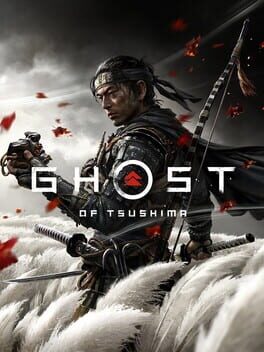
Jin Sakai, the stoic protagonist whose journey from reluctant warrior to legendary ghost has become synonymous with the Ghost of Tsushima brand, has long been the emotional anchor for the series. Since the original 2020 launch, Jin’s arc has been dissected in countless think pieces, praised for its nuanced portrayal of honor versus survival in feudal Japan. Re‑introducing him as a selectable avatar in the newly minted Most Wanted mode is more than a fan‑service cameo; it is a strategic move that leverages his iconic status to draw both veteran fans and newcomers into a mode that promises high‑stakes, skill‑based encounters. This re‑entry also signals Sucker Punch’s intent to keep the character relevant as the franchise expands its narrative universe.
What Happened?
The latest update to Ghost of Tsushima Complete Edition unveils the Most Wanted mode, a single‑player experience that adopts roguelike conventions—randomised enemy placements, escalating difficulty tiers, and permanent death mechanics—while staying true to the series’ hallmark swordplay. In this iteration, Jin Sakai joins three other combatants: the agile scout Atsu, the graceful duelist Oyuki, and the freshly introduced samurai Nagato, each equipped with distinct fighting styles, weapon upgrades, and passive perks that reshape the flow of each run. Players are thrust into a series of increasingly brutal skirmishes across reimagined locales of Tsushima, where mastery of timing, parry, and stamina management becomes the key to survival.
Accompanying the mode’s launch is the Echoes of Sekigahara expansion, a narrative‑driven add‑on that revisits the pivotal 1600 battle through the eyes of new characters while weaving Jin’s legacy into the broader tapestry of the era. Development lead Hiroki Nakamura hinted that the team drew inspiration from classic arcade challenges and modern titles such as Hades, aiming to blend the visceral immediacy of samurai combat with the procedural excitement that keeps players returning night after night. The announcement, delivered at a streamed PlayStation Showcase, emphasized that the mode will receive regular balance patches and seasonal challenges, positioning it as a living service within the otherwise closed‑loop single‑player ecosystem.
Analysis
From a market perspective, Ghost of Tsushima’s foray into roguelike territory arrives at a time when the genre’s commercial viability has been cemented by titles that marry deep narrative with looped gameplay—Hades, Returnal, and even the recent resurgence of Diablo IV. By embedding such mechanics into an established IP, Sucker Punch is effectively diversifying its revenue streams while mitigating the risk of post‑launch fatigue that often plagues story‑driven games. Moreover, the inclusion of multiple playable characters with unique skill trees creates a micro‑economy of content that can be monetised through cosmetic upgrades or seasonal passes without compromising the core experience, a model that has proven lucrative for both Ubisoft’s Assassin’s Creed Infinity experiments and Nintendo’s Splatoon 3 seasonal rotations.
Technical execution will be the decisive factor. Implementing procedural enemy spawns and adaptive AI within the tightly choreographed combat system that defined the original game demands a delicate balance; too much randomness could erode the deliberate pacing that fans cherish, while insufficient variation risks rendering the mode a mere novelty. Early playtests suggest Sucker Punch has invested heavily in a modular AI framework that can reinterpret enemy behaviours on the fly, a step forward that could set a new benchmark for action‑oriented roguelikes on consoles. Should the mode achieve stability across both PlayStation 5 and PC, it may encourage other legacy franchises to experiment with similar hybrid expansions, potentially reshaping the post‑launch roadmap for narrative heavyweights.
XPLog Opinion
At XPLog we view Jin’s return to the playable roster as a calculated masterstroke that underscores the franchise’s adaptability; the move not only revitalises the core character for a fresh audience but also demonstrates that even mature, story‑centric titles can successfully graft replay‑centric systems without diluting their identity. If the Most Wanted mode delivers on its promise of relentless, skill‑based combat, it will cement Ghost of Tsushima as a case study in how premium AAA studios can harness roguelike design to extend a game’s lifespan, keeping the community engaged long after the main narrative has concluded.
Final Thoughts
In sum, the integration of Jin Sakai into Ghost of Tsushima’s Most Wanted mode marks a pivotal evolution for the series, blending the gravitas of its historic storytelling with the addictive loop of modern roguelikes. As the Complete Edition rolls out across platforms this autumn, players and analysts alike will be watching closely to see whether the mode’s procedural challenges can coexist with the franchise’s revered combat philosophy. The next major update, slated for early 2027, promises additional character skins and a community‑driven leaderboard—milestones that will reveal whether this hybrid approach is a fleeting experiment or the blueprint for the next generation of single‑player expansions.