.png)
Overview
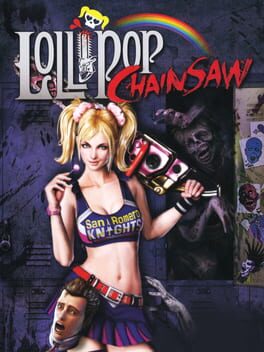
The gaming landscape of 2026 is witnessing a resurgence of niche, stylised action titles that blend over‑the‑top aesthetics with tight, nostalgic gameplay mechanics. Within this climate, the announcement that Juliet Starling, the iconic cheerleader‑turned‑chainsaw‑wielding heroine, will reappear in a brand‑new Lollipop Chainsaw installment is more than a nostalgic footnote; it is a litmus test for how legacy IPs can be re‑engineered for modern consoles while retaining their cult‑core appeal. The original 2012 release, a product of Grasshopper Manufacture’s eccentric vision and Suda51’s flair for the absurd, carved a unique niche by marrying beat‑'em‑up combat with a flamboyant, horror‑infused narrative. Its sudden disappearance from the market left a vacuum that indie developers and retro‑focused publishers have been eager to fill, and the current revival arrives at a moment when the market is hungry for distinct, personality‑driven experiences that stand apart from the homogenised AAA pipelines.
From a macro‑industry perspective, the timing aligns with SEGA’s renewed push to leverage its extensive catalogue across Asia, a region that has historically embraced quirky, character‑centric titles. By positioning the new Lollipop Chainsaw at this year’s Tokyo Game Show (TGS) and securing distribution through SEGA for Japan and Southeast Asia, the custodians Dragami Games are signalling a strategic partnership that could revitalize both the franchise and SEGA’s brand equity in markets where anime‑style aesthetics dominate consumer preferences. Moreover, the decision to showcase the game at TGS—a venue renowned for unveiling bold, genre‑defying projects—underscores the developers’ confidence that Juliet’s return will resonate not just with nostalgic fans but also with a new generation seeking fresh, high‑octane action.
What Happened?
Earlier this year, Dragami Games, a studio that has cultivated a reputation for breathing new life into dormant franchises, formally announced the development of a sequel to Lollipop Chainsaw. The studio’s statement highlighted an ambition to expand the narrative universe, introducing new antagonists, a deeper combat system, and an upgraded visual pipeline that leverages the capabilities of current‑gen hardware. While concrete gameplay footage remains limited, the teaser showcased Juliet wielding a more elaborate chainsaw, alongside a roster of supporting characters that hint at a richer, interconnected storyline. The announcement also confirmed that the title will be playable at SEGA’s booth during TGS, granting attendees a hands‑on preview that will likely shape pre‑release expectations across the region.
In addition to the gameplay reveal, the partnership details were disclosed: SEGA will act as the primary distributor for the Japanese and Southeast Asian markets, a move that reflects SEGA’s broader strategy to act as a conduit for Western‑origin IPs seeking footholds in Asian territories. This arrangement is expected to streamline localisation processes, leverage SEGA’s established retail channels, and provide a robust marketing push that aligns with the region’s seasonal buying cycles. Dragami’s leadership also hinted at post‑launch support, including potential DLC expansions and cross‑platform play, suggesting an intent to cultivate a long‑term service model rather than a one‑off nostalgic cash‑in.
Analysis
The revival of Lollipop Chainsaw arrives at a crossroads where legacy IPs are either resurrected as polished, mainstream franchises or relegated to niche, collector‑shelf curiosities. By aligning with SEGA, Dragami Games sidesteps the pitfalls of limited distribution and taps into a network that can amplify the title’s visibility across multiple console ecosystems, notably PlayStation, Xbox, and Nintendo Switch—platforms that dominate the Asian market. This multi‑platform approach mitigates risk, ensuring that the game can capture both core gamers who appreciate the original’s frenetic combat and newer audiences drawn to the high‑energy, stylised aesthetic. Moreover, the decision to enhance the combat system with deeper combos, parry mechanics, and adaptive AI reflects an industry‑wide shift towards rewarding skill‑based play, a trend popularised by titles such as Bayonetta 3 and Devil May Cry 5.
From a market dynamics standpoint, the title’s release could catalyse a modest resurgence in the ‘guilty‑pleasure’ action sub‑genre, prompting competitors to revisit dormant franchises with similar tonal flair. However, the project also faces technical hurdles: delivering a fluid, high‑frame‑rate experience across disparate hardware while preserving the series’ signature visual flamboyance demands meticulous optimisation. If Dragami succeeds, it could set a benchmark for how mid‑tier studios handle legacy revivals, potentially influencing publishing strategies for other niche IPs like No More Heroes or Killer7, which have long awaited a modern reinterpretation.
XPLog Opinion
At XPLog UK we view Juliet’s return not merely as a nostalgic cash‑grab but as a calculated gamble that, if executed with the right balance of reverence and innovation, could re‑establish Lollipop Chainsaw as a flagship example of how personality‑driven design can thrive in a market saturated with photorealistic shooters. The collaboration with SEGA signals a pragmatic understanding of regional market nuances, and the promised gameplay refinements suggest Dragami is listening to the community’s call for depth without sacrificing the series’ over‑the‑top charm. In short, this is a moment where a beloved cult classic could finally claim its place in the modern era, and we’ll be watching closely to see whether it delivers on that promise.
Final Thoughts
As TGS approaches, the upcoming hands‑on demo will serve as the first litmus test for both fan reception and critical appraisal, setting the tone for a launch window that could extend into late 2026 or early 2027 depending on regional rollout strategies. Stakeholders should keep an eye on SEGA’s post‑show press releases for exact release dates, platform specifics, and any announced post‑launch content pipelines. If the demo lives up to its hype, Juliet Starling’s resurgence may well become a case study in how legacy franchises can be revitalised through strategic partnerships, technical ambition, and a clear-eyed respect for the fanbase that kept the brand alive for over a decade.