.png)
Overview
When Square Enix and Disney first joined forces to create Kingdom Hearts in 2002, the industry witnessed an unprecedented marriage of two heavyweight intellectual properties: the whimsical, family‑friendly world of Disney animation and the mythic, action‑rpg sensibilities of Final Fantasy. The resulting franchise not only carved out a niche for itself but also demonstrated the commercial viability of cross‑company collaborations that blend disparate tonalities into a cohesive gameplay experience. Over the ensuing two decades, Kingdom Hearts evolved from a curiosity into a multi‑billion‑dollar juggernaut, spawning sequels, spin‑offs, and a fervent fanbase that eagerly consumes every new reveal, from story‑driven DLC to remastered editions on every major console generation.
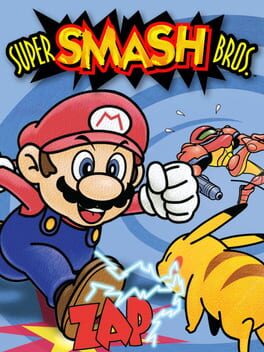
Behind the scenes, the success of Kingdom Hearts sparked a deeper strategic conversation at The Walt Disney Company. Executives, noting the franchise’s ability to unite characters from Pixar, Marvel, Lucasfilm and classic Disney shorts under a single gameplay umbrella, began to entertain the notion that a broader, competitive fighting title could capitalize on the same cross‑brand synergy. The idea was not merely a vanity project; it was a calculated response to the sustained dominance of Nintendo’s Super Smash Bros. series, which has become a cultural touchstone and a de‑facto showcase for legacy characters across the gaming spectrum. Disney’s internal teams, buoyed by the financial and brand‑awareness lift provided by Kingdom Hearts, briefly embarked on a prototype that would have placed Mickey, Donald, Goofy, and a host of Marvel and Star Wars avatars into a brawler reminiscent of Smash’s chaotic, platform‑based combat.
What Happened?
According to a former developer who worked on the secretive Disney project, the early stages involved assembling a small, cross‑disciplinary squad drawn from Disney Interactive Studios, Square Enix, and a handful of external fighting‑game veterans. The team’s mandate was to prototype a “crossover arena” that could accommodate the wildly different move‑sets and visual styles of characters ranging from the slap‑stick antics of Chip ‘n Dale to the kinetic powers of Iron Man. Early builds featured a hybrid physics engine that attempted to balance the cartoonish weightlessness of classic Disney figures with the more grounded, hit‑box‑focused mechanics that seasoned fighting‑game players expect.
Despite the enthusiasm, the prototype quickly ran into a series of practical and strategic roadblocks. Licensing complexities loomed large; each property—Marvel, Lucasfilm, Pixar, and the classic Disney catalog—required separate clearance, and the contractual negotiations threatened to stall development indefinitely. Moreover, internal market analysis revealed that launching a new fighting franchise in a space already dominated by Nintendo’s polished, annually refreshed Smash titles would demand a massive marketing spend and a clear differentiator beyond mere brand recognition. By late 2023, the project was shelved, with senior Disney leadership opting to double‑down on the proven Kingdom Hearts formula rather than gamble on an untested competitive arena.
Analysis
The brief foray into a Smash‑style brawler underscores a broader industry trend: legacy media conglomerates are increasingly eyeing the interactive space not just as a distribution channel but as a strategic brand‑extension platform. Disney’s flirtation with a fighting game reflects its recognition that modern gamers value interactivity that allows them to live out cross‑franchise fantasies—a desire that has been validated by the runaway success of titles like Super Smash Bros., Fortnite’s ever‑expanding crossover roster, and even the recent resurgence of Marvel vs. Capcom. However, the logistical quagmire of securing rights across dozens of IPs, coupled with the technical challenge of delivering a balanced competitive experience, illustrates why many such ambitions remain in the prototype stage.
From a market perspective, the decision to abandon the project likely preserved Disney’s capital for higher‑ROI ventures, such as continued investment in Kingdom Hearts sequels and the upcoming Disney Infinity‑style live‑service experiments. Yet the episode also serves as a cautionary tale for other publishers: the allure of a “Super Smash”‑type platform is potent, but the execution risk is equally high. Companies that have successfully launched crossover fighters—most notably Nintendo with Smash and Capcom with the revived Marvel vs. Capcom series—have benefited from decades of internal IP ownership and a deep understanding of competitive balance, assets Disney does not possess in the same way.
XPLog Opinion
At XPLog UK we view Disney’s aborted Smash‑style experiment as both a missed opportunity and a pragmatic self‑preservation move; the studio wisely recognized that a half‑cooked brawler could dilute the premium aura of its flagship franchises. Nonetheless, the very fact that Disney entertained the concept signals a shifting mindset within traditional media houses: they are no longer content to be passive licensors but are actively exploring interactive formats that could redefine how fans engage with beloved characters. Future success will hinge on Disney’s ability to harness its narrative strengths while partnering with seasoned fighting‑game developers who can translate those narratives into mechanically sound, e‑sport‑ready experiences.
Final Thoughts
While the Disney‑Super Smash crossover will likely remain a footnote in gaming history, its brief existence offers a compelling glimpse into how powerful IPs can inspire ambitious, if ultimately unrealized, projects. As Kingdom Hearts continues to expand—its next major release slated for early 2025—players can expect Disney to double‑down on the formula that proved successful, while keeping a watchful eye on the evolving competitive fighting market. The industry will be watching closely for any future announcements that might finally bring Disney’s sprawling character zoo into a true arena showdown.