.png)
Overview
After a decade of operating under the Microsoft banner, Double Fine Productions re‑emerged in 2024 as a fully independent studio, shedding the corporate safety net that had both enabled and constrained its most experimental titles. The studio’s recent pivot toward community‑driven development reflects a broader industry shift: veteran developers are leveraging the goodwill they earned during the console‑first era to tap directly into the passionate core‑gamer audience that still craves the quirky, narrative‑heavy experiences Double Fine popularised with titles like *Psychonauts* and *Brütal Legend*. The launch of the “AMNESIA FORTNIGHT” Kickstarter—a hybrid game‑jam and voting platform—represents a calculated gamble, positioning the studio not just as a content creator but as a curator of player‑generated ideas, a model that aligns with the participatory ethos of modern gaming culture.
In the current market, Kickstarter campaigns that surpass the six‑figure mark are becoming increasingly common, yet the gulf between modest indie projects and blockbuster‑scale stretch goals remains stark. The indie funding ecosystem has matured, with backers now demanding transparent roadmaps, realistic timelines, and tangible deliverables. Within this context, Double Fine’s decision to attach a $100 million USD stretch goal—essentially the budget of a mid‑tier triple‑A title—to a campaign that is already flirting with the £300,000 threshold is a bold, if not audacious, statement about the studio’s confidence in its brand equity and the nostalgic pull of *Brütal Legend*.
What Happened?
The “AMNESIA FORTNIGHT” campaign, launched in early August 2026, invited supporters to vote on prototype concepts submitted by the community, with the most popular ideas receiving development resources. As of early September, the fundraiser has amassed £296,238, just shy of its primary goal, and the campaign’s momentum shows no sign of waning with a full month remaining. This rapid accumulation of funds underscores Double Fine’s enduring reputation among core gamers, many of whom view the studio as a bastion of creative freedom in an industry increasingly dominated by live‑service models.
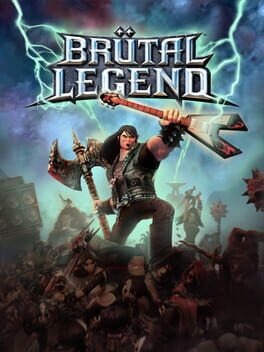
Embedded within the campaign’s stretch‑goal tier list is a headline‑grabbing promise: should the collective backers somehow marshal an unprecedented $100 million, Double Fine will resurrect *Brütal Legend* for a full sequel. The studio’s public statement frames the target as “seemingly impossible,” yet it is presented with a tongue‑in‑cheek resolve—“We aren’t joking”—that both acknowledges the absurdity of the figure and leverages the community’s love for the original 2009 title. No concrete development roadmap or staffing plan accompanies the claim, leaving the feasibility of a $100 million production entirely speculative, but the mere inclusion of such a lofty goal has ignited fervent discussion across forums, social media, and industry analysis blogs.
Analysis
From a market‑performance perspective, the $100 million stretch goal functions less as a realistic funding target and more as a marketing catalyst. Comparable high‑profile Kickstarter stretch goals—such as the $30 million pledge for *Star Citizen*—have demonstrated how lofty numbers can sustain long‑term media attention, even when actual delivery timelines slip. Double Fine’s move could therefore be interpreted as a strategic effort to keep the campaign in the public eye, driving incremental pledges that, while insufficient to meet the $100 million mark, may push the final tally well beyond the original £300,000 aim. However, the risk lies in the potential erosion of trust; if backers perceive the stretch goal as a gimmick rather than a genuine promise, future crowdfunding efforts could suffer credibility damage.
Competitively, the announcement positions Double Fine at an intriguing intersection of nostalgia‑driven publishing and indie agility. A *Brütal Legend* sequel would inevitably compete with heavyweight titles on both Xbox and PlayStation platforms, leveraging the franchise’s established fanbase while also testing the studio’s capacity to deliver a technically sophisticated, open‑world action‑adventure on modern hardware. The technical challenges—recreating the series’ signature heavy‑metal aesthetic, integrating next‑gen audio pipelines, and scaling AI for larger battle scenarios—are non‑trivial, especially for a team that has recently downsized to a lean, remote workforce. Should Double Fine secure a partnership with a major publisher or secure ancillary funding, the sequel could become a flagship example of how indie studios can re‑enter the triple‑A arena without surrendering creative control.
XPLog Opinion
At XPLog UK, we view Double Fine’s $100 million stretch goal as a double‑edged sword: it brilliantly captures the imagination of a community hungry for a sequel to a cult classic, yet it also risks setting an unattainable benchmark that could undermine the studio’s hard‑won reputation for transparency. The true value of this move lies not in the eventual dollar figure but in the conversation it sparks about the evolving role of crowdfunding in an era where mid‑tier budgets are increasingly sourced from a blend of private equity, publishing advances, and community backing. If Double Fine can channel the buzz into a sustainable development pipeline—perhaps by scaling the sequel down to a realistic budget while still delivering a polished experience—they will have demonstrated a new paradigm for indie studios to resurrect legacy IPs without the traditional publisher gate.
Final Thoughts
As the AMNESIA FORTNIGHT deadline approaches on 30 October 2026, all eyes will be on whether Double Fine can translate the current fundraising surge into a concrete commitment for *Brütal Legend* 2. Regardless of whether the $100 million ceiling is ever reached, the campaign’s trajectory will offer valuable data on how legacy franchises can be leveraged within modern crowdfunding frameworks, and it will set a benchmark for future indie studios daring to dream big. Keep an eye on Double Fine’s official channels for post‑campaign updates, as the next few weeks could redefine the relationship between nostalgic IP, community funding, and independent development in the years to come.