Overview
The Immortal John Triptych arrives on Nintendo's forthcoming Switch 2 as a singular anthology that gathers three distinct, experimentally crafted titles from indie auteur Joe Richardson: Four Last Things, The Procession to Calvary, and Death of the Reprobate. Each of these works originally debuted between 2017 and 2024 on a variety of PC and console storefronts, earning a modest cult following for their audacious blend of low‑poly aesthetics, grotesque humor, and a design philosophy that treats historic canvas paintings as interactive playgrounds. By consolidating them into a single package, the publisher not only offers a convenient entry point for newcomers but also positions the collection as a statement piece about the evolving relationship between classical art and modern game mechanics.
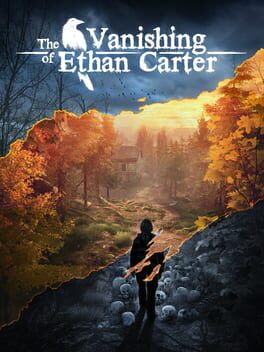
The timing of this release is particularly significant. Nintendo’s hardware refresh has reignited conversations about the console’s role as a haven for indie experimentation, a niche it cultivated with the original Switch’s eShop strategy. Simultaneously, the broader market is witnessing a resurgence of “art games” that leverage cultural heritage as a design substrate—think of titles like *Assassin’s Creed Valhalla’s* historical immersion or *The Vanishing of Ethan Carter*’s painterly world‑building. The Immortal John Triptych thus lands at the intersection of nostalgia for the early days of indie daring and a forward‑looking appetite for games that double as cultural commentary.
What Happened?
Nintendo announced that the anthology will be a launch‑day title for Switch 2, complete with a bespoke UI that mimics the look of a Renaissance altar. The bundle is priced at a modest $19.99, reflecting a strategic decision to lower the barrier for impulse purchases while still delivering three fully realized experiences. In a recent developer interview, Richardson explained that the decision to re‑package his three games was driven by a desire to showcase the thematic thread that runs through them: the subversive re‑interpretation of iconic religious and mythological scenes, rendered with a tongue‑in‑cheek irreverence that has become his signature.
Technical details reveal that the games have been rebuilt using the latest iteration of the Unity engine, taking advantage of the Switch 2’s upgraded GPU to render the famously pixelated textures with smoother frame rates and richer lighting. The anthology also introduces a “Gallery Mode,” allowing players to pause the action and examine the source paintings that inspired each level, complete with commentary from art historians. This added layer of educational content is designed to deepen the player’s appreciation for the source material, turning a comedic romp into a quasi‑museum experience.
Analysis
From a market perspective, the anthology serves as a low‑risk, high‑visibility showcase for Nintendo’s renewed commitment to indie visibility on its next‑gen platform. By bundling three titles that individually generated modest sales, the publisher can leverage aggregate download numbers to boost the Switch 2’s eShop rankings, thereby attracting further indie developers who see a viable commercial pathway. Moreover, the decision to highlight the games’ art‑historical roots aligns with a broader industry trend where publishers are courting a more mature audience that values intellectual depth alongside gameplay. This could encourage other studios to revisit their back catalogues, repackaging legacy titles with enhanced assets and contextual extras—a model reminiscent of the “Remastered” wave that dominated the PlayStation 4 era.
Competitively, the anthology pits Nintendo against platforms like Steam Deck and the upcoming PlayStation Portal, which are also courting the indie segment but with different value propositions. Nintendo’s advantage lies in its curated storefront experience and the cultural cachet of the Switch brand as a family‑friendly yet quirky console. However, the success of The Immortal John Triptych will hinge on its ability to transcend novelty and deliver sustained engagement. If players linger beyond the initial novelty of the absurdist humor, the title could become a case study in how art‑centric indie games can thrive on mainstream hardware without sacrificing their niche appeal.
XPLog Opinion
At XPLog UK we view The Immortal John Triptych as a bold litmus test for the next generation of indie publishing on Nintendo hardware: it proves that a console traditionally associated with polished, family‑oriented experiences can also serve as a fertile ground for avant‑garde, historically rooted satire. The anthology’s blend of humor, education, and technical polish sets a new benchmark for how indie developers can leverage platform upgrades to re‑ignite interest in their earlier works, and it signals that Nintendo is serious about diversifying its library beyond the usual platformers and RPGs. In our assessment, this move will likely inspire a wave of similar “museum‑style” releases that marry gameplay with cultural enrichment, expanding the console’s demographic reach.
Final Thoughts
The Immortal John Triptych positions itself not merely as a collection of quirky indie experiments, but as a strategic bridge between the past and the future of interactive entertainment. Its launch on Switch 2 will be watched closely by developers, analysts, and players alike, offering a glimpse into how classic art can be reimagined for a new generation of hardware. Keep an eye on the post‑launch metrics in the coming weeks, as well as the upcoming indie showcase at Nintendo’s Fall Live event, where further announcements could cement the console’s reputation as the premier stage for daring, culturally resonant games.
.png)
 XPLog
02 Sep 2026
4 min read
XPLog
02 Sep 2026
4 min read