.png)
Overview
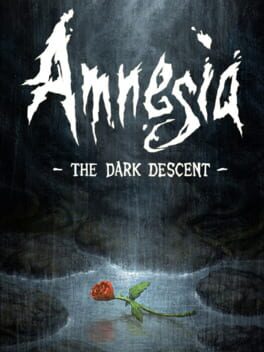
When Frictional Games, the Swedish studio behind the seminal titles Amnesia: The Dark Descent and Soma, announced their next venture, the gaming world took notice. Those two games not only redefined psychological horror for a generation of PC and console players but also demonstrated how a modest development team could leverage atmospheric storytelling to compete with blockbuster franchises. In an era where live‑service shooters dominate console sales charts and big‑budget studios pour resources into photorealistic open worlds, Frictional’s continued focus on claustrophobic, narrative‑driven experiences represents a deliberate counter‑trend that has cultivated a fiercely loyal niche audience. Their upcoming project, Ontos, arrives at a moment when the horror genre is experiencing a renaissance—spurred by indie successes like Phasmophobia, the resurgence of survival horror with titles such as Resident Evil Village, and an increasing appetite for games that blend existential dread with speculative science.
Ontos is billed as a philosophical horror set within a deranged research hotel perched on the moon’s far side, a premise that immediately summons the legacy of classic sci‑fi horror literature and the cold, unforgiving aesthetic of early space exploration games. The most talked‑about element of the reveal—a sentient wall composed of AI‑driven rats—has ignited both curiosity and skepticism across forums and social media. While the concept sounds like a whimsical nod to the absurdist humor that occasionally surfaces in indie circles, it also taps into a broader industry conversation about the integration of emergent AI behaviors into interactive environments. As developers experiment with machine‑learning‑based NPCs, procedural storytelling, and adaptive difficulty, Ontos positions itself at the intersection of artistic ambition and technical experimentation, promising to test the limits of what a horror game can do with limited hardware resources.
What Happened?
The announcement arrived during Frictional’s digital showcase streamed to a global audience of tens of thousands, where the studio’s creative director delivered a concise yet evocative pitch: Ontos is “a mad‑science hotel on the moon where the walls themselves whisper, and the only way out is through confronting the very nature of consciousness.” Accompanying the pitch were high‑resolution concept art depicting stark lunar corridors, flickering neon signage, and a grotesque mural of intertwined rat silhouettes that appear to form a living, breathing entity. The developers emphasized that the game will retain the studio’s signature emphasis on sound design, with an adaptive audio engine that reacts to player proximity to the rat wall, creating a palpable sense of unease that escalates as the AI learns the player’s patterns.
Beyond the atmospheric flourishes, Frictional disclosed several concrete technical goals. Ontos will be built on an upgraded iteration of their proprietary engine, optimized for both next‑gen consoles and high‑end PCs, with a particular focus on maintaining a stable 60 fps frame rate despite the computational overhead of running a swarm‑based AI system. The rat wall, according to the lead programmer, consists of a distributed network of lightweight agents that simulate simple behaviors—scurrying, clustering, and emitting low‑frequency audio cues—while a central AI orchestrates emergent patterns that react to player actions in real time. This architecture is deliberately lightweight, aiming to avoid the performance pitfalls that have plagued other AI‑heavy titles, and suggests that the game could indeed run on older hardware, potentially even the PlayStation 4 and Xbox One, albeit at reduced visual fidelity.
Analysis
From a market perspective, Ontos arrives at a crossroads where horror titles are increasingly bifurcating into two camps: high‑budget, action‑oriented experiences that lean on spectacle, and low‑budget, narrative‑driven experiments that prioritize psychological tension. Frictional’s decision to double down on the latter, while injecting a novel AI mechanic, could rejuvenate interest in the “slow‑burn” sub‑genre, especially if the rat wall proves to be more than a gimmick and instead offers genuinely emergent gameplay. Competitors such as Supermassive Games and Red Barrels have demonstrated that integrating adaptive AI can elevate replayability, but they have also shown the risk of overpromising on AI sophistication. Frictional’s modest approach—leveraging a swarm of simple agents rather than a monolithic neural network—may strike a sweet spot, delivering perceived intelligence without sacrificing performance, a balance that could become a reference point for future indie horror projects.
Platform dynamics also play a crucial role. While the studio’s previous releases have been PC‑first, the decision to target both current‑gen and next‑gen consoles indicates an intent to capture a broader audience, especially as console owners continue to gravitate toward narrative experiences during the holiday season. Moreover, the lunar setting aligns with a growing trend of sci‑fi horror hybrids, a niche that has seen success with titles like Observation and The Callisto Protocol. If Ontos can deliver a compelling blend of philosophical storytelling and technically impressive AI, it may not only reinforce Frictional’s brand as a pioneer of cerebral horror but also pressure larger publishers to invest in more experimental, AI‑driven design philosophies.
XPLog Opinion
At XPLog UK we view Ontos as a bold statement that indie horror can still innovate without the crutches of massive budgets; the talking rat wall is less a novelty and more a litmus test for how emergent AI can be woven into the fabric of dread. Should Frictional succeed in marrying their trademark atmospheric mastery with a system that genuinely reacts to player behavior, they will set a new benchmark for immersive horror—one that forces the industry to reconsider the value of subtle, adaptive menace over sheer visual spectacle.
Final Thoughts
In sum, Ontos promises to be a fascinating experiment that could reshape expectations for narrative horror on limited hardware, while also challenging the industry’s assumptions about AI complexity in indie titles. With a slated release window in early 2027 and a demo expected at the upcoming Game Developers Conference, the coming months will be critical for gauging whether the rat‑infested walls are a fleeting curiosity or the harbinger of a new era in player‑responsive horror design.