.png)
Overview
When The Witcher 3: Wild Hunt launched in 2015, it not only redefined open‑world storytelling but also cemented CD Projekt Red as a studio capable of marrying literary depth with technical ambition. The game’s sprawling continents, 60‑hour main campaign and award‑winning DLCs set a new benchmark for narrative‑driven RPGs, and its continued sales over the past decade have turned it into a perpetual revenue engine through expansions, season passes and a thriving mod community. As the PlayStation 5, Xbox Series X|S and next‑gen PCs now dominate the market, the industry has seen a wave of legacy titles receiving visual overhauls, often at a premium price, to capture both nostalgia‑driven sales and a new generation of hardware owners.
Against this backdrop, CD Projekt Red’s decision to release a remastered edition of The Witcher 3 without an additional charge is a move that reverberates far beyond a simple price tag. In an era where publishers increasingly monetize legacy content—consider the paid upgrades for Resident Evil 2 and 3, or the subscription‑only access to classic titles on Xbox Game Pass—offering a free upgrade signals a strategic pivot aimed at rebuilding trust after the tumultuous launch of Cyberpunk 2077. The gesture also aligns with the studio’s long‑standing philosophy of treating players as partners rather than customers, a stance that has historically fueled its community‑first reputation and contributed to sustained brand loyalty.
What Happened?
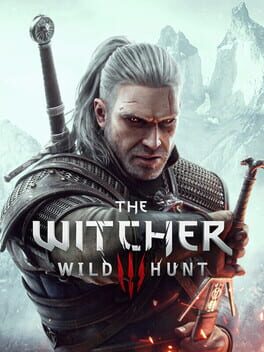
The announcement, delivered via a succinct developer blog post, confirmed that the upcoming Witcher 3 Remaster will arrive across PlayStation 5, Xbox Series X|S and PC with enhanced textures, ray‑traced lighting, faster load times and a suite of quality‑of‑life tweaks. Crucially, the studio emphasized that the upgrade will be free for anyone who already owns the original game on the respective platform, with no need for a separate purchase or a new license key. This approach mirrors the free next‑gen patches seen with titles like Horizon Forbidden West, but on a much larger scale, effectively providing a full visual and performance overhaul at zero extra cost.
Alongside the remaster, CD Projekt Red shed light on the origin story of the long‑awaited expansion Songs of the Past. According to the developers, the DLC emerged from a series of "happy accidents" during post‑launch support—small prototype systems and narrative ideas that were initially shelved, only to be rediscovered when the team revisited the engine for the remaster. These serendipitous discoveries coalesced into a cohesive storyline that explores untold chapters of Geralt’s journey, offering both fresh content for veterans and a compelling entry point for newcomers experiencing the game for the first time.
Analysis
From a market perspective, the free remaster could act as a catalyst for a resurgence in Witcher 3 sales, driving both new purchases and re‑engagement from lapsed players. By removing the price barrier, CD Projekt Red not only sidesteps the criticism levied at other studios for monetising nostalgia, but also positions the title as a flagship showcase for the capabilities of the current generation of hardware. This could translate into increased traffic on the studio’s digital storefronts, higher cross‑sell rates for ancillary products such as Gwent cards, and a stronger negotiating position when licensing the IP for future media adaptations.
Technically, the undertaking is far from trivial. Upgrading a game built on the REDengine 3 to support ray tracing and 4K textures requires a substantial rewrite of rendering pipelines, shader optimisation and memory management—tasks that historically have introduced new bugs and performance regressions. CD Projekt Red’s decision to tackle these challenges now, rather than delaying for a later “next‑gen exclusive,” suggests a confidence in their engineering talent and a desire to set a precedent for how legacy RPGs can be future‑proofed without fragmenting the player base across multiple versions.
XPLog Opinion
In XPLog’s view, the free Witcher 3 Remaster is a masterstroke of community‑centric branding that could very well redefine how studios approach legacy content in the post‑pandemic era; it demonstrates that goodwill can be leveraged as a competitive advantage, especially when the market is saturated with paid upgrades that risk alienating core audiences.
Final Thoughts
Ultimately, CD Projekt Red’s twin announcements signal a recalibration of priorities—putting player trust and long‑term franchise health above short‑term revenue spikes. As the release window narrows toward late 2026, the industry will be watching closely to see whether this free‑upgrade model spawns a new standard for remasters, and how the unexpected genesis of Songs of the Past might inspire other studios to mine their own development archives for hidden gems.