.png)
Overview
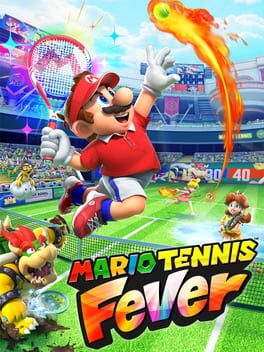
When Nintendo unveiled the Switch 2 earlier this year, the industry buzzed not only about the promised hardware leap but also about how its flagship franchises would translate onto the new platform. Mario Tennis Fever, a title that blends arcade flair with competitive depth, arrived as part of the initial launch slate, positioning itself as a bridge between casual family play and the burgeoning esports‑lite scene that Nintendo has been nurturing since the original Switch era. The game's debut was accompanied by a flurry of marketing that highlighted its refined physics, vibrant courts, and the integration of the new console’s enhanced GPU, which promises smoother frame‑rates and richer visual effects for fast‑paced rallies.
In the months following the console's release, Nintendo has faced a delicate balancing act: delivering enough post‑launch content to keep early adopters engaged while avoiding the perception of a half‑finished launch, a criticism that haunted the original Switch’s early years. The company's historical pattern—rolling out modest patches for core titles before unveiling larger DLC bundles—has become a strategic template across the industry, as seen with Sony’s incremental updates to Horizon and Microsoft’s live‑service approach to Halo Infinite. Mario Tennis Fever’s Version 1.1.1 therefore arrives at a pivotal moment, serving as a litmus test for Nintendo’s willingness to iterate quickly on Switch 2’s first‑generation software.
What Happened?
On 1 September 2026 Nintendo pushed a minor yet technically significant update for Mario Tennis Fever, bumping the game to version 1.1.1. The headline change adjusts the mechanics of returning a high‑ball, now rewarding players with a Star Shot—a powerful, trajectory‑altering strike that can turn defensive plays into match‑point opportunities. This tweak, while seemingly small, recalibrates the risk‑reward calculus that competitive players have been dissecting on community forums and in tournament settings. Alongside the Star Shot adjustment, Nintendo’s support page lists a series of bug fixes targeting the game’s Amp system, which governs the temporary boost mechanics that can swing momentum during rallies.
The patch also includes a suite of behind‑the‑scenes stability improvements, ranging from memory‑leak mitigation to controller latency reductions on the Switch 2’s upgraded docked mode. Although Nintendo has not released a detailed changelog beyond the official brief, the timing of the update—just weeks after the console’s global rollout—suggests a proactive response to early‑user feedback rather than a reactive hot‑fix. For the competitive community, the Star Shot alteration could reshape tier‑list rankings and influence deck‑building strategies in upcoming online leagues, prompting a wave of meta‑analysis that will likely spill over into the next major Nintendo‑hosted tournament cycle.
Analysis
From a market perspective, the 1.1.1 patch signals Nintendo’s intent to treat Switch 2 titles as living products rather than static launches. In an era where live‑service models dominate, even traditionally single‑player‑centric franchises are expected to receive regular balancing updates. By fine‑tuning a core mechanic like the high‑ball return, Nintendo demonstrates an awareness that player engagement hinges on perceived fairness and depth—a lesson learned from the criticism leveled at earlier sports titles that suffered from “pay‑to‑win” optics. This measured approach also differentiates Nintendo from competitors who often resort to sweeping seasonal overhauls; instead, Nintendo opts for surgical adjustments that preserve the game’s identity while keeping the competitive ladder dynamic.
Technically, the patch offers a glimpse into the development pipeline for Switch 2 games. The console’s new ARM‑based architecture and higher bandwidth memory demand a different optimization strategy compared to the original Switch. The fact that Nintendo could deploy a mechanic‑level change alongside low‑level bug fixes within a single build suggests a mature tooling environment, likely built around modular asset pipelines and hot‑swap capabilities. This infrastructure bodes well for future, more ambitious updates—perhaps new courts, character skins, or even a full‑blown DLC expansion—without necessitating a complete reinstall, a friction point that has plagued earlier console generations.
XPLog Opinion
At XPLog UK we view the Mario Tennis Fever 1.1.1 patch as a quiet but decisive statement: Nintendo is not content to let its next‑gen launch fade into a “set‑and‑forget” mode. The Star Shot tweak may appear modest, yet it reflects a data‑driven responsiveness that will be crucial for retaining the hardcore segment that craves competitive integrity. If Nintendo continues this cadence, we can anticipate a steady stream of quality‑of‑life updates that will keep the title relevant throughout the Switch 2 lifecycle, potentially positioning Mario Tennis Fever as a flagship esport for Nintendo’s burgeoning online ecosystem.
Final Thoughts
In sum, the version 1.1.1 update to Mario Tennis Fever does more than polish a single mechanic; it showcases Nintendo’s evolving post‑launch philosophy on the Switch 2, where incremental refinement coexists with the promise of larger content drops later in the year. Players should keep an eye on Nintendo’s developer livestreams slated for Q4 2026, where hints of a forthcoming expansion or cross‑title tournament integration may finally surface, cementing Mario Tennis Fever’s role as a cornerstone of the console’s competitive future.