.png)
Overview
When Telltale Games first released *The Wolf Among Us* in 2013, it redefined the possibilities of interactive storytelling by marrying the gritty noir of the *Fables* comic universe with a branching dialogue system that rewarded player agency. The original’s success was not merely a commercial win; it cemented Telltale as the torchbearer of episodic, character‑driven experiences, influencing a generation of developers to explore mature narratives in a format traditionally dominated by action‑oriented titles. Over the past decade, the adventure genre has seen a renaissance—thanks to indie breakthroughs, the rise of streaming services, and a renewed appetite for story‑first games—yet the *Wolf Among Us* franchise remained a dormant ember, its sequel a whispered promise among long‑time fans.
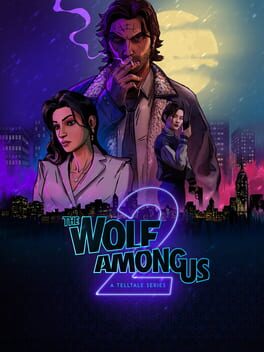
Fast forward to Gamescom 2024, where a cramped demo booth in Cologne became the stage for the long‑awaited reveal of *The Wolf Among Us 2*. The announcement arrived at a pivotal moment for both the publisher and the broader console ecosystem: Telltale, now under the stewardship of LCG Entertainment, is navigating a post‑bankruptcy revival while simultaneously courting a new generation of players accustomed to seamless, cross‑platform experiences. The demo, presented on a modest Xbox Series X unit, showcased a refreshed art direction that honors the original’s moody palette while leveraging the power of modern rendering pipelines, hinting at a production ambition that seeks to bridge nostalgic fidelity with contemporary polish.
What Happened?
The hands‑on session at Gamescom allowed attendees to step back into the rain‑slick streets of Fabletown, where Bigby Wolf—now visibly older and more battle‑scarred—faces a fresh wave of corruption threatening the fragile peace between fairy‑tale refugees. Players navigated a series of investigative set‑pieces that blended the classic point‑and‑click mechanics with subtle environmental puzzles, a design choice that signals Telltale’s intent to retain its signature interactivity while addressing past criticisms of linearity. Notably, the dialogue system demonstrated a more nuanced emotional weighting, where player choices ripple across episodes, promising a deeper, more consequential narrative arc than the original’s comparatively binary outcomes.
Accompanying the demo, Telltale’s creative director delivered a statement emphasizing a “new production pipeline” built around a hybrid engine that marries Unreal’s visual fidelity with a proprietary narrative scripting layer. The studio confirmed a 2025 Q4 launch window, targeting Xbox Series X|S, PlayStation 5, PC, and an exclusive early‑access window on Xbox Game Pass—a strategic move that mirrors the company’s 2023 partnership with Microsoft to secure a steady revenue stream while rebuilding brand trust. However, the announcement also hinted at lingering concerns: the need to balance episodic release schedules with the modern gamer’s expectation for rapid content delivery, and the challenge of scaling a story‑heavy title without inflating development costs.
Analysis
The resurgence of *The Wolf Among Us* arrives at a time when narrative-driven titles are fighting for relevance against live‑service juggernauts and high‑octane shooters. Telltale’s brand equity, once tarnished by its 2018 collapse, now serves as both a market differentiator and a liability; investors and publishers will scrutinize whether the sequel can recoup the substantial development outlay required for next‑gen graphics and a more sophisticated branching system. Competitors such as Quantic Dream and Supermassive Games have demonstrated that premium story experiences can thrive on platforms like PlayStation, but they have also shown the perils of over‑ambitious scope leading to delayed releases. Telltale’s decision to anchor the launch on Game Pass may mitigate financial risk by guaranteeing a baseline audience, yet it also raises questions about long‑term monetisation strategies once the exclusivity period expires.
Technically, the shift to a hybrid engine represents a double‑edged sword. While Unreal’s rendering capabilities will undoubtedly elevate the atmospheric tension of Fabletown’s underbelly, integrating Telltale’s bespoke dialogue tree system could introduce unforeseen bottlenecks, especially if the team opts to expand the narrative breadth beyond the original’s five‑episode structure. Moreover, the industry’s push toward cross‑play and cloud streaming means the sequel must be optimised for a diverse hardware landscape, from high‑end consoles to portable devices. Failure to deliver a smooth, consistent experience could erode player goodwill, particularly among the core demographic that values narrative cohesion over graphical fireworks.
XPLog Opinion
From XPLog’s perspective, *The Wolf Among Us 2* is more than a nostalgic cash‑in; it is a litmus test for the viability of episodic storytelling in an era dominated by binge‑ready releases. If Telltale can harness its renewed financial backing to deliver a tightly paced, emotionally resonant saga without the pitfalls of protracted development cycles, it will reaffirm the relevance of narrative adventures and potentially spark a renaissance for mid‑budget, story‑first projects. Conversely, a misstep could cement the perception that episodic formats are relics of a bygone console generation, pushing developers toward monolithic releases or hybrid live‑service models.
Final Thoughts
In sum, the unveiling of *The Wolf Among Us 2* signals a bold, if cautious, re‑entry of Telltale into the competitive narrative arena, with the forthcoming 2025 Q4 launch poised to test both the studio’s technical ambitions and its ability to reconnect with a fanbase that has aged alongside the franchise. As the industry watches, key dates to mark include the official trailer drop slated for early 2025, the commencement of the first episode’s beta in mid‑2025, and the final release window at the close of the year—moments that will reveal whether the sequel can truly bridge the gap between nostalgic reverence and modern gaming expectations.