.png)
Overview
After years of market saturation by live‑service shooters, endless roguelike loops, and deck‑building experiments, the traditional action‑adventure has become something of a nostalgic relic in the mainstream. Yet the genre’s DNA—exploration, skillful combat, and narrative momentum—remains a potent draw for players craving a cohesive, handcrafted experience. Usual June arrives at this crossroads, positioning itself as a seasonal staple that blends the visceral intensity of titles like Hades with the eerie charm of Halloween‑themed set‑pieces, all while re‑asserting the relevance of the classic adventure framework in a post‑live‑service era.
Developed by an indie studio that has quietly cultivated a reputation for narrative depth, Usual June also benefits from the seasoned hand of writer Cara Ellison, whose previous work on narrative‑rich titles has earned her a cult following. Her involvement signals a deliberate focus on story integration, a rarity in procedurally driven games. As the industry grapples with player fatigue from ever‑expanding content pipelines, the game’s promise of a tightly looped, replayable adventure could signal a broader shift toward curated, high‑replay value experiences that respect both time and creative ambition.
What Happened?
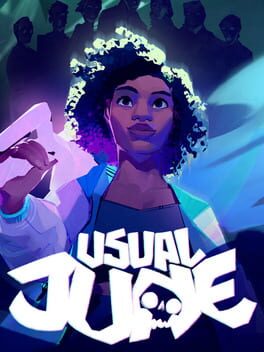
In a recent press release, the developers unveiled Usual June as an action‑adventure title that marries fast‑paced combat reminiscent of Hades with a seasonal aesthetic anchored in Halloween folklore. The core loop centers on a protagonist navigating a shifting, haunted town where crystal crabs and spectral entities serve both as combat challenges and environmental storytelling devices. Each run is procedurally altered, ensuring that the layout of the town, enemy placements, and loot tables differ, thereby encouraging multiple playthroughs while preserving a coherent narrative thread.
The announcement also highlighted a commitment to post‑launch support that diverges from typical live‑service models. Rather than endless microtransaction‑driven updates, the team plans a series of seasonal content drops aligned with real‑world holidays, each introducing new ghostly adversaries, thematic weapon skins, and narrative expansions that deepen the lore without fragmenting the player base. The studio’s director emphasized that these updates will be “free‑to‑play” additions, aiming to build a community that returns for the experience rather than the grind.
Analysis
From a market perspective, Usual June occupies a sweet spot between the high‑risk, high‑reward arena of indie roguelikes and the more predictable, subscription‑driven live‑service titles dominating console ecosystems. By leveraging procedural generation for replayability while anchoring the experience in a strong, seasonally resonant theme, the game sidesteps the content fatigue that plagues many post‑launch roadmaps. Its hybrid model could inspire other developers to adopt “seasonal‑as‑a‑service” approaches, where updates are tied to calendar events rather than endless monetisation cycles, potentially reshaping revenue expectations for mid‑tier indie studios.
Technically, the integration of Hades‑style combat mechanics with a haunted, atmospheric setting poses both opportunities and challenges. The fluidity of combat demands tight animation pipelines and responsive input handling, while the ghostly aesthetic requires sophisticated lighting and particle effects to convey an otherworldly ambiance without sacrificing performance on older hardware. If the studio can deliver a seamless experience across both next‑gen consoles and PC, it may set a new benchmark for how indie titles can achieve high production values without the deep pockets of AAA studios.
XPLog Opinion
At XPLog UK we view Usual June as a bold reminder that the core of gaming—engaging gameplay wrapped in compelling world‑building—still thrives when developers dare to blend nostalgia with innovation. Its seasonal focus not only promises a fresh, recurring hook for players but also challenges the prevailing live‑service doctrine that has, for better or worse, come to dominate the industry. Should the game deliver on its promises, it could catalyse a renaissance of handcrafted, replay‑centric experiences that respect player time while still offering the iterative depth gamers have come to expect.
Final Thoughts
Usual June positions itself as a potential Halloween mainstay, marrying classic action‑adventure sensibilities with modern procedural design and a thoughtful seasonal update strategy. As the release window approaches, observers should watch for early player feedback on the combat feel and the efficacy of its holiday‑driven content model—both of which could influence how indie studios negotiate the delicate balance between artistic integrity and sustainable monetisation in the years ahead.