.png)
Overview
The original The Wolf Among Us debuted in 2013 as a flagship title for Telltable Games, marrying gritty comic‑book aesthetics with a branching, choice‑driven narrative that proved that episodic adventure could still thrive in the post‑HD era. At a time when the Xbox 360 was battling the rise of mobile gaming, the game’s moody lighting, hand‑drawn textures, and morally ambiguous storytelling carved a niche that attracted both casual players and hardcore fans of literary noir. Fast‑forward to 2026, the industry has witnessed a renaissance of narrative‑heavy experiences—Life is Strange sequels, Disco Elysium's PC resurgence, and the surge of streaming‑first titles—all of which have re‑validated the market appetite for story‑first design, making the timing of a remastered edition feel almost inevitable.
Gamescom 2026, traditionally a showcase for next‑gen hardware and blockbuster spectacles, unexpectedly became a platform for legacy titles to announce their return, reflecting a broader shift where publishers are mining their back‑catalogues to fill the ever‑hungry content pipeline. Xbox’s strategic push for “first‑party‑plus‑legacy” titles on both the Series X|S and the more affordable One hardware aligns with Microsoft’s broader ecosystem goals: retain existing subscribers, attract narrative‑driven gamers, and bolster the value proposition of Game Pass. In this context, The Wolf Among Us Remastered is not merely a nostalgic cash‑in; it is a calculated move to reinforce the Xbox brand’s commitment to deep, story‑centric experiences that differentiate it from the console‑centric action‑shooter crowd.
What Happened?
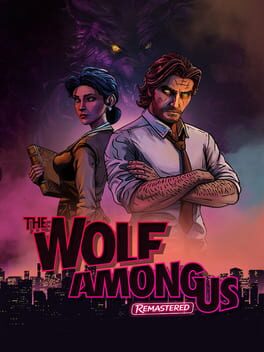
During a concise yet impactful press briefing at Gamescom, the development team revealed that the remastered edition will launch on October 29th for Xbox One, Series X, and Series S, positioning the title as a cross‑generation experience that leverages the hardware’s increased memory bandwidth and ray‑tracing capabilities. The headline feature, dubbed “Noir Mode,” promises a re‑imagined visual filter that deepens the chiaroscuro contrast, amplifying the original comic‑book palette while offering an optional cinematic overlay that mimics the grainy textures of classic noir film. Alongside this, the team highlighted a suite of technical upgrades: 4K resolution support, 60‑fps performance on the Series X, a modernized UI that streamlines dialogue navigation, and a rebuilt animation pipeline that smooths character gestures without sacrificing the hand‑drawn charm.
Beyond the visual overhaul, the announcement included a promise of over an hour of behind‑the‑scenes content—developer commentary, concept art galleries, and a documentary on the original production’s tumultuous journey. This archival material not only serves as a collector’s bonus but also contextualizes the game’s place in Telltale’s broader narrative evolution, especially given the studio’s bankruptcy in 2018 and its subsequent revival under LCG Entertainment. By bundling this historical insight with the technical enhancements, the publishers aim to appeal both to veterans who lived through the original launch and to a new generation of players discovering the tale of Bigby Wolf for the first time.
Analysis
The market impact of this remaster is likely to be multifaceted. On the Xbox side, the title bolsters the library of exclusive narrative experiences that can be leveraged as marquee attractions for Game Pass, a subscription service that has become a primary driver of console sales and user retention. Competing platforms such as PlayStation and Nintendo have also leaned into remasters—Uncharted: Legacy of Thieves and Metroid Prime Remastered—yet few have offered a true “mode” overhaul that reinterprets the aesthetic language of the original. This differentiation could translate into higher engagement metrics, especially if the Noir Mode resonates with streamers seeking fresh visual hooks for live content.
From a technical standpoint, rebuilding the game on a modern engine while preserving the narrative branching logic presents a non‑trivial challenge. Telltale’s original proprietary engine was notorious for its limited scalability, contributing to the studio’s financial woes. The decision to reconstruct the title on a contemporary engine—likely Unity or Unreal—suggests a long‑term strategy to future‑proof the IP, enabling easier porting to PC, next‑gen consoles, and possibly cloud streaming services. Moreover, the inclusion of high‑resolution assets and a refined audio mix positions the game to meet the expectations of today’s audiophile gamers, who demand spatial sound and high dynamic range—a far cry from the compressed audio of the Xbox 360 era.
XPLog Opinion
At XPLog UK we view the remaster not merely as a nostalgic footnote but as a bellwether for Telltale’s re‑emergence in a market that now values narrative depth as highly as technical prowess; the success of this release could dictate whether the revived studio secures the budget and publisher confidence needed to green‑light original sequels, potentially resurrecting the long‑awaited second season that fans have campaigned for since 2017.
Final Thoughts
In sum, The Wolf Among Us Remastered arrives at a crossroads where legacy content meets next‑gen capability, offering both a polished homage for long‑time fans and a compelling entry point for newcomers. With its October 29th launch, the title will serve as a litmus test for how effectively classic narrative adventures can be modernized without diluting their core identity—a test that could shape the strategic roadmaps of both Microsoft’s console ecosystem and the resurrected Telltale studio for years to come.