Overview
The release of Resonance: A Plague Tale Legacy on the PlayStation 5 arrives at a pivotal moment for both the franchise and Sony’s next‑generation strategy. Since its debut in 2019, A Plague Tale has cultivated a reputation for marrying harrowing narrative with meticulously crafted stealth mechanics, earning a devoted following among players who value cinematic storytelling and atmospheric tension. Asobo Studio, the French developer behind the series, leveraged its early success to push technical boundaries on the PS4 and later the PS5, delivering lush environments and a hauntingly beautiful art direction that set a new benchmark for narrative‑driven titles in the indie‑to‑AAA spectrum.
Yet the industry context surrounding this prequel is equally compelling. The PS5’s launch window has matured into a crowded ecosystem where blockbuster exclusives, live‑service juggernauts, and high‑budget RPGs vie for consumer attention. Within this competitive arena, mid‑tier, story‑centric games must justify their shelf‑space by either innovating mechanically or deepening the lore in ways that resonate with an audience increasingly fragmented across streaming, esports, and social play. Resonance, positioned as a prequel, therefore carries the weight of not just expanding the A Plague Tale mythos but also proving that the series can adapt its core formula to a market that rewards both novelty and fidelity to established brand identity.
What Happened?
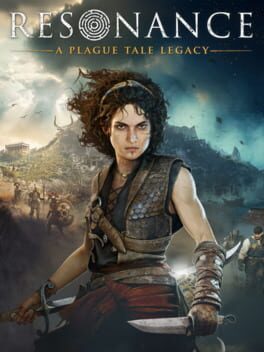
Announced at a modest digital showcase, Resonance: A Plague Tale Legacy is framed as a prequel that explores the grim origins of the pestilential world that defined its predecessors. Rather than revisiting the iconic sibling duo Amicia and Hugo, the title follows a new ensemble of characters navigating a plague‑ravaged Crete, a setting that diverges sharply from the medieval French backdrop fans have come to associate with the series. The most conspicuous design shift is the removal of the signature rat swarms, replaced by a combat‑centric approach that leans heavily on gunplay and melee encounters. This pivot reflects Asobo’s ambition to broaden the gameplay palette, offering players a more direct, action‑oriented experience while still preserving the oppressive atmosphere that made the original games memorable.
Developer statements highlighted a deliberate intent to “challenge the series’ identity” by experimenting with a more aggressive combat loop and a narrative that delves into the socio‑political fallout of the Black Death. The prequel is built on the PS5’s custom SSD, enabling faster load times and more intricate level designs that accommodate both stealth and open‑combat scenarios. Marketing materials also emphasize the game’s visual fidelity, showcasing ray‑traced lighting and high‑resolution textures that aim to immerse players in a world where darkness is both a tactical tool and a narrative metaphor.
Analysis
From a market performance perspective, Resonance arrives at a time when publishers are experimenting with hybridization of genres to capture cross‑demographic interest. The decision to strip away the rats—a mechanic that was both a gameplay hallmark and a narrative metaphor—may alienate purists, but it also opens the door to players who found the original’s stealth constraints prohibitive. By positioning combat at the forefront, Asobo taps into the broader trend of action‑driven experiences dominating sales charts, especially on next‑gen hardware where performance budgets allow for larger enemy populations and more complex AI behaviors.
Competitively, the title pits itself against heavyweight franchises such as Horizon Forbidden West and Elden Ring, which dominate the PS5’s premium segment. However, Resonance’s niche lies in its hybrid identity: a story‑rich, historically flavored adventure that offers a more immediate combat rhythm. If the game can deliver a compelling narrative that justifies its prequel status—revealing untold lore that enriches the Amicia‑Hugo saga—it could carve out a sustainable audience that fuels future DLC or spin‑off opportunities, reinforcing Sony’s portfolio of exclusive narrative experiences.
XPLog Opinion
At XPLog UK we view Resonance as a bold, if risky, evolution for Asobo. The studio’s willingness to abandon the rats—a symbol that defined the series—signals a confidence that the core emotional resonance can survive mechanical overhaul. While some fans may mourn the loss of the stealth‑rat symbiosis, the shift toward combat could rejuvenate the franchise, attracting a broader segment of core gamers who crave visceral encounters without sacrificing the series’ trademark melancholy. In the long run, this gamble may well pay off, positioning A Plague Tale as a versatile IP capable of branching into multiple gameplay philosophies while retaining its narrative gravitas.
Final Thoughts
Resonance: A Plague Tale Legacy stands as a litmus test for how legacy narrative franchises can adapt to the evolving expectations of next‑generation audiences. Its success will hinge on whether the new combat focus can coexist with the series’ haunting storytelling and whether the prequel narrative can meaningfully augment the existing canon. With a launch slated for late 2026, the industry will be watching closely as the title’s reception could dictate the strategic direction of Asobo Studio and influence Sony’s broader commitment to story‑driven exclusives on the PS5 platform.
.png)
 XPLog
26 Aug 2026
4 min read
XPLog
26 Aug 2026
4 min read