.png)
Overview
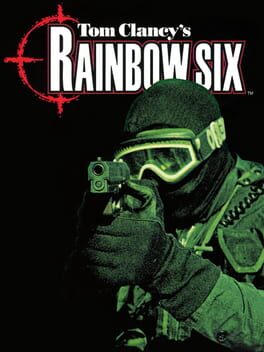
Ubisoft's announcement of Rainbow Six Tactics marks a watershed moment for a franchise that has, for nearly two decades, been synonymous with high‑octane, real‑time tactical shooters. Since the original Tom Clancy's Rainbow Six debut in 1998, the series has evolved from a PC‑centric, squad‑based simulation into a global esports powerhouse with titles like Rainbow Six Siege, which has dominated the competitive scene with its emphasis on precise gunplay, destructible environments, and relentless player‑vs‑player combat. The decision to launch a turn‑based, single‑player spinoff on Xbox Series X|S and PC therefore represents not just a genre shift, but a strategic diversification aimed at broadening the franchise’s demographic reach and capitalising on the resurgence of tactical, slower‑paced experiences that have found success in titles such as XCOM and the recent resurgence of Fire Emblem.
From a market perspective, the timing is striking. The current console generation is witnessing a bifurcation between live‑service shooters that rely on continuous content updates and narrative‑driven, single‑player experiences that cater to gamers seeking depth over immediacy. Ubisoft, which has struggled to recoup the massive development costs of its flagship live‑service projects, appears to be hedging its bets by re‑investing in a more modest, story‑centric approach that can be delivered on a tighter schedule and with lower ongoing operational overhead. Moreover, the Xbox ecosystem, under Microsoft’s stewardship, has been actively courting developers who can enrich its Game Pass library with varied genres, making Rainbow Six Tactics a perfect fit for the platform’s strategic content acquisition goals.
What Happened?
The reveal, delivered via a polished trailer at a recent Xbox showcase, showcased a dramatic shift in visual perspective: a top‑down, isometric view that replaces the first‑person immersion of Siege with a board‑game‑like battlefield where players orchestrate breaches, position operators, and manage resources turn by turn. Ubisoft’s internal development team, led by veterans of the original Rainbow Six series, emphasised that the core design philosophy remains true to the franchise’s DNA – meticulous planning, intel gathering, and adaptive decision‑making – but is now expressed through a methodical, chess‑like framework. The game promises a single‑player campaign that will see players navigate a series of escalating missions, each with branching outcomes based on how well they coordinate their squad’s abilities and react to emergent threats.
In addition to the core gameplay overhaul, Ubisoft highlighted several new systems that aim to deepen the tactical experience. These include a “breach‑and‑clear” mechanic where players must time their entry points to maximise surprise, a dynamic AI director that adjusts enemy placement and reinforcement patterns in real time, and a progression tree that unlocks specialised operator skills reminiscent of the operator‑specific gadgets that have defined Siege’s competitive meta. The announcement also confirmed that the title will launch exclusively on Xbox Series X|S and PC, with a release window slated for the latter half of 2024, positioning it as a key Q3‑Q4 offering for both Ubisoft’s publishing calendar and Microsoft’s Game Pass lineup.
Analysis
From a financial standpoint, Rainbow Six Tactics could serve as a low‑risk, high‑reward experiment for Ubisoft. Turn‑based strategy games typically require smaller development teams and shorter production cycles compared to AAA live‑service shooters, meaning the break‑even point can be reached with considerably fewer sales. However, the franchise’s brand equity provides a built‑in audience that can be leveraged to drive initial adoption, especially among players who have grown weary of the relentless grind associated with live‑service models. Should the title succeed in delivering a compelling narrative and robust tactical depth, it could open the door for a series of spin‑offs that explore other corners of the Tom Clancy universe, potentially revitalising dormant IPs like Ghost Recon or Splinter Cell through a similar turn‑based lens.
Competitively, the move also signals Ubisoft’s recognition of shifting player expectations within the broader console ecosystem. While Sony continues to double down on narrative‑driven single‑player experiences, Microsoft’s strategy increasingly revolves around diversifying its library to appeal to both hardcore and casual gamers. By placing Rainbow Six Tactics on Xbox first, Ubisoft aligns itself with Microsoft’s vision of a “Netflix‑style” subscription model where a steady stream of varied content keeps subscribers engaged. This alignment could also translate into favourable revenue‑share agreements, cross‑promotion within Game Pass, and a stronger foothold in the burgeoning esports‑adjacent market of strategy‑focused streaming content.
XPLog Opinion
At XPLog UK, we view Rainbow Six Tactics not merely as a side project, but as a calculated pivot that could redefine Ubisoft’s relationship with its core audience. By stripping away the reflex‑driven chaos of Siege and re‑introducing the cerebral planning that made the original Rainbow Six a critical darling, Ubisoft is sending a clear message: the brand is adaptable, and its future will be built on both competitive firepower and thoughtful, story‑driven design. If executed with the polish expected of a flagship title, Tactics could become a blueprint for how legacy franchises evolve without alienating their base, proving that strategic depth can coexist with mainstream accessibility.
Final Thoughts
Rainbow Six Tactics stands at the intersection of nostalgia and innovation, offering a fresh entry point for newcomers while rewarding long‑time fans with a familiar strategic ethos reimagined for a new generation of gamers. As the release window approaches, the industry will be watching closely to see whether Ubisoft can successfully translate the high‑stakes tension of its shooter lineage into a turn‑based format that satisfies both critics and the ever‑evolving expectations of the Xbox and PC communities. Keep an eye on Ubisoft’s upcoming developer diaries and Microsoft’s Game Pass announcements for the next wave of details that will shape the title’s ultimate impact on the market.