.png)
Overview
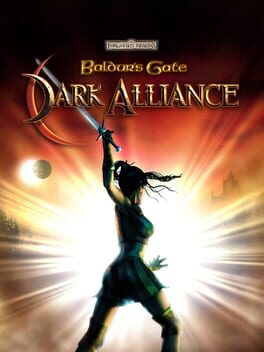
The tabletop titan Dungeons & Dragons has spent the last decade oscillating between ambitious console experiments and modest digital adaptations, yet the franchise’s true potential on modern hardware has remained largely untapped. From the early 2000s releases like *Baldur's Gate: Dark Alliance* to the recent resurgence sparked by *Baldur's Gate 3* and the *Dungeons & Dragons: Dark Alliance* reboot, the market has demonstrated a voracious appetite for immersive, narrative‑driven experiences that translate the pen‑and‑paper magic into interactive form. Against this backdrop, Gamescom’s Opening Night Live—traditionally the launchpad for marquee announcements—served as the perfect stage for unveiling a project that promises to bridge the gap between deep role‑playing fidelity and the kinetic demands of today’s single‑player action titles.
Warlock, the brainchild of independent studio Owlcat Games, has been quietly gestating since its initial reveal at the 2022 Game Awards, where the studio hinted at a “next‑generation D&D adventure” that would focus on a lone protagonist wielding eldritch powers. Owlcat, best known for its critically acclaimed *Pathfinder: Kingmaker* series, leveraged its expertise in complex character systems to craft a game that aims to marry the strategic depth of tabletop spellcasting with the visceral immediacy of modern action‑RPG combat. Over the past eighteen months, the development team has reportedly iterated on a proprietary engine to support dynamic lighting, real‑time particle effects, and a fully voiced narrative, positioning Warlock as a flagship title for the upcoming generation of consoles and high‑end PCs.
What Happened?
The first full‑length trailer for Warlock debuted during Gamescom’s Opening Night Live, instantly drawing attention with a sweeping aerial shot of a gothic, mist‑shrouded cityscape that feels ripped straight from the *Forgotten Realms* lorebooks. The sequence then cuts to the titular warlock protagonist, a cloaked figure whose gauntleted hands summon crackling bolts of arcane energy, dispatching a horde of grotesque, otherworldly foes in a fluid, combo‑heavy combat system. The visual fidelity—high‑resolution textures, real‑time ray‑traced reflections, and a meticulously choreographed spell‑casting animation suite—signals a clear intent to compete with heavyweight action‑RPGs such as *Elden Ring* and *Starfield* while retaining the distinctive D&D flavor.
Accompanying the visual showcase, Owlcat’s creative director, Alexios Vassiliadis, emphasized that Warlock is designed as a “pure single‑player odyssey,” deliberately steering away from the multiplayer components that have plagued previous D&D adaptations with uneven reception. The trailer also highlighted a robust skill‑tree that mirrors the tabletop’s spell slot system, allowing players to customize their warlock’s pact, invocations, and eldritch blast variants. Moreover, the developers hinted at an open‑world structure segmented into distinct “domains” that each reflect a different aspect of the warlock’s mythos, promising a blend of exploration, lore‑driven quests, and emergent combat scenarios.
Analysis
From a market perspective, Warlock arrives at a pivotal moment when the action‑RPG segment is experiencing a renaissance, driven by both next‑gen hardware capabilities and a consumer desire for deeper narrative experiences. The title’s single‑player focus directly addresses the criticism leveled at *Dark Alliance* (2021) for its shallow story and multiplayer‑centric design, positioning Warlock as a potential flagship for the D&D brand that can reclaim the loyalty of core RPG enthusiasts. Competitively, the game will contend with established franchises that have already set high bars for combat fluidity and world‑building; however, Owlcat’s pedigree in crafting intricate character progression systems could give Warlock a unique selling proposition that differentiates it from the more generic fantasy action titles.
Technical ambition is another axis of analysis. The trailer’s demonstration of real‑time ray tracing and complex particle effects suggests a heavy reliance on the latest GPU architectures, which may limit early adoption among console‑only audiences unless a scalable graphics pipeline is implemented. Owlcat’s decision to develop a proprietary engine rather than licensing a mainstream solution like Unreal or Unity could introduce both risk and reward: while it allows for fine‑tuned D&D‑specific mechanics, it also demands significant resources to achieve parity with industry‑standard performance benchmarks. Should the studio successfully navigate these hurdles, Warlock could set a new technical benchmark for tabletop‑derived titles, potentially influencing future D&D projects to adopt similar bespoke solutions.
XPLog Opinion
At XPLog UK, we view Warlock as a watershed moment for the Dungeons & Dragons franchise—a chance to finally deliver a single‑player experience that respects the depth of the source material while embracing the kinetic expectations of modern gamers; if Owlcat can balance the intricate spell‑crafting systems with accessible, high‑octane combat, Warlock could redefine the brand’s digital identity and re‑establish D&D as a premier destination for narrative‑driven action RPGs.
Final Thoughts
Warlock’s debut trailer has set a high bar, and the coming months will be crucial as Owlcat reveals more concrete release windows, platform specifics, and pre‑order incentives; gamers should mark the anticipated 2025 Q4 launch window—when both PlayStation 5 Pro and Xbox Series X S upgrades are expected—to watch for beta opportunities that could shape the final polish of this ambitious D&D venture.