.png)
Overview
When Activision announced that Call of Duty: Modern Warfare 4 would launch on the forthcoming Nintendo Switch 2, the gaming press and community alike erupted in a mixture of disbelief and excitement. The series, a pillar of the first‑person shooter market for nearly two decades, has never been a natural fit for Nintendo’s handheld‑first philosophy, making the day‑and‑date release across PC, PlayStation, Xbox and now the Switch 2 a watershed moment that signals a broader shift in platform‑agnostic publishing strategies. The last time a mainline Call of Duty title touched a Nintendo console was 2013’s Ghosts on the Wii U, an effort that struggled with performance constraints and ultimately faded into obscurity. Thirteen years later, the hardware capabilities of the Switch 2 – a hybrid console boasting a more powerful Tegra‑X2‑class processor, higher‑resolution display support, and an upgraded SSD‑style storage solution – promise a far more respectable experience, at least on paper.
Beyond the technical curiosity, the announcement arrives at a time when the console market is undergoing rapid realignment. Sony and Microsoft are deepening their subscription ecosystems, while Nintendo’s unique family‑friendly brand continues to dominate the portable segment. For a franchise that traditionally leans on high‑budget, high‑performance hardware, the decision to ship a full‑scale Call of Duty title to a handheld device reflects both the maturation of the Switch 2’s architecture and the publisher’s desire to capture the ever‑expanding demographic of gamers who spend the majority of their playtime on portable platforms. Moreover, the move dovetails with the industry‑wide push toward “day‑and‑date” releases, a model that reduces fragmentation and maximizes revenue windows, but also raises questions about how developers will balance performance parity across wildly divergent hardware ecosystems.
What Happened?
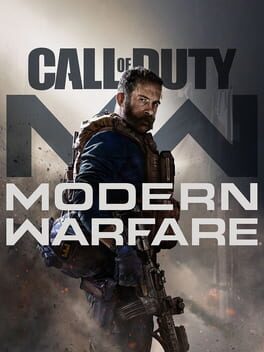
In the weeks following the official reveal, retailers began listing a physical edition of Modern Warfare 4 for the Switch 2, but the product description raised eyebrows: the packaging appears to be a simple cardboard box containing a download code rather than a traditional cartridge. This “code‑in‑box” approach, while not unprecedented for Nintendo’s own titles in the digital‑first era, is a first for a premium, triple‑A shooter of this magnitude. Early screenshots of the box show the iconic Modern Warfare branding, a QR code for activation, and a clear disclaimer that the game must be downloaded from the Nintendo eShop before it can be played. No physical media is included, meaning the experience will be dependent on the user’s internet connection and the capacity of the Switch 2’s internal storage or microSD expansion.
Activision’s official statement, released via a press release and reiterated in a brief interview with the studio’s lead producer, frames the decision as a “logistical optimisation” aimed at reducing manufacturing lead times and ensuring a synchronized global launch. The producer emphasized that the code‑in‑box version will receive the same patch cadence, seasonal content, and cross‑play support as its console and PC counterparts. However, the lack of a tangible cartridge has sparked speculation about potential performance compromises, such as reduced texture fidelity or capped frame rates, especially given the Switch 2’s still‑emerging hardware profile. The community’s reaction has been a blend of enthusiasm for the platform’s expanded library and apprehension about whether the title will truly deliver the series’ hallmark fast‑paced, buttery‑smooth gameplay on a handheld device.
Analysis
The decision to ship Modern Warfare 4 as a code‑in‑box for the Switch 2 is emblematic of a broader industry trend toward digital‑first distribution, accelerated by pandemic‑era supply chain disruptions and the rising cost of physical production. From a market perspective, this strategy enables Activision to sidestep the logistical nightmare of manufacturing cartridges that must meet strict size and power specifications, while simultaneously offering a unified retail experience across all platforms. Yet the move also places the onus on Nintendo’s eShop infrastructure to handle a surge of high‑bandwidth downloads, a scenario that could strain servers in regions with limited broadband capacity. Competitors like Sony have already experimented with “download‑only” editions for their flagship titles, but they have done so with a clear emphasis on preserving performance parity; the Switch 2’s unique hardware constraints will test whether a code‑in‑box can truly match the fidelity of its console siblings.
Strategically, this release could act as a catalyst for future third‑party collaborations with Nintendo, encouraging other high‑budget studios to consider the hybrid console as a viable flagship platform rather than a niche side‑project. If Modern Warfare 4 manages to deliver a respectable frame rate—ideally 30 fps at 1080p in handheld mode—and retains its core multiplayer loop, it could reshape consumer expectations for what “premium” experiences look like on portable hardware. Conversely, a sub‑par performance would reinforce the long‑standing perception that the Switch 2 remains a secondary market for AAA shooters, potentially prompting publishers to revert to PC‑centric or cloud‑gaming solutions for handheld audiences. The outcome will likely influence licensing negotiations, development pipelines, and even the future design of Nintendo’s own hardware, as the company may be compelled to further close the performance gap to attract more of the lucrative shooter demographic.
XPLog Opinion
At XPLog UK we view the code‑in‑box rollout as a bold, if cautious, experiment that underscores Activision’s recognition that the handheld market is no longer a peripheral concern. While the lack of a physical cartridge may irk collectors, the pragmatic benefits—faster global distribution, reduced inventory risk, and the ability to push hot‑fixes instantly—outweigh the nostalgic drawbacks. Our stance is that the true test will be the in‑field performance: if Modern Warfare 4 can sustain a fluid, competitive experience without sacrificing visual clarity, it will validate the Switch 2 as a legitimate arena for AAA shooters and force the industry to rethink the hard‑line divide between “home console” and “portable” titles. Should the game stumble, however, it will serve as a cautionary tale that not every blockbuster can be shoehorned into a hybrid form factor without compromising the very essence that made the franchise a cultural juggernaut.
Final Thoughts
Modern Warfare 4’s arrival on the Switch 2, packaged as a code‑in‑box, epitomises the convergence of digital distribution, cross‑platform ambition, and the relentless pursuit of new audiences. As the launch date approaches—targeted for the same day as the PC, PlayStation and Xbox releases—players, analysts, and industry insiders will be watching closely to see whether the hybrid console can finally host a true next‑gen Call of Duty experience. The next few months will reveal not only the technical viability of such a venture but also the strategic direction of both Activision and Nintendo as they navigate an increasingly fluid gaming ecosystem.