.png)
Overview
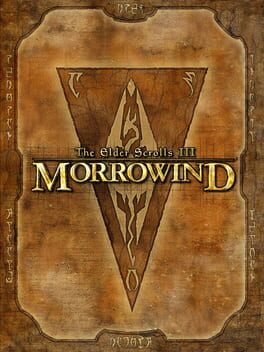
When Bethesda released The Elder Scrolls III: Morrowind in 2002, it not only introduced players to the ash‑laden island of Vvardenfell but also sparked a modding renaissance that still reverberates three decades later. The game’s open‑ended engine, combined with an early‑adopter community hungry for tools, gave rise to projects that would rewrite the very geography of Tamriel. Among those, Tamriel Rebuilt stands as the most ambitious: a volunteer‑driven effort that began in 2009 with the explicit goal of extending the official map beyond Vvardenfell to encompass the mainland provinces of Morrowin, Skyrim, and beyond. Over the years the project has grown from a handful of map patches to a sprawling, fully voiced, quest‑rich continent that rivals the scale of Bethesda’s own expansions.
In the current console‑centric era, where Bethesda’s flagship titles now launch simultaneously on Xbox Series X|S and PlayStation 5, the appetite for deep, PC‑first mod content remains surprisingly robust. Players who have migrated to newer releases still return to Morrowind for its distinct aesthetic and its comparatively lightweight modding pipeline. The release of a major expansion like "Poison Song" therefore arrives at a crossroads: it re‑energizes a legacy title while also underscoring the enduring market value of community‑generated content, a lesson that even the publisher’s own Creation Kit now strives to emulate across the newer Creation Engine iterations.
What Happened?
Over the weekend the Tamriel Rebuilt team pushed the long‑awaited "Poison Song" expansion to its public repository, instantly making it available through Nexus Mods and the project’s own download hub. The update unlocks two previously inaccessible factions – the storied Great House Indoril and the enigmatic Temple Ordinators – allowing players to formally pledge allegiance, complete unique questlines, and earn faction‑specific rewards. In addition, the expansion introduces a verdant new region described by the developers as a landscape of "lush gardens and bountiful fields," a stark visual contrast to the volcanic wastelands that dominate much of Morrowind’s mainland. Voice‑acted dialogues, custom armor sets, and a suite of new NPCs populate this area, giving veterans a fresh narrative foothold without breaking immersion.
From a development perspective, "Poison Song" represents the culmination of more than a decade of incremental world‑building. Lead modder Aric Velnar (known in‑game as "Neravarine") explained that the new content required a complete overhaul of the project’s quest framework to accommodate branching allegiance mechanics, a task that involved rewriting over 1,200 lines of script and integrating new UI elements compatible with both the original Gamebryo engine and the modernized OpenMW reimplementation. The team also coordinated a crowd‑sourced art sprint, enlisting over 40 artists to produce high‑resolution textures and hand‑painted foliage, ensuring the new region meets the visual fidelity expectations set by recent Bethesda releases.
Analysis
From a market standpoint, "Poison Song" serves as a potent reminder that community‑driven expansions can extend a game’s commercial lifespan far beyond the traditional DLC model. While Bethesda’s own post‑launch strategy for titles like Skyrim and Fallout 4 relied heavily on paid add‑ons, the free, volunteer‑based nature of Tamriel Rebuilt’s output creates a virtuous feedback loop: increased player engagement drives more donations, which in turn fund higher‑quality assets and larger development teams. This model could inform future publisher‑modder collaborations, especially as the industry grapples with the economics of live‑service games that often suffer from content fatigue.
Technically, the expansion pushes the limits of what legacy engines can achieve when paired with modern tooling. By leveraging the OpenMW project—a fully open‑source reimplementation of Morrowind’s engine—the team sidestepped many of the original game’s memory constraints, enabling richer textures and more complex AI scripts without sacrificing performance on contemporary hardware. This approach foreshadows a broader trend where modders act as de‑facto R&D labs for engine optimization, a role that could become increasingly valuable as studios look to back‑port features to older platforms or support cross‑generation releases.
XPLog Opinion
At XPLog we view "Poison Song" as both a triumph of community passion and a strategic case study for publishers. Bethesda has long touted its commitment to modders, yet the resources allocated to official support tools remain modest compared to the output of volunteer teams like Tamriel Rebuilt. By formally recognizing and perhaps even integrating such community milestones into their roadmap, Bethesda could harness a well‑spring of innovation while rewarding the very fanbase that sustains their franchises. In short, the expansion isn’t just a new set of quests—it’s a blueprint for symbiotic growth between developers and the modding ecosystem.
Final Thoughts
As "Poison Song" rolls out to the global Morrowind community, its impact will be measured not only in the hours of gameplay it adds but in the conversations it sparks about the future of fan‑driven content. Keep an eye on the Tamriel Rebuilt roadmap for hints of a possible "Sunspire" or "Northern Reach" update later this year, and watch Bethesda’s upcoming Creation Kit updates for any nods toward deeper integration with projects like OpenMW. Whether you’re a veteran Dunmer or a newcomer to the province, the expansion reaffirms that the world of Tamriel is still very much alive—and still being written, one community patch at a time.