.png)
Overview
After a thirteen‑year hiatus that saw the Call of Duty franchise disappear from Nintendo’s handheld and console line‑up following the Wii U era, Activision is poised to re‑enter the ecosystem with Modern Warfare 4 slated for the upcoming Switch 2. The announcement arrives at a pivotal moment for Nintendo, whose next‑generation hardware promises a leap in processing power, GPU bandwidth, and SSD‑based storage – all crucial ingredients for delivering a franchise historically defined by high‑fidelity graphics, massive multiplayer battles, and tight, responsive gunplay. The return is not merely nostalgic; it reflects a broader industry trend where major publishers are re‑evaluating the viability of portable premium titles in an increasingly cloud‑centric market.
Historically, Call of Duty’s brief flirtation with Nintendo began on the original Wii, where a stripped‑down version of Modern Warfare 2 attempted to capture the casual audience with motion‑controlled aiming, only to receive mixed reviews due to performance compromises. Subsequent titles never materialised for the Switch family, as the hardware constraints of the original console and the strategic focus on Xbox and PlayStation ecosystems took precedence. The new partnership with Digital Legends, a studio that cut its teeth on mobile shooters before being absorbed into Activision’s portfolio in 2021, signals a strategic shift: leveraging a developer adept at squeezing performance out of limited hardware while retaining the franchise’s core DNA.
What Happened?
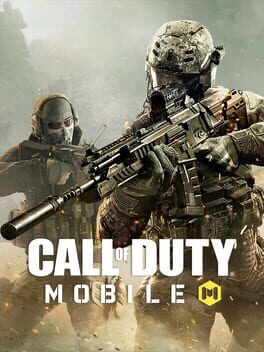
Activision’s latest press release confirmed that Digital Legends, the Spanish‑based studio renowned for its work on Call of Duty: Mobile and recent contributions to Black Ops 6, 7, and Warzone, will serve as the primary partner for the Switch 2 port of Modern Warfare 4. According to statements from Infinity Ward’s leadership, the collaboration is designed to ensure that the game runs at a native 60 fps on the new hardware, with a dynamic resolution scaling system that mirrors the visual fidelity seen on the PlayStation 5 and Xbox Series X. The partnership also extends to bespoke UI adjustments, controller mapping for the Switch’s hybrid design, and the integration of Nintendo’s online services to support cross‑play with existing PC and console ecosystems.
Beyond the technical roadmap, the announcement highlighted a shared vision between Infinity Ward and Digital Legends to preserve the franchise’s competitive integrity while embracing Nintendo’s unique player base. The developers emphasized that the Switch 2 version will feature exclusive content drops, community events timed with Nintendo’s holiday marketing calendar, and a tailored progression system that respects the handheld’s typical play sessions. This approach aims to bridge the gap between the hardcore shooter community and Nintendo’s traditionally family‑friendly audience, potentially redefining the demographic expectations for a Call of Duty title.
Analysis
The strategic implications of this move are multifold. From a market perspective, Nintendo’s projected install base for the Switch 2 exceeds 30 million units within its first year, offering Activision a fresh revenue stream that could offset the saturation seen on traditional consoles. Moreover, the partnership with Digital Legends mitigates the risk associated with porting a AAA title to a platform that historically demanded significant engine rework; the studio’s expertise in mobile optimisation translates directly to the hybrid nature of the Switch 2, where power efficiency and thermal constraints are paramount. Competitor-wise, Sony and Microsoft have already secured exclusive first‑party shooters for their next‑gen consoles, leaving a niche that Activision can exploit by delivering a premium, cross‑play capable experience on a portable device.
Technical hurdles remain, however. The Switch 2’s architecture, while a step up from its predecessor, still lags behind the raw horsepower of the latest AMD RDNA 3 GPUs found in the Xbox Series S and PlayStation 5 Digital Edition. Achieving parity in visual fidelity will likely require aggressive texture streaming, AI‑driven upscaling, and a possible reduction in world‑scale assets. Digital Legends’ track record with Call of Duty: Mobile suggests they possess the pipeline tools to meet these challenges, but the final product’s reception will hinge on how seamlessly the studio can balance performance with the franchise’s signature cinematic moments.
XPLog Opinion
At XPLog UK, we view the Modern Warfare 4 Switch 2 launch as a watershed moment for both Activision and Nintendo. It demonstrates Activision’s willingness to diversify its platform strategy beyond the traditional console duopoly, while Nintendo gains a marquee title that could elevate the Switch 2 from a “portable console” to a legitimate contender in the competitive shooter arena. If Digital Legends can deliver a fluid, content‑rich experience that respects the franchise’s competitive standards, the partnership could set a new benchmark for how AAA shooters are adapted for hybrid hardware, encouraging other publishers to revisit portable premium releases.
Final Thoughts
Modern Warfare 4’s return to Nintendo, powered by Digital Legends, is poised to reshape expectations for high‑octane shooters on handheld platforms. With a launch window this October, the industry will be watching closely to see whether the Switch 2 can sustain the franchise’s legacy of fast‑paced, visually impressive gameplay without compromise. Stakeholders should keep an eye on performance benchmarks released in the coming months, as well as community feedback during the early access phases, to gauge whether this collaboration heralds a new era of cross‑platform parity or remains a niche experiment.