.png)
Overview
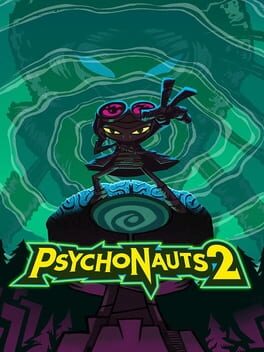
After a summer that saw the studio stripped from Microsoft’s internal roster and forced into a painful restructuring, Double Fine Productions is emerging with a bold public experiment that blends crowdfunding, live‑streamed development, and documentary storytelling. The new Amnesia Fortnight, slated for late August into September, is not just a nostalgic nod to the 2012 internal jam that birthed titles like Costume Quest and Gang Beasts; it is a strategic repositioning of Double Fine as a community‑driven indie powerhouse, leveraging the trust it built with backers of Psychonauts 2 and the cult reputation of its eccentric auteurs. In an industry where mid‑tier studios are increasingly squeezed between blockbuster publishers and ultra‑lean indie outfits, Double Fine’s decision to hand the reins of its next project to a live audience marks a rare attempt to fuse creative autonomy with transparent, participatory funding.
The timing aligns with a broader resurgence of game‑jam culture as a viable pipeline for low‑budget innovation, a trend catalysed by the success of events such as Ludum Dare and the rise of live‑streamed development on platforms like Twitch. Moreover, the partnership with 2 Player Productions—renowned for its immersive documentaries that chronicled the making of Broken Age and Psychonauts 2—adds a meta‑narrative layer, promising fans not only a prototype but also a behind‑the‑scenes chronicle of the creative process. This dual‑track approach could set a new benchmark for how studios showcase their workflows, potentially reshaping the expectations of both backers and the wider gaming press.
What Happened?
In a Kickstarter update posted on August 31, Double Fine announced that the upcoming Amnesia Fortnight will be a live‑streamed jam where backers will vote on a slate of nascent concepts, ultimately shepherding four prototypes through a compressed development sprint. From that pool, a single prototype will be earmarked for full production as a “small” game, with the promise of exclusive merchandise and rarity items for participants. The studio has outlined a schedule that stretches across most of September, providing enough room for rapid iteration while preserving the theatricality of a live event. The involvement of 2 Player Productions ensures that every brainstorming session, whiteboard scrawl, and frantic code‑push will be captured for a forthcoming documentary that aims to demystify the indie development cycle for a mainstream audience.
Double Fine’s leadership, represented by co‑founder Tim Schafer, framed the initiative as a “trust experiment”—a chance to prove that a proven creative collective can still deliver compelling experiences without the safety net of a major publisher. The Kickstarter page also hinted at potential cross‑media synergies, such as limited‑edition physical collectibles that echo the studio’s history of quirky, fan‑focused merchandise. While the event is positioned as a community‑centric celebration, it also serves a pragmatic purpose: generating fresh IP while maintaining a cash flow that mitigates the financial shock of the July layoffs and the broader market slowdown affecting mid‑size developers.
Analysis
The market implications of Double Fine’s live jam are multifold. Firstly, it reasserts the viability of Kickstarter as a financing vehicle for established studios, a space previously dominated by newcomers. By tying backer votes to prototype outcomes, Double Fine creates a feedback loop that could reduce the risk of post‑launch under‑performance—a chronic issue for mid‑budget titles that often suffer from mis‑aligned expectations. Secondly, the event could act as a catalyst for other ex‑publisher studios seeking to retain their IP while courting a more engaged fanbase; the precedent of a transparent, real‑time development process may inspire similar models at studios like Obsidian or inHouse, especially as console manufacturers continue to prune their first‑party line‑ups.
From a technical perspective, the compressed timeline forces the team to lean heavily on existing tools and pipelines, likely revisiting the in‑house engine that powered Psychonauts 2. This constraint could yield a leaner, more modular engine architecture that benefits future projects, effectively turning the jam into a low‑cost R&D sprint. However, the public nature of the process also raises the specter of “design by committee,” where fan votes might favor safer, more conventional concepts over the studio’s trademark eccentricity. Balancing artistic risk with crowd‑sourced approval will be a delicate dance that could define the success of the prototype selection.
XPLog Opinion
At XPLog we view Double Fine’s Amnesia Fortnight as a decisive statement that the studio refuses to become a relic of the 2000s indie renaissance; instead, it is leveraging its storied heritage to rewrite the playbook for mid‑tier development. By turning the jam into a public spectacle, Double Fine not only rebuilds goodwill after the painful Xbox split but also creates a sustainable pipeline for fresh IP that is both financially accountable and creatively vibrant—a formula that could very well become a lifeline for other veteran houses navigating the post‑AAA fragmentation.
Final Thoughts
As the livestream kicks off on August 31, industry watchers will be keenly tracking engagement metrics, backer sentiment, and the quality of the four prototypes that emerge. The ultimate test will be whether the selected concept can transition from a prototype to a polished, market‑ready title without losing the spark that made Double Fine a household name among gamers. If successful, Amnesia Fortnight could herald a new era where legacy studios blend the intimacy of indie funding with the spectacle of live development, setting a benchmark for community‑driven creation that reverberates through the next half‑decade of game publishing.