.png)
Overview
Factory simulation has moved from the niche corners of the PC market into a mainstream cultural touchstone, a trajectory that began with the procedural wonder of Factorio and accelerated through the cinematic polish of Satisfactory and the cosmic ambition of Dyson Sphere Program. Over the past five years, both publishers and indie studios have chased ever‑more intricate supply chains, sophisticated AI logistics, and visually arresting environments, all while trying to retain the accessibility that made the genre’s earliest titles appealing to a broader audience. Within this competitive crucible, Lantto Games—renowned for narrative‑driven strategy titles such as Thea: The Awakening—has partnered with the veteran indie publisher Hooded Horse to deliver a game that aspires to blend granular industrial depth with a poetic visual language rooted in real‑world heritage.
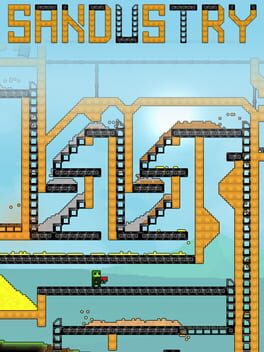
The aesthetic DNA of Sandustry is unmistakably drawn from the post‑industrial countryside of Wales, an area where the echo of centuries‑old slate quarries still reverberates through the hills. The developers have explicitly referenced the historic Aberllefenni quarries—the longest continuously operated slate mine in the world until its closure in 2003—as a touchstone for the game’s environmental storytelling. By transposing that gritty, weather‑worn landscape into a stylised, neon‑infused simulation, the title not only pays homage to a disappearing way of life but also creates a visual metaphor for the transformation of raw material into high‑tech production, a narrative arc that resonates deeply with players who crave both substance and style.
What Happened?
On 18 July 2026, Lantto Games and Hooded Horse announced the global launch of Sandustry on Steam, GOG, and the Epic Games Store, accompanied by a simultaneous release on the Xbox Series X|S and PlayStation 5. The game introduces a modular factory‑building system where players excavate raw ore from procedurally generated quarries, refine it through a cascade of customisable processing units, and ultimately ship finished components to a network of orbital outposts. The developers emphasised a “hands‑off” automation philosophy: once a production line is optimised, the AI manages throughput, allowing players to focus on macro‑scale expansion, strategic logistics, and aesthetic customisation of their industrial complexes.
Early access reports and the first wave of critical reviews highlight the game’s meticulous attention to UI ergonomics, a rarity in a genre that often sacrifices clarity for depth. The partnership with Hooded Horse ensured a robust launch‑day support infrastructure, including a dedicated modding toolkit that promises a vibrant post‑release ecosystem. Sales projections from market analytics firm SuperData suggest that Sandustry could surpass the $15 million revenue mark within its first quarter, a figure that would place it among the top‑performing indie simulations of the year and signal a strong appetite for titles that marry industrial rigor with artistic flair.
Analysis
The arrival of Sandustry arrives at a pivotal moment when the simulation market is fragmenting into hyper‑niche experiences. Its emphasis on a streamlined automation loop directly counters the “feature bloat” criticism levied at contemporaries such as Factorio's expansions, positioning the game as an accessible entry point for newcomers while still offering the layered optimisation that hardcore enthusiasts demand. Technically, the developers have leveraged a hybrid ECS‑based engine to handle thousands of concurrent entities without sacrificing frame‑rate stability on console hardware—a noteworthy achievement that could set a new performance benchmark for simulation titles on the current‑gen platforms.
From a competitive standpoint, the game also threatens to redraw the market share map between PC‑centric factories and console‑friendly simulations. Historically, titles like Dyson Sphere Program have been constrained by controller ergonomics, but Sandustry’s UI redesign, combined with its controller‑optimised radial menus, may entice a significant portion of the console player base to experiment with deep‑strategy gameplay. Moreover, the partnership with Hooded Horse brings a proven publishing pedigree that can navigate the complex landscape of cross‑platform updates, community engagement, and post‑launch content, potentially extending the game’s lifecycle well beyond the typical six‑month hype window.
XPLog Opinion
At XPLog UK we view Sandustry as a watershed moment for the factory‑simulation genre: it proves that an indie studio can deliver a technically ambitious, visually distinct, and commercially viable experience without the backing of a AAA budget, and it does so while honoring a specific cultural heritage that most contemporaries overlook. The game’s success could catalyse a new wave of historically grounded simulations, encouraging developers to embed regional narratives into the mechanics themselves, thereby enriching the player’s emotional investment beyond mere efficiency optimisation.
Final Thoughts
In sum, Sandustry arrives as both a celebration of industrial heritage and a bold statement about the future of simulation design, offering a delicate balance of depth, polish, and accessibility that could redefine player expectations across both PC and console ecosystems. Keep an eye on the upcoming July 2027 DLC roadmap, which promises expanded planetary biomes and a cooperative multiplayer mode that may further solidify its standing as a genre‑shaping landmark.