.png)
Overview
Konami’s decision to resurrect the Silent Hill franchise after a decade‑long hiatus has sent ripples through the survival‑horror community, and the recent 19‑minute gameplay showcase cements the company’s ambition to leverage the power of the PlayStation 5. The footage, released as part of an official deep‑dive, drops players into the mist‑shrouded streets of St. Amelia, a fictional Scottish town that appears to be the spiritual successor to the series’ classic fog‑laden locales. This setting is not merely a nostalgic callback; it signals a deliberate attempt to blend the franchise’s psychological roots with the next‑gen hardware’s capabilities, such as ray‑traced lighting, haptic feedback, and ultra‑fast SSD streaming, all of which promise to elevate dread from a visual cue to a tactile experience.
From a market perspective, Silent Hill’s re‑entry arrives at a moment when the survival‑horror genre is undergoing a renaissance, driven by titles like Resident Evil Village and the resurgence of indie dread‑craft experiences. The genre’s revival has been fuelled by a consumer appetite for narrative‑driven, atmospheric games that reward careful exploration over button‑mashing. Konami, once a dominant force in the early 2000s with titles such as Metal Gear Solid and the original Silent Hill entries, has spent recent years re‑orienting toward mobile and pachinko ventures. This new showcase therefore serves as both a litmus test of the company’s capacity to re‑establish itself in the core gaming market and a statement to competitors that the Silent Hill brand still commands a potent cultural cachet.
What Happened?
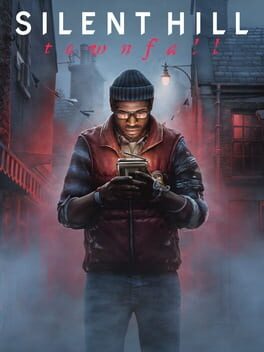
The deep‑dive opens with a cinematic prologue that places the player in the shoes of Simon, a nameless protagonist whose backstory is hinted at through environmental storytelling rather than exposition. As Simon steps onto the rain‑slick cobblestones of St. Amelia, the camera lingers on the oppressive fog, while the DualSense’s adaptive triggers simulate the resistance of trudging through wet ground. The sequence quickly transitions to a tutorial‑like segment introducing the “CRTV” device—a handheld, retro‑styled camera that functions as both a light source and a means to capture supernatural anomalies. This mechanic appears to be a modern reinterpretation of the series’ classic “camera” motif, echoing the original game’s use of a Polaroid to document grotesque entities.
Following the CRTV tutorial, the footage showcases a blend of open‑world exploration and scripted set‑pieces. Players are encouraged to investigate abandoned houses, decipher cryptic notes, and manage limited resources such as batteries and ammunition. Combat moments are brief but deliberate, emphasizing a “fight‑or‑flight” decision tree that forces players to weigh the risk of engagement against the psychological toll of confronting the Otherworld—a parallel dimension that materializes when the town’s reality fractures. The clip concludes with a chilling transformation of St. Amelia into an Otherworld landscape, complete with distorted geometry and a haunting, low‑frequency soundscape that hints at the game’s intended use of 3D audio to heighten immersion.
Analysis
From a commercial standpoint, Silent Hill: Townfall is positioned to capitalize on the PS5’s expanding install base, which surpassed 40 million units worldwide by mid‑2026. The decision to launch as a timed‑exclusive on Sony’s platform reflects a strategic partnership that could grant Konami favorable marketing placement, while also allowing the studio to fine‑tune performance on a single hardware architecture—a crucial factor given the series’ history of technical constraints on older consoles. Moreover, the integration of the CRTV mechanic suggests an intent to differentiate the title within a crowded horror market, offering a hybrid of classic investigative gameplay and modern sensory feedback that could set a new benchmark for genre design.
Technically, the footage reveals that Konami is exploiting the PS5’s ray‑tracing capabilities to render realistic fog and reflective surfaces, a notable evolution from the grainy, low‑poly atmospheres of the early 2000s. However, the reliance on heavy visual effects may introduce performance trade‑offs, especially in open‑area sections where draw distance and AI pathing are critical. Competitors such as Capcom have already demonstrated mastery of high‑fidelity horror with Resident Evil Village, meaning Townfall must deliver a compelling narrative and innovative gameplay loops to justify its premium positioning. The introduction of the Otherworld as a dynamic, player‑triggered event could also serve as a technical showcase for the console’s rapid SSD loading, allowing seamless transitions that were previously impossible.
XPLog Opinion
At XPLog UK we view Silent Hill: Townfall as a litmus test for Konami’s ability to re‑enter the core console arena without relying on nostalgia alone; the studio appears to be betting on a sophisticated blend of atmospheric design, tactile feedback, and a fresh investigative tool that could redefine how horror games engage the player’s senses, and if executed well, it will not only revive a beloved franchise but also push the entire genre toward more immersive, hardware‑driven experiences.
Final Thoughts
Silent Hill: Townfall’s first public glimpse hints at a title that could restore Konami’s reputation as a premier creator of psychological terror, while simultaneously showcasing the PlayStation 5’s unique strengths. As the industry watches for a full reveal later this year, the key dates to mark are the anticipated E3 showcase in September and the slated Q1 2027 release window, moments that will determine whether the fog of St. Amelia clears into a lasting legacy or dissipates as another missed opportunity.