.png)
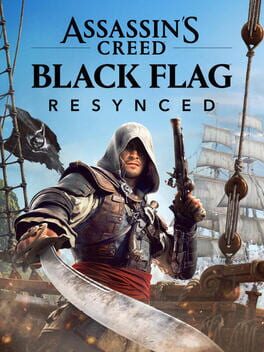
Ubisoft Singapore's remake Assassin's Creed Black Flag Resynced, due to launch on 9 July, significantly alters the original title's modern-day framing. The remake removes the first-person office‑simulator sequences that accompanied Edward Kenway's historical tale and replaces them with collectible modern-day rifts hidden throughout the Caribbean.
The change responds to the wider series' tonal shift following Assassin's Creed III, which largely concluded the Desmond arc and left Black Flag's contemporary subplot feeling like a brief epilogue. The original modern-day sections provided glimpses of returning characters such as Shaun and Rebecca, but Resynced reframes Edward's present-day echoes as optional discoveries rather than a linear hub-driven narrative.
"[The] modern-day direction has changed quite a bit," said creative director Paul Fu. "Desmond's story has also come to a conclusion some time ago, so it felt natural for us to evolve with the Animus Hub. Edward's story is now being told in modern-day rifts, which are now almost like secret bottles that you find in the Caribbean, so they no longer strongly telegraph and push the narrative anymore; you have to actively search for these secrets, and they provide 'What if?' scenarios. So, 'What if Edward chose greed over his wife?' for example. We wanted it to be a little more narrative-driven than they were in Shadows. But at the same time, we know that there are people who love the previous modern-day story as well. Personally, I'm one of them. I actually really like the Abstergo...
The rifts resemble the alternate‑timeline encounters last seen in Assassin's Creed Shadows (2025) but are presented as discrete, hidden experiences rather than a persistent contemporary storyline. According to Fu, the team aimed to make these moments more narrative-driven than the rifts in Shadows while also making them optional secrets players must seek out.
The remake's shift in modern-day design is a marked departure from the original Black Flag's approach and reframes how Edward Kenway's legacy is explored in the present, moving from an explicit hub-based commentary to scattered, speculative vignettes that invite player discovery.