.png)
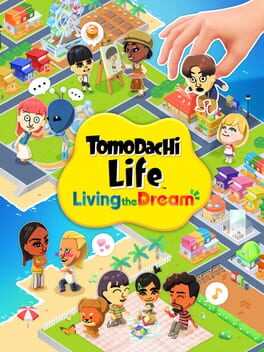
Tomodachi Life: Living The Dream revives Nintendo's peculiar Mii-based life-simulation on Switch with a familiar mixture of anarchic humour, quirky emergent moments and a surprisingly hands-off approach to progression. The experience remains centred on the oddball pleasures of creation and observation, but the novelty wears thin for those seeking structure or long-term challenge.
What it is
Living The Dream keeps the franchise's core intact: construct a roster of Miis, kit them out with eccentric fashions and watch as personalities collide, romances ignite and bizarre demands interrupt daily life. The Switch incarnation benefits from modern console polish — crisper visuals, smoother navigation and a more generous suite of customisation options — while never abandoning the random, often surreal humour that has fuelled the series since the 3DS original.
Gameplay and loop
The gameplay loop revolves around micro-interactions. Miis ask for clothes, food, advice and companionship, and fulfilling those requests unlocks short vignettes, interactions and new items. Many of the highlights are emergent: overheard conversations, unlikely pairings and visual gags triggered by wardrobe choices or apartment decorations. Those moments provide frequent laughs and make the game compelling in short bursts.
Despite the charm, the underlying systems are intentionally light. Tasks are simple and repetitive, and goals rarely present meaningful difficulty. Progression is driven by collecting items and expanding the population of the island, which sustains play for a moderate period but can feel aimless over long sessions. The lack of deeper systems — complex relationships, meaningful character growth or evolving challenges — limits long-term engagement for players who expect more than episodic humour.
Creation and customisation
The Mii creation suite has seen welcome expansion. Facial options, hairstyles and clothing choices are broader than in the original, allowing for more accurate likenesses and deliberately grotesque experiments in equal measure. The game's wardrobe and furnishing catalogue supplies almost endless material for absurdity, and part of the fun is testing how far the engine's dialogue can be pushed by provocative combinations.
Presentation
Graphically, Living The Dream is simple but effective. The aesthetic leans into a toy-like, slightly uncanny charm that suits the game’s humour. On Switch, character models and environments are cleaner than their 3DS predecessors, though the visual upgrade is evolutionary rather than revolutionary.
Audio design supports the comedy with a jaunty, unobtrusive soundtrack and plenty of vocal quips. Dialogue lines are short and frequently recycled, which reinforces the sense that the game is designed for brief laughs rather than narrative immersion.
Technical performance
Performance is stable across handheld and docked modes, with quick load times and responsive menus. Minor repetition in sound effects and reused dialogue lines is more noticeable than any technical fault; bugs and crashes were not encountered during testing.
Replayability and audience
The game will resonate strongly with those who enjoyed the original Tomodachi Life and anyone who delights in emergent sandbox comedy and character-creation antics. For completionists and players who favour structured objectives and varied long-term gameplay, the content can feel thin after the initial novelty subsides.
Verdict
Tomodachi Life: Living The Dream offers the same weird, wonderful Mii-driven comedy that defined its predecessor, updated for the Switch with improved customisation and a cleaner presentation. The title's greatest strength is its capacity to provoke laughter through absurdity and unexpected interactions; its greatest weakness is a somewhat limited gameplay backbone that relies on repetition. The result is a charming diversion that rewards creativity and short sessions more than marathon play.
- Score: 7/10
- Pros: Endless opportunities for ridiculous Mii creation, frequent laugh-out-loud emergent moments, polished Switch presentation.
- Cons: Repetitive tasks, thin long-term progression, recycled dialogue and gags.