.png)
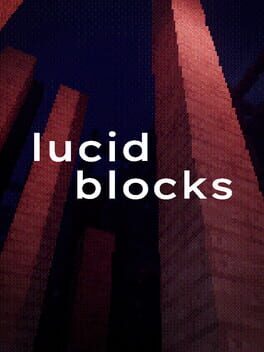
Lucid Blocks treats crafting as an act of strange, tangible consequence rather than a bland loop of resource sinks and stat gains. The game’s crystalline environments and procedurally generated landscapes make each experiment feel like an experiment, and each successful synthesis an aesthetic event as much as a mechanical one.
Inside a summit of blinding white blocks, players can smash crusts and tunnel into a shaded interior where a "tiny wild sun" can be coaxed into being. The light within these towers is described as slick and enamel-bright, with fissured reflections that recall the quartz architecture of Noctis. Externally the structure gleams so intensely that details blur; internally the crafted object — a pulsing, noisy star — reshapes the immediate world, its radiation inferred from secondary effects rather than straightforward illumination.
Rock Paper Shotgun’s feature on the game captures this sensibility: Lucid Blocks privileges the surprising physics of materials, the poetic logic of crafted artefacts and the sensory feedback of successful combinations. The skies are odd and unhelpful, dominated by a hazy torus that neither rises nor sets, so the only real source of light and consequence can be a formation created by players. That inversion — craft as primary source rather than mere convenience — is rare.
Most videogame crafting remains boring because it is instrumental. Inventories, recipe trees and resource grind exist to gate progression or inflate play-time. Lucid Blocks subverts that formula by making craft a mode of discovery. The act of synthesising a new object produces an immediate, often beautiful change in the environment: a sound, a glow, a new way for light to fracture across surfaces. Those outcomes reward curiosity and lateral thinking rather than optimisation spreadsheets.
Design choices in Lucid Blocks favour emergent possibility over explicit direction. The procedural biomes, the interaction of translucent materials and the unpredictable behaviour of crafted items mean that missteps can be as meaningful as success. In that sense the game functions less like a crafting system bolted onto progression and more like a laboratory where experimentation is the principal gameplay loop.
There is a pragmatic lesson in Lucid Blocks’ approach. When craft systems are allowed to affect ambience, navigation and sensation, they become memorable. Conversely, when crafting is reduced to numbers and checklists, it becomes forgettable. Lucid Blocks offers a vivid reminder that design choices — not just new mechanics — dictate whether crafting feels like alchemy or admin.
For players and developers attuned to the potential of emergent systems, Lucid Blocks stands out as an example of how atmosphere, material behaviour and procedural generation can be combined to make crafting feel alive.