.png)
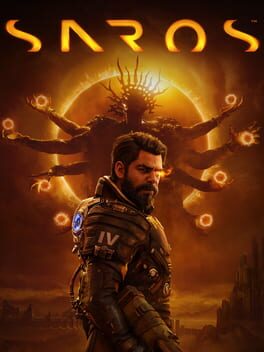
Following a hands‑on session with the upcoming PlayStation 5 exclusive Saros, XPLog spoke with director Gregory Louden and art director Simone Silvestri about the game's design and Housemarque's enduring relationship with arcade sensibilities.
Housemarque became synonymous with arcade‑style fare over two decades, with titles such as Resogun, Dead Nation, Super Stardust HD and Nex Machina defining the studio's output. A widely reported 2017 blog post claimed "arcade is dead" after Nex Machina's sales proved underwhelming, and the studio subsequently pivoted towards a different direction with 2021's Returnal. Returnal nonetheless retained many arcade hallmarks, reconfigured within a modern roguelite template.
Louden left no ambiguity on the matter during the interview. "No," he said when asked whether arcade was finished as a form. "I'd say overall that the arcade spirit lives on at Housemarque. It really has defined Saros, and it defined Returnal. We're gameplay first, so really, it is about having these razor‑sharp responsive controls, and I'd say the core feeling you get from the arcade experience is that flow and immersion, and that's fundamental to Saros.
"The idea of time slipping away as you're lost on Carcosa, weaving between projectiles and bullet ballet, the music driving the sensibility and the pace and the challenge and almost hypnotizing effect of the bullet patterns – we really try to push it all. So yes, I'd say that arcade lives on in Housemarque."
Saros positions those traits within a distinct aesthetic and mechanical package. The game's encounters emphasise precision and momentum, rewarding players who master movement and recognise pattern rhythms. Louden framed the studio's evolution as a transformation rather than a departure: core arcade principles remain, but they have been reinterpreted to fit contemporary expectations around pacing, narrative framing and audiovisual fidelity.
Art director Simone Silvestri outlined visual priorities that support the gameplay goals. Clarity and readability in dense action sequences are balanced with a strong sense of place. Carcosa is presented as an environment that complements the mechanical intent, where lighting, particle work and sound design work in concert to focus player attention and reinforce the hypnotic cadence of encounters.
XPLog's three‑hour preview of Saros highlighted how those elements combine in practice. Tight input response, deliberate enemy telegraphing and carefully choreographed projectile patterns produce moments of flow more commonly associated with arcade cabinets than with modern single‑player console releases. The audio design plays a prominent role in driving tempo, helping to turn hectic sequences into rhythmic tests of skill.
Housemarque's public about‑face in 2017 now reads as a recalibration rather than a renunciation. With Saros, the studio appears determined to prove that arcade design can thrive when married to contemporary production values and a willingness to iterate on form. The result positions Saros as a showcase for what has been described as an "arcade reborn" — a game that prioritises immediate gameplay clarity and sensory rhythm while still operating comfortably within the expectations of current PlayStation audiences.
Saros remains upcoming and many details are yet to be revealed, but the studio's messaging and the previewed build both point to a title that embraces Housemarque's legacy while pushing it into new territory.