.png)
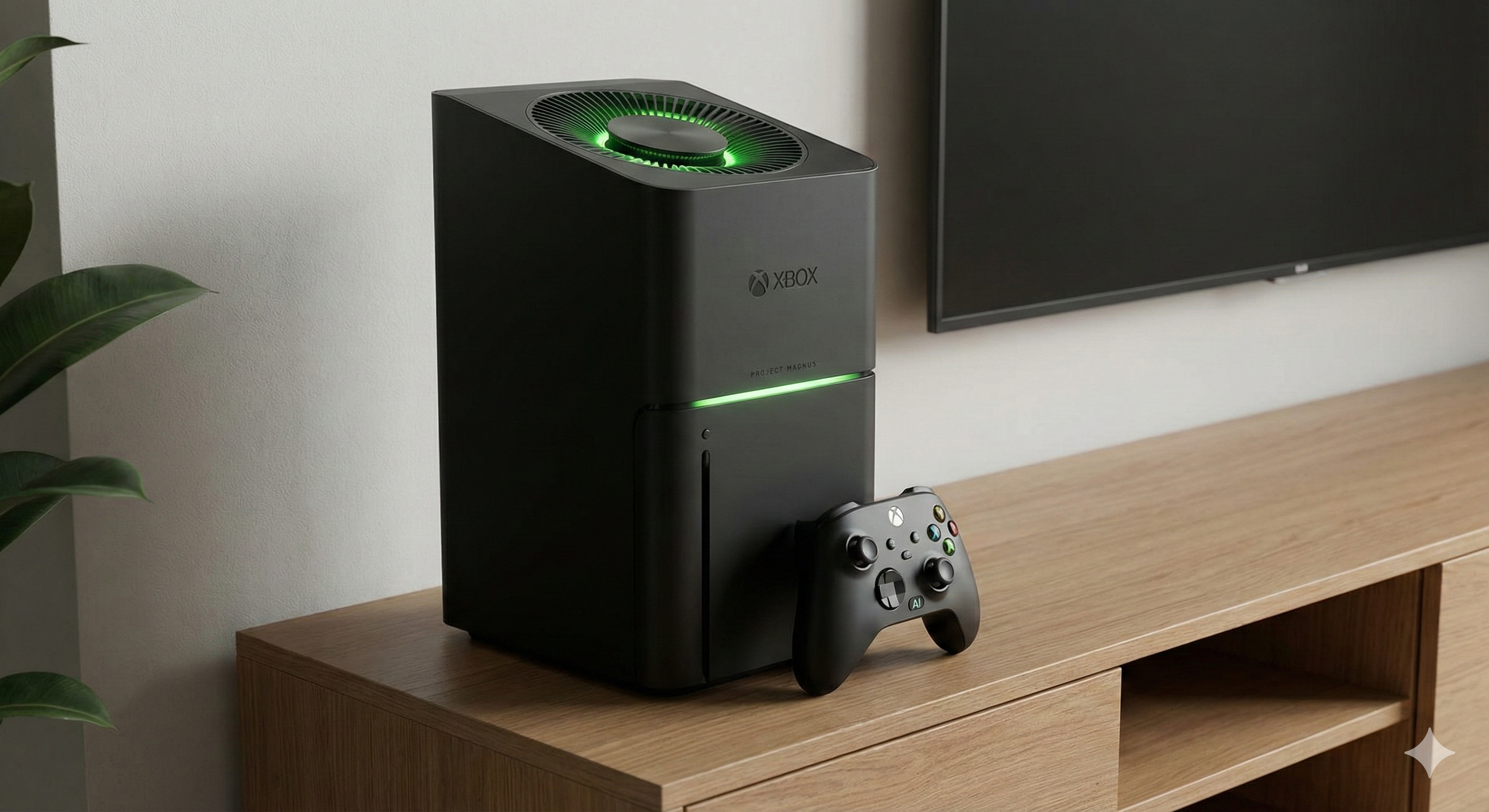

The road to the next generation of console gaming just got a lot clearer. Following confirmation from AMD CEO Lisa Su that the company is gearing up for a 2027 launch of Microsoft’s next console, a massive new leak suggests the silicon specifications for the device have been finalized.
Codenamed "Magnus," the new chip reportedly leverages a hybrid architecture that could fundamentally change how consoles handle processing power. Here is everything we know about the specs that could be powering your living room in 2027.
The Hybrid CPU Strategy
According to reports from Moore's Law is Dead and Overclock3D, Microsoft is moving away from the standard 8-core setup used in the Series X. Instead, the "Magnus" chip will reportedly utilize a hybrid configuration featuring AMD's upcoming Zen 6 architecture.
The leaked configuration includes:
- 3 Performance Cores (Zen 6): Focused on high-frequency tasks and raw speed.
- 8 Efficiency Cores (Zen 6c): Dedicated to background processes and multi-threaded scaling while maintaining low power consumption.
This 11-core setup allows the console to dedicate maximum power to demanding game logic while offloading OS and background tasks to the efficient 'c' cores, potentially offering a massive leap in effective in-game performance.
RDNA 5 and The Ray Tracing Jump
On the graphics front, the leap looks even more significant. The leak indicates Microsoft is skipping RDNA 4 entirely for this generation, jumping straight to RDNA 5. The GPU reportedly features 68 Compute Units (CUs)—a roughly 30% increase over the Xbox Series X's 52 CUs.
However, raw core counts don't tell the whole story. The architectural improvements in RDNA 5 are expected to heavily target Ray Tracing and AI workloads. Analysts believe this generation could finally make full Path Tracing viable on home consoles, moving beyond the hybrid rasterization techniques common today.
The Era of the NPU
Perhaps the most distinct addition to the spec sheet is a dedicated NPU (Neural Processing Unit).
- Target Performance: 110 TOPS (Trillions of Operations Per Second) at 6 watts.
- Efficiency Mode: 46 TOPS at just 1.2 watts.
While PC gamers have relied on GPU tensor cores for AI upscaling (like DLSS), the inclusion of a dedicated NPU suggests Microsoft is building the entire system architecture around AI. This could offload upscaling, physics, and NPC behavior from the main GPU, freeing up resources for higher framerates and graphical fidelity.
Memory and Bandwidth
The memory subsystem is reportedly moving to GDDR7 on a 192-bit bus. While the silicon technically supports up to 48GB of memory, the report notes that a retail unit is unlikely to max this out due to cost constraints. We will likely see a more consumer-friendly capacity that still offers a significant speed boost over current GDDR6 standards.
What This Means for 2027
With the silicon finalized, Microsoft can now only make minor tweaks before mass production begins. If these specs hold true, the next Xbox won't just be a "faster Series X"—it will be a smarter, more efficient machine designed to rely as much on AI reconstruction as it does on raw horsepower.