
Overview
When MachineGames announced Indiana Jones and the Great Circle, the gaming press and long‑time fans alike were taken aback. The Swedish studio had spent the better part of a decade polishing the visceral, over‑the‑shoulder shooting experience that made Wolfenstein: The New Order a benchmark for modern first‑person shooters. Yet the decision to tackle a franchise built on archaeological puzzle‑solving, whip‑cracking acrobatics and close‑quarters brawling signaled a bold pivot, one that sits at the intersection of licensed adventure revival and the industry’s broader appetite for narrative‑driven, hybrid gameplay.
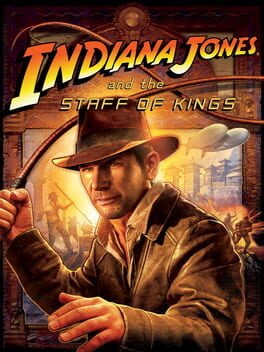
That pivot cannot be understood without revisiting the historical context of both properties. The Wolfenstein series, resurrected by MachineGames in 2014, capitalized on a resurgence of retro‑inspired shooters while injecting cinematic storytelling and a polished combat loop. Meanwhile, the Indiana Jones license, after a long lull following the mixed reception of Lego Indiana Jones and the tepid response to the 2009 game “Indiana Jones and the Staff of Kings,” had been yearning for a modern, high‑budget treatment. The convergence of these two trajectories—an established developer eager to stretch its design muscles and a beloved IP desperate for relevance—set the stage for a development journey that the studio itself described as “very tough.”
What Happened?
In a candid interview on the FRVR podcast, design director Jens Andersson revealed that the core challenge lay not in the narrative or the visual fidelity, but in re‑engineering the combat system from a gun‑centric paradigm to a melee‑first approach. MachineGames’ engine, originally tuned for bullet physics, recoil patterns and enemy AI that reacts to ranged threats, had to be retrofitted to accommodate whip‑based disarms, hand‑to‑hand takedowns, and environmental interactions that feel as satisfying as pulling the trigger on a well‑placed shot. The team spent months iterating on animation blending, hit‑box precision, and sound design to ensure that every punch, kick, and whip crack resonated with the same weight that fans had come to expect from Wolfenstein’s gunplay.
Beyond the mechanical overhaul, the studio also faced the delicate task of honoring the Indiana Jones mythos while injecting fresh gameplay hooks. The narrative team consulted with Lucasfilm’s story group to weave a plot that bridges the classic 1930s adventure tone with contemporary storytelling sensibilities, introducing a “Great Circle” artifact that promises global stakes. Simultaneously, the level designers crafted set pieces that encourage vertical traversal and puzzle solving, echoing the iconic chase sequences of the films while ensuring that each encounter can be resolved through either brute melee force or clever environmental use, thereby preserving player agency.
Analysis
From a market perspective, MachineGames’ gamble aligns with a noticeable trend: studios with strong shooter pedigrees are diversifying into hybrid action‑adventure titles to capture broader demographics. Ubisoft’s recent success with the “Assassin’s Creed” renaissance and Naughty Dog’s expansion from linear narratives to open‑world exploration illustrate that audiences reward franchises that evolve their core mechanics. By transplanting its polished combat philosophy into a melee‑heavy framework, MachineGames not only expands its own portfolio but also positions itself competitively against studios like Crystal Dynamics, which have long dominated the licensed adventure space with titles such as “Tomb Raider.” The technical hurdles—reworking AI to anticipate close‑range threats, rebalancing enemy difficulty without the safety net of ranged weapons, and ensuring the iconic whip feels both a tool and a weapon—are non‑trivial, yet the studio’s demonstrated ability to iterate quickly, as seen during the Wolfenstein post‑launch updates, bodes well for a polished final product.
Long‑term, the success of Indiana Jones and the Great Circle could have ripple effects across the console ecosystem. The game is slated for a timed exclusive launch on the PlayStation 5, leveraging the platform’s haptic feedback and adaptive trigger capabilities to heighten the tactile sensation of each whip crack and fist strike. Should the title achieve strong sales, it may reinforce Sony’s strategy of securing high‑profile licensed experiences to differentiate its hardware, while also encouraging other developers to consider similar cross‑genre experiments. Conversely, a lukewarm reception could signal that even seasoned shooters must tread carefully when abandoning the familiar gunplay loop that underpins much of their design identity.
XPLog Opinion
At XPLog UK we view MachineGames’ transition as a calculated risk that could redefine the studio’s creative trajectory; the willingness to abandon a proven formula in favor of a melee‑centric adventure demonstrates a maturity that many mid‑tier developers lack. If the team can deliver a combat system that feels as rewarding as pulling the trigger on a Wolfenstein enemy, they will not only cement Indiana Jones as a viable modern franchise but also set a new benchmark for how licensed games can evolve beyond shooter tropes, ultimately enriching the core gamer’s experience across genres.
Final Thoughts
Indiana Jones and the Great Circle stands at a crossroads where nostalgic reverence meets ambitious design reinvention. The upcoming release, slated for Q2 2027, will be the first true test of MachineGames’ ability to translate its gun‑driven expertise into a melee‑rich adventure that satisfies both die‑hard Indiana fans and the studio’s existing shooter audience. Keep an eye on post‑launch performance metrics, community feedback on the combat feel, and how the title influences future licensed collaborations across the PlayStation ecosystem.