
Overview
The Pokémon franchise has spent the better part of two decades refining a formula that blends casual collect‑and‑play loops with deep, long‑term progression, a model that has turned Pokémon Go, Pokémon Masters, and now Pokémon Pokopia into cornerstones of Nintendo’s mobile strategy. As the industry wrestles with the fatigue of endless banner cycles and the push for more meaningful player agency, the upcoming "Apples to Applin" event—running from 16 November to 1 December 2026—arrives at a critical juncture. It signals Nintendo’s intent to inject fresh design philosophy into its live‑service ecosystem, leveraging seasonal storytelling and tangible in‑game economies to keep both veteran collectors and newer entrants engaged during the holiday window.
Historically, limited‑time events in Pokémon mobile titles have acted as both revenue spikes and community catalysts. Early‑stage events in Pokémon Go, for instance, introduced regional exclusives that spurred global travel and social coordination, while later iterations leaned heavily on paid bundles and gacha mechanics. Pokopia’s latest offering builds on that lineage by introducing five new Generation 8 Grass‑ and Dragon‑type creatures, but it also re‑imagines the acquisition pathway: players must hunt for a novel currency—Syrupy Apples—earned through daily challenges and community tasks, rather than simply spending premium currency. This shift reflects broader market pressure from competitors like Niantic’s “Pokémon GO Fest” and Bandai Namco’s “Dragon Ball Z: Dokkan Battle,” which have begun rewarding sustained play over pure monetisation.
What Happened?
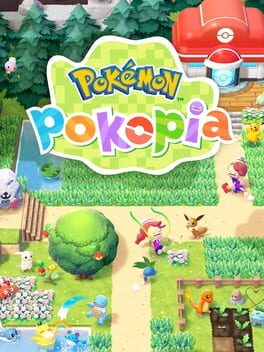
From 16 November, the Pokopia map will sprout a whimsical orchard outside the central Pokémon Center, where a newly‑introduced Applin will appear, offering players a quest chain centered around the collection of Syrupy Apples. These apples are not merely decorative; they serve as a gate‑keeping resource that unlocks a suite of exclusive items, ranging from decorative habitat pieces to functional boosts that enhance breeding yields for the five new Grass‑ and Dragon‑type Pokémon. The event’s design cleverly intertwines narrative and utility: each apple harvested is tied to a mini‑story about the orchard’s caretaker, reinforcing a sense of progression that feels earned rather than purchased.
The five new Pokémon—each a hybrid of the beloved Grass and Dragon archetypes—have been teased as “limited‑time only,” meaning they will not reappear in standard rotations after 1 December. This scarcity is a calculated move, echoing the success of previous limited‑time exclusives that drove spikes in daily active users (DAU) and average revenue per user (ARPU) during event windows. Moreover, the event introduces a new habitat‑building mechanic, allowing players to construct themed environments that showcase their collected creatures. This not only deepens the personalization aspect of Pokopia but also creates shareable content that can ripple across social platforms, amplifying organic reach.
Analysis
From a market perspective, the Apples to Applin event arrives at a time when the mobile live‑service sector is grappling with player churn and regulatory scrutiny over loot‑box‑like mechanics. By anchoring progression to a play‑earned currency, Nintendo sidesteps potential backlash while still preserving a monetisation avenue through optional premium packs that accelerate apple collection. This hybrid model mirrors trends seen in titles such as “Genshin Impact,” where free‑to‑play progression is balanced with a “wish” system, but Pokopia’s approach is arguably more transparent, as the primary path to the exclusive Pokémon is skill‑based rather than chance‑based.
Competitively, the event positions Pokopia against both legacy franchises and emergent indie live‑services. The inclusion of Dragon‑type hybrids taps into the enduring popularity of dragon mythology in gaming, while the Grass‑type focus aligns with the broader eco‑centric narrative that has been gaining traction in 2026, as players increasingly gravitate toward games that incorporate environmental themes. Technically, the rollout of a new habitat‑building engine poses challenges: server load must accommodate a surge in simultaneous construction actions, and the art pipeline must render a diverse set of decorative assets without compromising performance on lower‑end devices. Nintendo’s prior experience with scalable cloud‑based asset streaming in Pokémon Go suggests they are well‑placed to mitigate these risks, but the true test will be the stability of the live‑service during peak holiday traffic.
XPLog Opinion
At XPLog UK, we view the Apples to Applin event as a watershed moment for Nintendo’s mobile ambitions: it demonstrates a mature understanding that player retention now hinges on meaningful, play‑driven rewards rather than pure spend‑walls. By marrying limited‑time exclusivity with a transparent, effort‑based economy, Pokopia not only safeguards its brand integrity but also sets a benchmark that other publishers will struggle to match without compromising on either monetisation or player goodwill.
Final Thoughts
In sum, the Apples to Applin event is more than a seasonal gimmick; it is a strategic inflection point that could reshape how Pokémon mobile titles balance scarcity, player agency, and revenue. As the event concludes on 1 December, the community will be watching closely to see whether the newly‑earned habitats and exclusive Pokémon translate into sustained engagement beyond the holiday surge—a metric that will undoubtedly inform Nintendo’s roadmap for future live‑service updates throughout 2027 and beyond.