
Overview
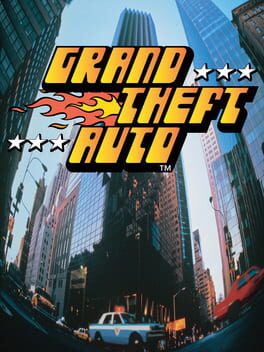
As the gaming calendar hurtles toward what many pundits are already dubbing the most consequential launch of 2026 – and perhaps the decade – the industry is awash with speculation, data points, and a palpable sense of anticipation. Rockstar Games’ upcoming title, Grand Theft Auto VI, has already shattered pre‑order forecasts, prompting analysts to revisit the franchise’s evolution from its modest 1997 debut on the PlayStation 1 to the sprawling, photorealistic sandbox that now dominates the cultural conversation. This resurgence is not merely a product of nostalgia; it reflects a broader market trend where legacy IPs are being re‑engineered to exploit next‑gen hardware, cloud streaming capabilities, and ever‑more sophisticated live‑service ecosystems.
Within this fevered climate, Eurogamer’s annual "GTA Week" has resurfaced as a barometer of community sentiment, and its irregular series "The Big Question" has been revived to interrogate a timeless debate: which entry in the series truly stands as the pinnacle of the open‑world experience? The question may appear whimsical, but it serves as a conduit for deeper discussions about design philosophy, technological milestones, and the shifting expectations of a player base that now demands both cinematic storytelling and emergent gameplay freedom.
What Happened?
Earlier this week, Eurogamer published a feature that formally re‑launched "The Big Question" with a fresh editorial angle, inviting readers to weigh in on the ultimate GTA title. The article does not merely list fan‑favorite moments; it contextualises each game’s release within the broader economic and hardware landscape of its era – from the PlayStation 2’s market dominance that propelled GTA III into mainstream consciousness, to the Xbox 360 era where GTA V set new standards for revenue generation through its online component, GTA Online.
Simultaneously, the piece has sparked a cascade of social‑media polls, Reddit AMAs, and YouTube deep‑dives, each dissecting variables such as vehicle handling physics, soundtrack curation, and narrative depth. Developers from Rockstar have been quoted emphasizing their commitment to iterative refinement, noting that every new GTA title inherits a “DNA” of mechanics that are tweaked, expanded, or occasionally discarded based on player telemetry and critical feedback. This dialogue underscores how the franchise has become a living laboratory for open‑world design.
Analysis
The commercial ramifications of this renewed discourse are significant. GTA V remains the best‑selling single‑title game of all time, a fact that has forced competitors like Ubisoft’s Assassin’s Creed and Bethesda’s The Elder Scrolls series to double‑down on post‑launch content pipelines. Rockstar’s ability to monetize a single IP across multiple console generations demonstrates a mastery of long‑tail revenue that many studios struggle to emulate. Moreover, the impending launch of GTA VI on both legacy and next‑gen platforms will likely accelerate the migration of players toward newer hardware, reinforcing Sony’s and Microsoft’s strategic bets on high‑fidelity exclusive titles.
From a technical perspective, each iteration of GTA has acted as a benchmark for engine evolution. The transition from the RenderWare engine to the proprietary Rockstar Advanced Game Engine (RAGE) enabled unprecedented scale, while the integration of real‑time ray tracing and AI‑driven crowd simulations in GTA VI promises to push the envelope further. However, these advancements also introduce development risk: higher fidelity demands longer production cycles and larger budgets, potentially compressing the window for future releases if market reception falters.
XPLog Opinion
At XPLog UK we contend that the "best GTA" debate is less about nostalgic sentiment and more about identifying the franchise’s strategic inflection points – moments where design choices either expanded the series’ demographic reach or cemented its cultural relevance. While GTA III shattered the notion that open worlds could be narrative‑driven, GTA V demonstrated the power of a robust multiplayer ecosystem. The forthcoming GTA VI must therefore balance these legacies, delivering a single‑player experience that feels as fresh as the online component feels sustainable, lest the series risk stagnation in an increasingly competitive sandbox market.
Final Thoughts
In sum, the resurgence of "The Big Question" mirrors the industry’s broader reckoning with legacy franchises in an era of rapid technological turnover. As the launch window for GTA VI narrows – with the official release slated for late 2026 and a series of pre‑launch demos expected at major events like Summer Game Fest – the conversation will only intensify. Players, analysts, and developers alike should keep a close eye on how Rockstar leverages its storied past to shape the next chapter of open‑world gaming, and whether the answer to "the best GTA" will finally be written in stone or remain an ever‑evolving debate.