
Overview
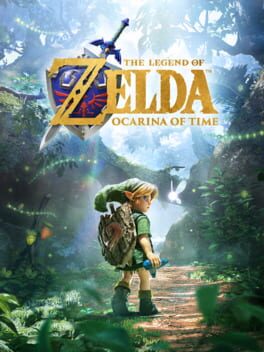
The Legend of Zelda: Ocarina of Time remains a cornerstone of gaming history, a title that not only defined the 3D action‑adventure genre on the Nintendo 64 but also set a benchmark for narrative pacing, puzzle design, and emotional resonance. Since its 1998 launch, the game has been dissected in academic circles, cited in design curricula, and repeatedly re‑experienced by successive generations of players, each discovering new layers of depth in its sprawling Hyrule. In recent years, Nintendo has leaned heavily into reviving its legacy catalog, leveraging the Switch’s hybrid nature to deliver polished remasters that appeal both to nostalgic veterans and newcomers hungry for a curated entry point into the company’s storied franchises.
Against this backdrop, the latest iteration of Ocarina of Time—dubbed the “Switch 2 Enhanced Remaster”—arrives at a moment when the industry is witnessing a resurgence of high‑profile remakes, from Capcom’s Resident Evil 2 to Square Enix’s Final Fantasy VII Remake. The market trend underscores a broader consumer appetite for refined, technically upgraded classics that can compete with contemporary releases on visual fidelity and quality‑of‑life improvements. Nintendo’s decision to not merely port the original but to re‑engineer pivotal set‑pieces, such as the iconic Master Sword acquisition, signals a strategic gamble: can the company deepen emotional payoff without alienating purists who guard the original’s sanctity?
What Happened?
During a livestreamed Nintendo Direct last month, the company unveiled a side‑by‑side comparison of the Master Sword moment from the original N64 version and the newly rendered sequence for the Switch 2 Enhanced Remaster. The comparison highlighted a dramatically expanded cutscene, richer lighting, and a subtle yet powerful orchestral swell that aligns the player’s anticipation with Link’s destiny. Moreover, the developers introduced a brief interactive vignette wherein Link’s hand trembles as he grasps the sword, a design choice that injects a tactile sense of weight and gravitas previously impossible on the hardware of the late ’90s.
Lead director Takashi Tezuka, speaking to reporters, emphasized that the enhancement was not a superficial graphical upgrade but a narrative recalibration. “We wanted to honor the moment that defined a generation,” he said, “by giving it the emotional resonance it deserves in today’s cinematic gaming language.” The remaster is slated for a global launch in Q2 2027, with a simultaneous rollout across the current Switch, the upcoming Switch 2, and a cloud‑streaming option for legacy hardware. Nintendo also promised post‑launch support, including optional difficulty tweaks and a “Legacy Mode” that preserves the original frame‑rate and visual style for purists.
Analysis
From a market perspective, Nintendo’s deepening of a single, beloved set‑piece may appear modest, yet it serves as a litmus test for the company’s broader revitalization strategy. By allocating resources to fine‑tune a moment that already enjoys mythic status, Nintendo signals confidence that incremental, high‑impact refinements can drive sales comparable to full‑scale reimaginings. This approach also positions Nintendo favorably against competitors who are pouring massive budgets into entirely new IPs; it leverages existing brand equity while keeping development risk relatively low. The timing aligns with the projected surge in console sales for the Switch 2, where a strong launch lineup anchored by legacy titles could accelerate adoption rates and extend the platform’s lifecycle.
Technically, the remaster showcases Nintendo’s evolving engine capabilities, particularly in real‑time global illumination and adaptive audio mixing. The challenge of preserving the original’s timing—critical for puzzle solutions and boss patterns—while integrating modern visual fidelity required a delicate balance of frame‑perfect emulation and selective re‑authoring. This hybrid methodology hints at a future pipeline where Nintendo can resurrect other classics (such as Metroid Prime or Star Fox 64) with comparable care, potentially creating a new revenue stream that capitalizes on the studio’s extensive back catalog without cannibalizing new IP development.
XPLog Opinion
At XPLog UK, we view the enhanced Master Sword sequence as a masterstroke of emotional engineering; it demonstrates that Nintendo still understands the alchemy of nostalgia—mixing reverence for the past with a forward‑looking polish that feels inevitable rather than forced. While some may argue that such micro‑enhancements are merely fan service, the reality is that they reinforce Nintendo’s brand narrative of “timeless quality,” a promise that keeps core gamers invested and fuels the ecosystem of collector‑driven sales that underpin the company’s fiscal health.
Final Thoughts
The Switch 2 Enhanced Remaster of Ocarina of Time is poised to become a benchmark for how legacy content can be thoughtfully upgraded for modern audiences. By focusing on a singular, emotionally resonant moment, Nintendo not only reaffirms the game’s cultural significance but also charts a sustainable path for future remasters that respect both the original design and contemporary player expectations. Keep an eye on the official release window in mid‑2027 and the subsequent post‑launch patches that will likely reveal how Nintendo balances preservation with innovation in the years ahead.