
Overview
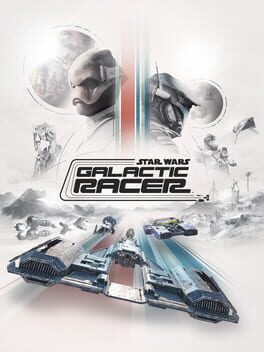
When Fuse Games unveiled its debut title, Star Wars: Galactic Racer, the industry was skeptical of another licensed racing venture entering an arena already dominated by legacy franchises such as Mario Kart and the venerable Star Wars Episode I: Racer. Yet the studio’s decision to blend the high‑octane thrill of arcade‑style competition with the iconic visual language of a galaxy far, far away proved to be a calculated gamble that resonated with both casual fans and hardcore racers. By tapping into the nostalgia of the original 1999 racer while introducing a modern, cross‑platform architecture, Fuse positioned its offering at the intersection of heritage and innovation—a sweet spot that has historically propelled titles from modest indie projects to cultural touchstones.
Reaching 1.5 million players in under a year is a metric that transcends raw numbers; it signals a shift in how licensed IP can be leveraged in the live‑service model that now defines much of the console and PC ecosystems. In a market where premium‑priced, single‑purchase experiences are increasingly supplemented by ongoing content drops, the milestone illustrates that a well‑executed, free‑to‑play or low‑cost entry point can generate a sustainable player base capable of supporting post‑launch revenue streams. Moreover, the achievement arrives at a moment when Disney‑Lucasfilm’s licensing strategy has been deliberately cautious, favoring high‑budget, narrative‑driven titles over experimental spin‑offs—making Fuse’s success an intriguing data point for future partnership negotiations.
What Happened?
Fuse Games confirmed the player count via a vibrant social media post that featured the enigmatic Biddy Blas—a character whose meme‑worthy presence has become a rallying point for the community. The announcement was accompanied by a concise statement from the studio’s creative director, who highlighted the “organic growth” of the community and thanked the fanbase for “fueling the hyper‑drive of Galactic Racer’s evolution.” While the post did not disclose revenue figures, the sheer scale of the audience suggests a healthy active‑user ratio, especially given the title’s availability across PlayStation, Xbox, PC, and emerging cloud platforms.
Alongside the celebration of the milestone, Fuse teased a slate of forthcoming updates designed to keep momentum alive. Early hints point toward new hyperspace circuits inspired by lesser‑explored corners of the Star Wars canon, additional starfighter skins tied to upcoming film releases, and an expanded multiplayer ladder that will introduce cross‑play matchmaking. The studio also alluded to a “seasonal progression system” that will reward long‑term engagement without resorting to pay‑to‑win mechanics—a balancing act that could set a benchmark for future licensed live‑service titles.
Analysis
From a market perspective, the 1.5 million‑player figure places Galactic Racer in a competitive tier alongside other successful niche racers such as WRC 9 and the revived F1 series, all of which have carved out dedicated followings despite operating outside the mainstream blockbuster sphere. This achievement underscores a broader industry trend: well‑curated licensed experiences can thrive when they eschew the “cash‑grab” stereotype and instead focus on delivering authentic, high‑quality gameplay that respects the source material. For Disney‑Lucasfilm, the data point may encourage a re‑evaluation of its licensing framework, potentially opening doors for more agile developers to experiment with the brand under tighter creative oversight.
Technical considerations also play a pivotal role in the title’s trajectory. Fuse’s decision to build on a modular engine that supports simultaneous updates across disparate hardware reduces the friction often associated with post‑launch patches, allowing the studio to iterate rapidly in response to community feedback. However, the ambition to implement cross‑play and a seasonal progression system introduces challenges around server stability, anti‑cheat measures, and balancing new content against legacy player expectations. Successfully navigating these hurdles will not only cement Galactic Racer’s longevity but could also serve as a case study for future licensed live‑service projects seeking to avoid the pitfalls that have plagued similar endeavors.
XPLog Opinion
At XPLog UK we view Fuse Games’ milestone as a compelling proof‑of‑concept that the Star Wars licence still possesses untapped kinetic energy when paired with disciplined, community‑first design. The studio’s restraint in monetisation, combined with a clear roadmap for content, suggests a sustainable model that could inspire other mid‑tier developers to pursue licensed ventures without surrendering creative control. Nonetheless, the road ahead is fraught with the risk of feature creep and player fatigue; maintaining a delicate equilibrium between fresh updates and preserving the core racing experience will be the ultimate test of Fuse’s long‑term vision.
Final Thoughts
Star Wars: Galactic Racer’s ascent to 1.5 million players marks more than a numerical triumph—it heralds a potential renaissance for licensed, service‑oriented games that prioritize gameplay fidelity over aggressive monetisation. As Fuse Games rolls out its promised updates throughout the coming quarters, the industry will be watching to see whether the title can translate its early success into a lasting franchise, and whether Disney‑Lucasfilm will leverage this momentum to broaden its licensing portfolio. Keep an eye on the studio’s Q1 2025 roadmap announcement for concrete dates on new tracks, seasonal passes, and the first major cross‑play tournament that could cement Galactic Racer’s place in the e‑sports arena.