
Overview
Rockstar Games has long cultivated a mythic aura around each new Grand Theft Auto release, turning launch windows into cultural events that ripple across the gaming ecosystem. As the company prepares to unleash Grand Theft Auto VI, the media landscape is saturated with speculation, pre‑order incentives, and a cascade of community‑generated content that fuels anticipation far beyond traditional advertising budgets. In this climate, Eurogamer’s GTA Week serves as a curated hub, aggregating news, lore deep‑dives, and fan‑centric experiences to keep the conversation alive while competitors scramble for share of the lucrative open‑world market.
The latest initiative—a contest inviting players to recount their favourite GTA memory for a chance to win a copy of the forthcoming title—might appear modest on the surface, yet it taps into a sophisticated strategy of user‑generated hype. By leveraging nostalgia, Rockstar not only rewards its most vocal fans but also harvests organic social media amplification that can outpace paid campaigns. This approach mirrors broader industry trends where publishers weaponise community storytelling to sustain momentum across the multi‑year development cycles that now define AAA releases.
What Happened?
Eurogamer announced that, as part of its GTA Week coverage, readers can submit a written recollection of their most cherished Grand Theft Auto moment for a chance to receive a pre‑release copy of GTA VI. The call‑to‑action is positioned alongside a broader slate of editorial pieces, livestreams, and a counter‑programming ‘Not‑GTA’ week that will run from 23 November, underscoring the publisher’s intent to dominate the conversation calendar. Submissions are collected via a dedicated portal, with the winning entry selected by a panel of Eurogamer editors and a representative from Rockstar’s community team.
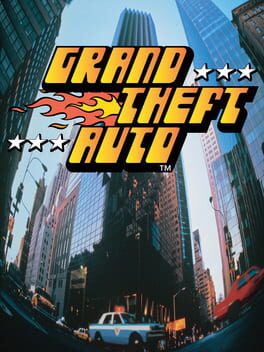
The contest’s mechanics are deliberately simple: a short narrative, no length limit, and an optional screenshot or video clip to substantiate the memory. This low barrier to entry encourages participation from casual players who may have only dipped into the series, as well as hardcore veterans whose stories span the franchise’s evolution from the original 1997 top‑down experiment to the sprawling realism of GTA V. By promising a copy of the yet‑unreleased game, Rockstar effectively turns a nostalgic exercise into a pre‑order driver, reinforcing the perception that early adopters are part of an exclusive inner circle.
Analysis
The contest reflects a nuanced understanding of modern marketing economics. In an era where user acquisition costs for AAA titles can eclipse $100 per player, leveraging earned media through fan narratives offers a dramatically higher return on investment. Moreover, the initiative dovetails with Rockstar’s historical reliance on post‑launch content—such as GTA Online’s continual updates—to extend the product’s revenue tail. By seeding excitement now, the company can secure a robust initial install base, which in turn fuels the microtransaction ecosystem that has become the financial backbone of the series.
From a competitive standpoint, the move also serves as a defensive maneuver against rivals like Ubisoft’s Assassin’s Creed and Take‑Two’s own 2K portfolio, which have recently experimented with similar community‑driven campaigns. Rockstar’s brand equity, however, provides a unique leverage point: the franchise’s cultural cachet means that even a modest contest can generate headlines across mainstream gaming outlets, Twitch streams, and Reddit threads. The risk, albeit minimal, lies in setting expectations for the final product; if GTA VI fails to deliver a comparable experience to the memories fans are recalling, the emotional dissonance could erode goodwill.
XPLog Opinion
At XPLog UK we view the memory contest as a masterstroke of participatory marketing, one that acknowledges the symbiotic relationship between Rockstar and its most vocal constituency. By inviting fans to relive the series’ defining moments, the publisher not only harvests free‑wheel publicity but also reinforces the narrative that GTA VI is the inevitable next chapter in a saga that has shaped open‑world design for two decades. This strategy will likely translate into stronger pre‑order numbers and a more engaged community at launch—an outcome that, in a market increasingly driven by live‑service revenue, could set a new benchmark for how legacy franchises tease their successors.
Final Thoughts
In sum, the GTA memory contest is more than a promotional gimmick; it is a calculated lever that amplifies Rockstar’s brand mythology while feeding the commercial engine that underpins modern AAA development. As the launch window narrows, observers should watch the volume of fan submissions, social media spikes, and any subsequent reveal events that tie the contest winners to exclusive content drops. The next key dates to monitor are the contest deadline on 20 November and the official GTA VI release window slated for early 2027, moments that will reveal whether nostalgia‑driven engagement can indeed convert into sustained post‑launch profitability.