Overview
The indie landscape has never been more fertile for games that wear their politics on the sleeve of their design, and Origame Digital’s newest venture sits at the volatile intersection of cosmic horror, anti‑colonial narrative, and explicit anti‑fascist intent. In an era where studios from the likes of Devolver and Annapurna are courting both critical acclaim and activist audiences, the Melbourne‑based team has chosen to weaponise the very aesthetics that once inspired dread—H.P. Lovecraft’s nightmarish geometry—and turn them into a mirror reflecting the lingering shadows of European settlement on Australian soil. By anchoring their alien city in recognisable, if deliberately anachronistic, urban signage such as “Downtown,” the developers force players to confront the absurdity of treating colonised land as an exotic other, a tactic that has become a recurring motif in contemporary cultural critique.
At the same time, the project arrives amidst a broader industry reckoning with representation and historical accountability. Recent releases like "Tell Me Why" and "Never Alone" have demonstrated that authentic indigenous storytelling can thrive when studios partner with community custodians, and the market response has been encouraging enough for publishers to green‑light more titles that centre marginalized voices. Origame’s decision to embed Māori protagonists and to explicitly pit them against a cabal of German and British occult Nazis signals a deliberate alignment with this wave, while also tapping into the growing appetite for games that do more than entertain—they educate, provoke, and mobilise. The timing is crucial: as console manufacturers double‑down on exclusive content to differentiate their ecosystems, a politically charged indie trilogy could become a strategic asset for platforms seeking cultural relevance beyond raw horsepower.
What Happened?
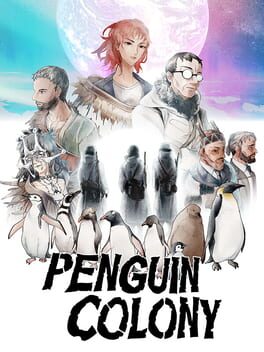
Origame Digital unveiled the first installment of their three‑part series, tentatively titled "Penguin Colony," during a live‑stream that blended gameplay footage with a stark visual essay on Australian land rights. The game drops players into the body of a Rockhopper penguin navigating a sprawling, cubist metropolis whose skyline is a grotesque homage to Lovecraftian “terraces of every sort of provocative disproportion.” The environment is deliberately juxtaposed with real‑world footage of Melbourne’s streets, reminding players that the fictional alien ruins sit atop stolen Wurundjeri, Woi‑wurrung, and Bunurong lands. According to the studio’s lead designer, the choice of a penguin avatar is a subversive nod to the absurdity of colonial narratives that portray indigenous peoples as exotic curiosities, while also providing a fresh gameplay mechanic centred on limited vision and agile movement.
The narrative thrust deepens as the player is recruited into a Māori expedition tasked with thwarting a coalition of Nazi occultists—representing both historical fascist ideologies and their modern resurgence—who seek to resurrect an eldritch entity they dub the “one true Aryan king.” This plotline is not merely a sensationalist set‑piece; it weaves together documented occult experiments of the Third Reich with contemporary concerns about extremist groups appropriating mythic symbols. In interviews, Origame’s creative director emphasized that the trilogy will progressively expand its scope, moving from the claustrophobic streets of “Downtown” to the spectral high‑rises of a blood‑soaked swamp, each act designed to amplify the stakes of cultural reclamation versus imperialist horror.
Analysis
From a market perspective, the trilogy positions itself as a niche yet potentially lucrative counter‑current to the mainstream AAA horror pipeline dominated by franchises like "Resident Evil" and "Silent Hill." By embedding a clear anti‑fascist message, the series may attract funding from cultural grants and socially responsible investors, a trend observed in recent European Union media programmes that prioritize diversity and historical reckoning. However, the commercial risk remains significant; retailers and platform holders have shown hesitancy to promote overtly political titles, especially when they intersect with contentious historical narratives. The success of "Disco Elysium" and "Control" illustrates that there is a dedicated audience for cerebral, thematically heavy experiences, but those games benefitted from extensive post‑launch support and critical endorsement that amplified their reach.
Technical hurdles also loom large. Rendering the “crabby cuboid geometry” of the alien city while maintaining performant frame rates on both current‑gen consoles and mid‑range PCs will demand clever optimisation, perhaps leveraging procedural generation techniques pioneered by studios like Hello Games. Moreover, the integration of real‑world footage with stylised assets raises licensing and localization challenges, particularly when navigating the sensitivities of indigenous representation. Should Origame secure partnerships with cultural institutions and secure accurate language translation for Māori dialogue, the project could set a new benchmark for authenticity in interactive storytelling, but any misstep could invite backlash from both activist circles and heritage custodians.
XPLog Opinion
At XPLog UK we view Origame’s ambition as a bold litmus test for the industry’s capacity to marry high‑concept horror with unapologetic political discourse; if the trilogy delivers on its promise, it could usher in a wave of indie titles that treat historical injustice not as a backdrop but as a driving mechanic, compelling publishers to reconsider the commercial viability of games that challenge, rather than merely entertain, their audiences.
Final Thoughts
In sum, Origame Digital’s Lovecraft‑infused anti‑fascist saga arrives at a pivotal moment when gamers are demanding more than spectacle—they seek relevance, accountability, and a platform for underrepresented stories. The series’ success will hinge on its ability to balance unsettling horror with respectful cultural collaboration, and on whether the broader ecosystem—platform holders, press, and funding bodies—will champion a game that refuses to hide its political spine. Keep an eye on the scheduled release window for the second act in Q3 2027, when the narrative is expected to broaden its scope and further test the limits of indie ambition.

 XPLog
13 Nov 2026
5 min read